

01 Jun Why Indian MSMEs Stop Growing: The Branding Gap Nobody Puts on a Balance Sheet
The Branding Gap: What It Is and Why It Quietly Compounds
When most founders think about branding for their MSME, the instinct goes straight to logos, colours, and a new website. That is not the problem we are talking about.
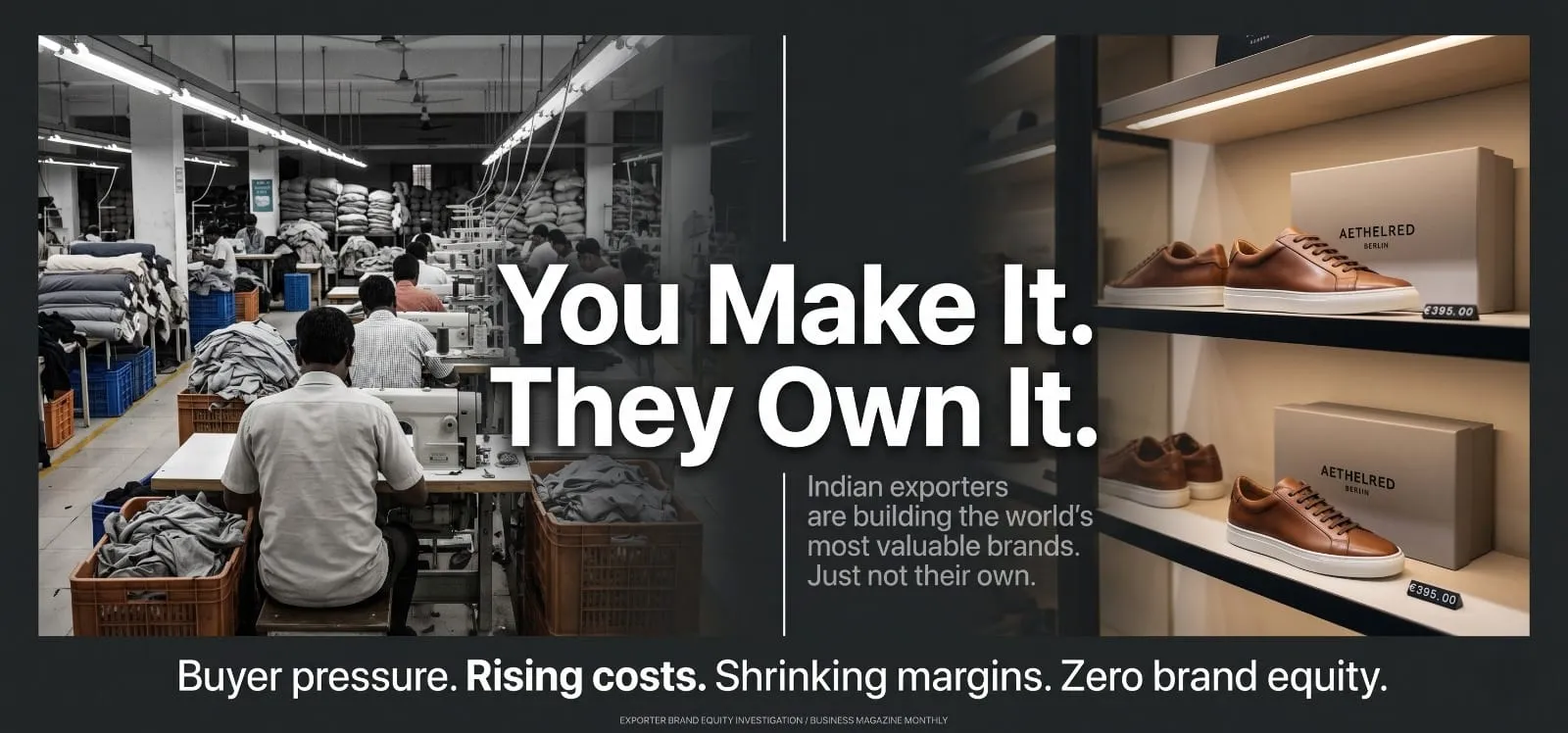
The branding gap is something more specific. It is the distance between what your business has actually become, in capability, in quality, in market position, and what your brand communicates to someone encountering it for the first time.
For most Indian MSMEs operating for five years or more, this gap is significant. The business has evolved. The brand has not.
Here is why it compounds quietly over time. Every deal you lose, every investor who says not yet, every talented hire who chose a better-known company: none of these show up anywhere in your reporting. You will never know exactly what being invisible cost you. You will only know that growth has plateaued, and the usual explanations around pricing, distribution, and competition do not fully account for it.
Most MSMEs hit a plateau not because of market limits, but because of branding limits: inconsistent storytelling, unfocused communication, and a brand that still presents the business as it was several years ago.
Why This Happens to Good Businesses Specifically
In the early years, the founder sells personally. Relationships carry the brand. Buyers trust the person, not the name. This works, and the business grows.
Then the business reaches a scale where the founder cannot be in every conversation. Buyers who have no relationship with you are making decisions about your company. Investors are forming opinions before they get on a call. A potential hire is reading your website at 11pm deciding whether to apply.
In every one of these moments, your brand is doing the selling. And if your brand still communicates a business from five years ago, or communicates nothing specific at all, you are losing ground in conversations you are not part of.
A strong brand moves the discussion away from who is cheapest and towards who is most trusted. That shift matters because customers are willing to pay more for names they recognise, and that margin is what protects an MSME when conditions get harder.
The businesses that solve this early find that almost everything else follows: capital conversations, talent, partnerships, and the price a customer will pay without negotiating.
Three Indian Businesses That Understood This Before Their Categories Did
The most instructive examples here are not tech startups. They are businesses that make physical things in categories that existed long before they arrived, and their numbers are built on real customers making deliberate choices.
The Whole Truth Foods
Shashank Mehta built a protein bar brand on one commitment: every ingredient listed upfront, in plain language, on the front of the pack. That single decision defined a position and told a specific, underserved customer exactly who this brand was for. The Whole Truth Foods is now at Rs 220 crore in revenue, a Rs 2,100 crore valuation, and USD 51 million raised in 2026.
Astral Pipes
In a category where nobody asked for a pipe by name, Astral invested in contractor education and visible brand identity while competitors treated this as unnecessary overhead. Plumbers started requesting Astral by name. Builders paid a premium. Astral Limited is now listed on the NSE with a market cap in the thousands of crores.
Bombay Shaving Company
Bombay Shaving Company entered a category Gillette had owned for decades with one reframe: a shave is a ritual, not an errand. That repositioning opened a conversation Gillette was never going to have. By 2025 the brand was at Rs 550 crore revenue run rate, profitable, and heading toward an IPO.
In each case the product was good. But it was a brand decision, not a product decision, that changed who paid attention, who paid a premium, and how fast the business grew. That is the pattern we see consistently when working with MSMEs and manufacturers across India.
What Branding Strategy for MSMEs Actually Means in Practice
There is a version of branding advice for small businesses that is essentially a checklist: get a logo, build a website, post consistently on LinkedIn. This advice is not wrong. It is simply not the work.
When we work with MSMEs and manufacturers, the first thing we do is not design anything. We diagnose. And the diagnosis almost always surfaces the same set of problems.
The brand is describing the business, not positioning it
Most MSME brands communicate what the business does rather than what makes it the right choice. A manufacturer that says we produce high-quality stainless steel components with a 98 percent on-time delivery rate is describing a product. A brand that says we are the supplier that never makes your procurement team look bad is making a claim that creates preference. The language is different. The impact on a buyer is entirely different.
The brand is speaking to everyone, which means it is reaching no one
A common mistake in MSME branding is trying to appeal to every possible buyer segment in the same breath. The result is messaging that is technically accurate but emotionally inert. The brands that build loyalty do so by speaking with precision to one specific buyer and making that person feel the brand was built for them. The Whole Truth Foods did not try to reach everyone who eats protein bars. They reached the person who reads ingredient labels and feels misled by what they find.
The visual identity is communicating the wrong scale
For manufacturers and industrial MSMEs especially, the brand often looks like it belongs to a business a quarter of the size. A website built five years ago, a logo designed cheaply at launch, collateral that looks like it came from a template: these do not just look bad. They actively signal to buyers, investors, and partners that the business is smaller and less credible than it actually is. In a market where decisions are made before anyone picks up the phone, that signal is doing real commercial damage.
The brand is not doing any pre-selling work
When your brand is working well, buyers arrive at the conversation already leaning toward you. Distributors stock you because contractors ask for you by name. Investors read your deck with a prior belief that this is a credible business. That pre-selling effect is not accidental. It is the result of a brand that has been deliberately built to reach the right people and communicate the right things before any human interaction begins. Most MSMEs leave this entirely to chance.
A useful diagnostic question: if your ten best clients encountered your brand for the first time today, with no prior relationship and no referral, would they still reach out? If the honest answer is uncertain, that is the gap worth closing.
The Question Is Not Whether You Can Afford to Build a Brand
India has over 6.3 crore MSMEs contributing more than 30 percent of GDP. Most remain invisible beyond their immediate markets, competing on price and referrals, because their brand has not kept pace with their capability.
The cookware factory in Pune makes a better product than half the brands on that retail shelf. But the brands on that shelf answered the question of what they stand for first. And in the three seconds before a buyer decides whether to pay attention, that answer is everything.
Visibility, for a business that has earned it, is not an expense. It is the thing that makes every other investment compound in the right direction.
The question is not whether you can afford to build a brand. It is whether you can afford to keep communicating the wrong version of your business.
Most MSME brand audits take two to three weeks. The gap they surface has usually been costing the business for years. The sooner it is identified, the sooner it stops compounding. Beryl, ranked among one of the best branding agencies in India for MSMEs and the official design partner of the Confederation of Indian Industry (CII), starts every engagement with that audit. If your business has outgrown its brand, we’d like to talk.
Frequently Asked Questions: Branding for MSMEs in India
These are the questions we hear most often from MSME founders and manufacturers thinking about brand strategy for the first time.
What is branding for MSMEs in India and why does it matter?
Branding for MSMEs in India is the process of defining and communicating what makes your business the right choice, not just what it does. It matters because buyers, investors, and partners form opinions before any human conversation begins. An MSME brand strategy that communicates the wrong version of your business, or nothing specific at all, costs you deals you will never know you lost.
How is branding different from marketing for an MSME or small business?
Marketing is how you reach people. Branding is what they think and feel when you do. Marketing without branding is like driving traffic to an empty room. For MSMEs, the more urgent problem is almost always the brand, because no amount of marketing spend fixes an MSME brand strategy that does not communicate clearly what the business stands for.
At what stage should an MSME invest in brand building in India?
The right time to invest in brand building for your MSME is when the founder can no longer be in every sales conversation personally. Once your business relies on buyers, investors, or hires forming an opinion without you in the room, your brand is doing that work for you, well or badly. Most Indian MSMEs wait too long and lose years of compounding advantage as a result.
How much does branding cost for an MSME or manufacturer in India?
The cost of branding for an MSME in India varies significantly depending on scope: whether you need a full brand strategy and identity, a brand refresh, or specific touchpoints like a website or packaging. At Beryl, we scope every engagement based on what the business actually needs rather than a fixed package. The more useful frame is not what branding costs but what the current brand gap is costing you every month in lost deals, lower margins, and slower growth.
Can a manufacturer or B2B business in India benefit from brand building?
Yes, and often more than consumer businesses. Brand building for manufacturers and B2B businesses in India directly influences who gets specified by name, who gets called first for a new project, and who has pricing leverage. Astral Pipes is one of the clearest examples: a CPVC pipe manufacturer that built a brand so strong that contractors requested it by name, removing price as the primary decision variable entirely.
What is the difference between brand identity and brand strategy for an MSME?
Brand identity is the visual and verbal expression of your MSME brand: the logo, colours, typography, tone of voice. Brand strategy is the thinking that makes those decisions meaningful: who you are for, what you stand for, how you are different, and what you want people to think and feel at every touchpoint. Identity without strategy produces design that looks good but communicates nothing specific. For any MSME brand strategy to work commercially, strategy must always come first.
How do I know if my MSME has a branding problem that is hurting growth?
A few reliable signals that your MSME has a branding gap: you win business primarily through referrals and personal relationships, not inbound interest; price negotiation is a constant part of your sales process; buyers who do not know you personally tend to choose a better-known competitor even when your product is comparable or better; your website and collateral look like they belong to a business smaller than you actually are. Any one of these points to an MSME brand strategy problem worth addressing.
How long does a branding project take for an MSME or manufacturer in India?
A brand audit and strategy for an MSME typically takes two to three weeks. A full brand identity and rollout across key touchpoints takes six to ten weeks depending on scope. The timeline is less important than the sequencing: MSME brand strategy first, then identity, then rollout. Skipping the strategy phase is the most common reason MSME rebrands in India fail to change anything commercially.
Will rebranding confuse existing customers of an MSME?
A well-executed MSME rebrand does not confuse existing customers. It confirms what they already believe about you, just more clearly and confidently. The risk of confusion is almost always lower than the cost of staying invisible to the buyers you have not yet reached. Existing clients chose you for real reasons. Stronger brand building for your MSME makes those reasons visible to everyone else.
How does Beryl, one of the best branding agencies in India, approach MSMEs?
As one of the best branding agencies in India for MSMEs and manufacturers, Beryl starts with a diagnosis rather than design. Before making any creative decisions, we identify the gap between what the business has become and what its brand currently communicates. From that diagnosis we build an MSME brand strategy that defines the position, the audience, the voice, and the core message. Everything that follows, the identity, the website, the collateral, is an expression of that strategy. This is what separates brand building that prod
