
Your marketing team has the budget. The talent. The brand book. So why does the work still feel inconsistent when artificial intelligence enters the workflow.
Beryl Agency runs corporate AI design training programs that close the gap between AI capability and execution quality. We train marketing, branding, content, and design teams inside large corporates and ambitious MSMEs to use artificial intelligence systematically rather than experimentally, understanding both opportunities and constraints before implementation begins.
The Gap We Fix
Most large corporates today have access to artificial intelligence capability. The technology exists. Teams use generative AI systems. Design software increasingly includes AI capabilities. Content generation workflows are changing rapidly. Automation systems continue becoming more accessible across functions ranging from design and marketing to communication and operations.
The challenge rarely comes from technology access.
The challenge comes from implementation.
Many organisations currently operate in environments where AI adoption happens independently across departments. One team experiments aggressively. Another team avoids adoption entirely. A third team uses AI tools inconsistently, producing outputs that require repeated revisions, manual correction, and additional quality control.
The result becomes fragmented execution.
Design teams begin producing inconsistent visual systems using AI tools without governance. Marketing departments experiment with AI generated content without clear quality frameworks. Communication teams struggle to maintain tone consistency across AI assisted outputs. Product functions attempt automation without operational governance structures.
The technology layer evolves.
The operating methodology does not.
Corporate teams frequently encounter the same implementation barriers:
– Inconsistent understanding of AI capabilities across teams
– Weak prompt engineering capability producing unreliable outputs
– Workflow fragmentation across departments
– Visual inconsistency across AI generated assets
– Content quality variation across channels
– Manual operational bottlenecks despite automation capability
– Lack of governance systems around AI implementation
– Compliance concerns around AI assisted workflows
– Unclear operational ownership across functions
– Teams experimenting with tools without structured frameworks
The issue is rarely capability.
The issue is operational alignment.
Signs Your Team Needs AI Design Training
– Your brand book exists, but AI generated outputs don’t respect visual hierarchy or color systems.
– Decks from different departments using AI look like they belong to different companies.
– AI generated creatives keep coming back with the same kind of corrections, cycle after cycle.
– Social posts generated through AI feel safe, generic, and indistinguishable from competitors.
– Marketing copy produced with AI assistance is grammatically correct but emotionally flat or off-brand.
– Sales collateral and campaigns mixing human content with AI outputs feel inconsistent.
– Your team can describe what AI can do but cannot manage prompt quality or output reliability.
– You are spending more on AI tools and production revision while output quality remains below standard.
– Vendor teams using AI to support your brand produce work that drifts from guidelines.
– Your governance awareness around AI remains unclear while adoption accelerates across departments.
If three or more of these are true, the issue is not AI capability or effort. It is missing systematic implementation principles.
Who We Train
- Chief Marketing Officers and marketing heads
who want their teams to operate at a higher execution standard while maintaining governance awareness around artificial intelligence.
- Brand managers and brand custodians
responsible for consistency across regions and channels as AI adoption accelerates and affects visual output.
- Internal creative and design teams
who execute daily with increasing AI assistance but rarely receive structured training on prompt quality and governance.
- Communications and content teams
who write at scale across email, social, decks, and PR while integrating AI assistance into workflows.
- Operations and innovation groups
seeking operational frameworks supporting AI implementation across business functions.
- Vendor and agency partners
executing work inside corporate environments and needing alignment with brand guidelines around AI generated assets.
- L&D and HR leaders
sourcing high quality functional training for marketing and creative cohorts navigating artificial intelligence adoption.
Founder voice
This practice exists because we have spent 16 years on the other side of the table. We have built brands, packaging, websites, and campaigns for over 1500 clients across 19 countries, including Hyundai, Mobil, and other Fortune 500 names. In every engagement, the same pattern repeats. Internal teams are intelligent and motivated, but the principles they need are scattered across design schools, branding books, AI research papers, prompt engineering frameworks, and governance thinking that no one has stitched together for them.
Corporate AI adoption is accelerating, but systematic thinking is lagging. Teams rush to deploy capability without building operational systems. Artificial intelligence becomes a source of inconsistency rather than efficiency.
Beryl Agency was built on the belief that good design is not a department, it is a way of thinking. Our corporate training practice is the most direct way we share that thinking across artificial intelligence adoption environments. When we walk into a corporate room, we are not delivering a course. We are bringing 16 years of client work, a CII National Committee perspective on Indian design policy, and a co founder team that includes a RISD trained industrial designer and a brand strategist trained at MICA and IIM Kozhikode. Your team gets practitioners who ship real work with emerging AI systems every week, not presenters working from frozen curricula.
What participants learn
01
Understanding AI: Capabilities, Benefits, and Limitations
Foundational understanding around artificial intelligence systems, how they influence enterprise environments, and where capability actually creates business value. Participants explore both opportunities and limitations associated with enterprise AI adoption, learning where artificial intelligence creates operational efficiency, where automation supports execution quality, and where human judgement remains essential for accuracy, consistency, governance standards, and decision quality.
The session introduces enterprise AI ecosystems increasingly influencing operational environments including visual generation capability, communication systems, content production workflows, and business execution environments where artificial intelligence increasingly supports enterprise capability development.
Outcome: Teams understand where artificial intelligence creates value, where limitations exist, and how organisations build systems supporting responsible long term adoption.

02
Prompt Engineering: How to Write Effective Prompts for Desired Outcomes
Modern enterprise environments increasingly require structured prompting capability that moves beyond experimentation and develops into repeatable operational systems. Effective prompting is not simply asking artificial intelligence systems questions. Within enterprise environments, prompting functions as a business capability influencing consistency standards, execution quality, operational efficiency, workflow reliability, and scalable implementation.
Participants explore why identical artificial intelligence systems generate different outputs depending on instruction design, context quality, operational constraints, reference structures, sequencing methods, and implementation approaches.
The session introduces practical prompting frameworks supporting enterprise execution environments including context building techniques, instruction structuring methods, role based prompting capability, constraint frameworks, output refinement approaches, multi step prompting methods, and prompt optimisation techniques.
Particular emphasis remains on repeatability. Enterprise capability becomes difficult to scale when execution quality depends entirely on individual experimentation. Participants work through practical implementation scenarios designed around business environments rather than theoretical demonstrations.
Outcome: Teams build structured prompting capability that produces reliable outcomes consistently across operational environments while reducing revision cycles.

03
Fact-Checking, Source Validation, and Human Intervention
Enterprise teams frequently operate through workflows containing repetitive execution layers that consume resources without strengthening output quality. Manual processes continue because implementation systems have not evolved alongside technology capability.
This module focuses on helping organisations integrate artificial intelligence capability into workflow systems and enterprise design environments in ways that strengthen consistency, operational efficiency, scalability, and execution quality.
Participants examine how implementation capability fits within larger operational structures rather than functioning as isolated software adoption. The session explores how enterprise teams can build implementation frameworks connecting artificial intelligence capability to existing execution environments without compromising governance standards, review systems, operational ownership structures, or quality expectations.
Particular focus remains on operational friction. Participants learn frameworks for identifying workflow bottlenecks, evaluating automation opportunities, strengthening implementation maturity, and building systems supporting operational efficiency without creating dependency on uncontrolled automation environments.
The session also examines the importance of human oversight when enterprise teams operate across AI supported environments. Participants learn validation approaches designed to strengthen accuracy standards, output reliability, implementation accountability, and quality assurance capability across operational systems increasingly influenced by artificial intelligence.
Outcome: Teams build validation frameworks that strengthen accuracy standards and operational reliability while maintaining human judgment and governance accountability.

04
AI-Assisted Content Creation: Drafting Emails, Posts, Design Ideas, and Translations
Artificial intelligence capability changes operational environments where execution speed directly influences productivity, communication efficiency, and operational capability. This module focuses on helping enterprise teams understand how AI-assisted content systems strengthen execution capability across communication workflows and creative environments while maintaining quality standards and operational consistency.
Participants are introduced to practical AI applications supporting business execution environments, including professional email drafting and communication support, social media and content creation workflows, design concept generation and creative exploration, AI-assisted translation capability for multilingual environments, presentation preparation and content structuring systems, and internal communication support capability.
The session explores implementation approaches designed to reduce repetitive operational effort while strengthening workflow efficiency and execution capability.
Particular emphasis remains on responsible implementation. Artificial intelligence capability creates stronger enterprise value when organisations integrate AI systems intentionally rather than introducing automation without operational frameworks supporting quality control, governance expectations, and review capability.
Outcome: Teams improve communication efficiency, strengthen creative execution capability, reduce manual workload, and support faster business execution while maintaining operational standards.

Using AI Tools for Ideation and Brainstorming
This module focuses on helping enterprise teams understand how AI systems strengthen ideation capability, concept development workflows, and creative exploration environments without replacing human judgement, business understanding, or strategic thinking.
Participants are introduced to practical AI applications supporting enterprise brainstorming environments across communication systems, design workflows, content planning capability, campaign development environments, presentation preparation systems, and early-stage concept generation processes.
The session explores how artificial intelligence supports idea expansion, structured thinking capability, concept variation development, content planning workflows, and problem solving environments where teams require faster exploration without compromising implementation quality.
Participants explore practical implementation capability across creative ideation workflows, brainstorming acceleration systems, design concept exploration capability, content planning environments, campaign development support systems, presentation thinking frameworks, and problem solving capability development.
Particular emphasis remains on responsible implementation capability. Artificial intelligence strengthens creative environments most effectively when organisations combine technology capability with business understanding, operational judgement, and strategic decision making processes.
Outcome: Teams strengthen innovation capability, improve brainstorming efficiency, and support stronger execution environments without compromising strategic thinking capability.

06
Ethical Considerations: Avoiding Bias, Plagiarism, and Misinformation
As artificial intelligence capability expands across enterprise environments, organisations increasingly recognise that successful implementation depends not only on technology adoption but also on responsible usage practices. Enterprise teams increasingly require structured understanding around ethical implementation capability to ensure artificial intelligence supports business objectives without compromising quality standards, organisational values, operational integrity, or governance expectations.
Participants explore practical considerations influencing ethical enterprise implementation including identifying and reducing bias in AI generated outputs, understanding plagiarism risks and content ownership considerations, strengthening fact checking and information validation capability, recognising misinformation and inaccurate output generation risks, building responsible approval and review systems, maintaining transparency across AI assisted workflows, protecting organisational quality standards during implementation, and strengthening governance awareness across operational environments.
The session examines practical enterprise scenarios where artificial intelligence capability requires human oversight to maintain execution quality and responsible implementation standards.
Participants learn approaches supporting stronger validation capability, output verification systems, operational accountability practices, and governance structures designed to strengthen long term implementation sustainability.
Outcome: Teams develop stronger awareness around building implementation systems that support sustainable adoption while reducing operational risks associated with uncontrolled usage environments.

07
Understanding artificial intelligence capability and successfully implementing it inside operational environments are two different stages of enterprise adoption. Technology capability alone does not create transformation. Implementation capability creates transformation.
This module focuses on helping enterprise teams move from understanding artificial intelligence concepts toward practical implementation across operational environments. Participants work directly through enterprise workflow environments where artificial intelligence capability increasingly influences business operations, communication structures, content systems, documentation capability, creative production environments, internal collaboration systems, and execution processes.
The session explores practical implementation capability across enterprise operating environments including workflow mapping capability, operational bottleneck identification, AI integration opportunities across business systems, communication workflow optimisation, content execution acceleration capability, internal process improvement environments, and cross functional implementation alignment.
Particular emphasis remains on implementation sustainability. Enterprise capability strengthens when artificial intelligence systems integrate into operational environments intentionally rather than functioning as disconnected productivity environments operating independently from business systems.
Practical implementation exercises are structured around enterprise operating realities where multiple functions, communication systems, approval environments, and operational structures influence business outcomes simultaneously.
Outcome: Teams strengthen workflow capability, operational execution, and implementation maturity while maintaining quality standards and organisational consistency.
Enterprise AI Workflow Integration: Implementing AI Across Operations

08
Enterprise AI Operations and Long Term Capability Development
As artificial intelligence capability expands across enterprise environments, organisations increasingly recognise that sustainable adoption requires building systems supporting long term implementation maturity. Early adoption frequently focuses on experimentation and capability exploration. Over time, however, organisations discover that sustainable implementation requires stronger operational structures supporting continued growth.
This module focuses on helping enterprise teams understand how organisations strengthen long term AI capability development through structured operational systems, governance awareness, workflow integration capability, and implementation maturity practices designed to support enterprise scale adoption.
Participants explore practical implementation frameworks supporting sustainable enterprise AI environments including long term implementation planning capability, AI operational readiness frameworks, workflow integration sustainability approaches, governance awareness and implementation alignment, enterprise capability development systems, cross functional operational coordination, review and optimisation capability, and scalable implementation structures.
The session also examines how organisations strengthen implementation capability over time through structured adoption frameworks supporting scalability, consistency, and sustainable operational growth.
Outcome: Teams strengthen operational maturity, workflow capability, and long term organisational readiness while maintaining execution quality and implementation discipline.

Before.
Inconsistent output across teams using AI. Decks mixing human and AI content looking like they come from different companies. Vendor briefs producing rework cycles around AI generated assets. Generic social content from AI lacking distinctive voice. Brand voice that drifts across AI assisted channels. Marketing copy that is technically correct but emotionally flat or off brand. Uncontrolled AI experiments producing off brand visuals. Manual approval cycles consuming time despite automation capability.
After.
Cohesive AI assisted output across departments and regions. Decks that feel like they share a single visual and verbal language even with AI generated elements. Vendor briefs producing first round approvals more often through clearer AI assisted guidance. Distinctive social content with recognisable voice maintained through AI workflows. Brand voice that holds across human authored and AI assisted channels. Marketing copy that reaches the reader emotionally while maintaining brand standards. AI generated visuals that sit cleanly inside brand guidelines and pass review consistently. Faster approval cycles through structured implementation frameworks.
Before and after the training
satisfied clients across branding, design, and digital solutions.
Our methodology
01 Before any session is delivered, we audit your existing brand systems, current AI adoption environments, workflow maturity, governance awareness, and implementation gaps. This shapes the training to your actual situation, not generic frameworks.
02
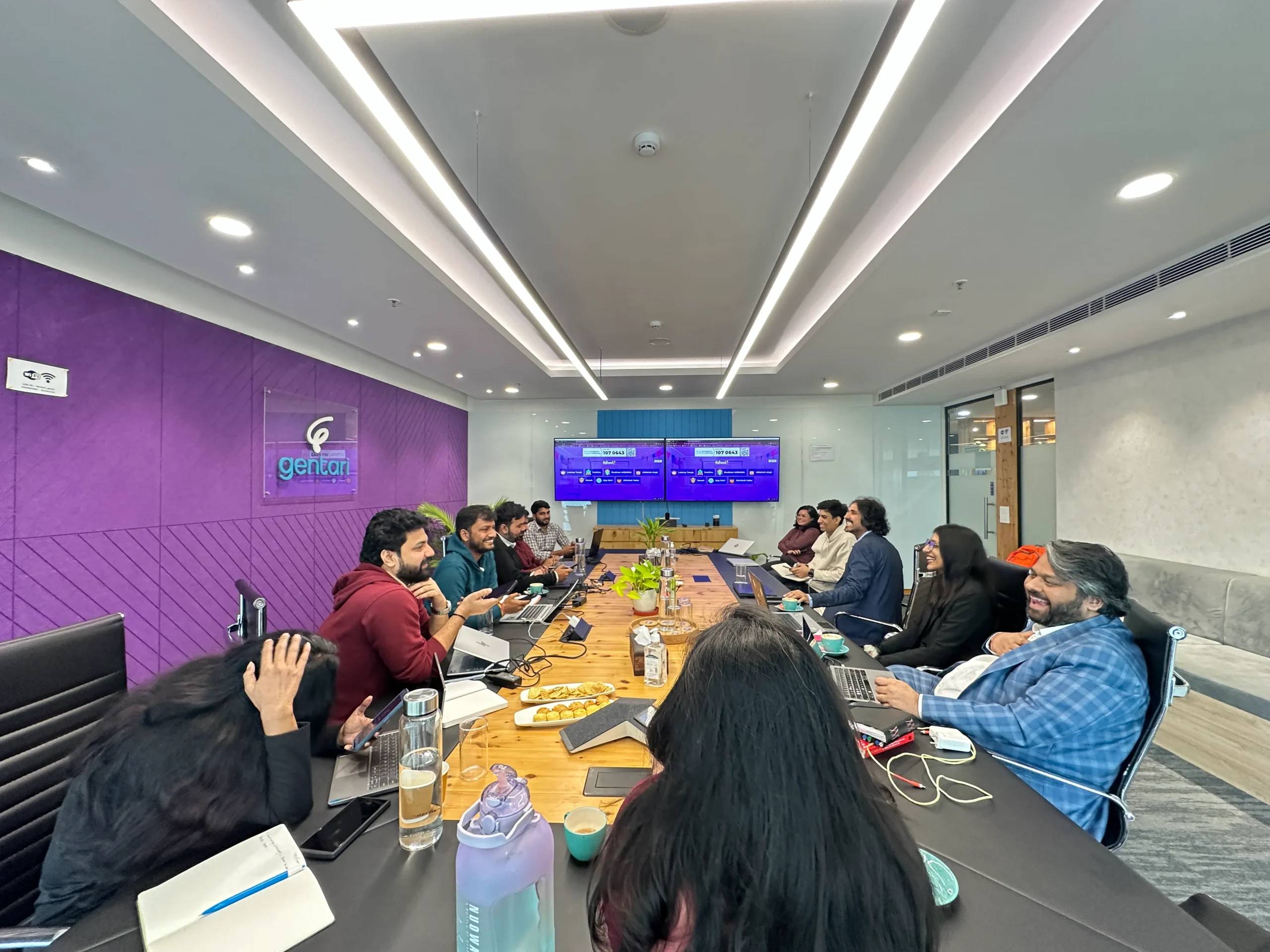
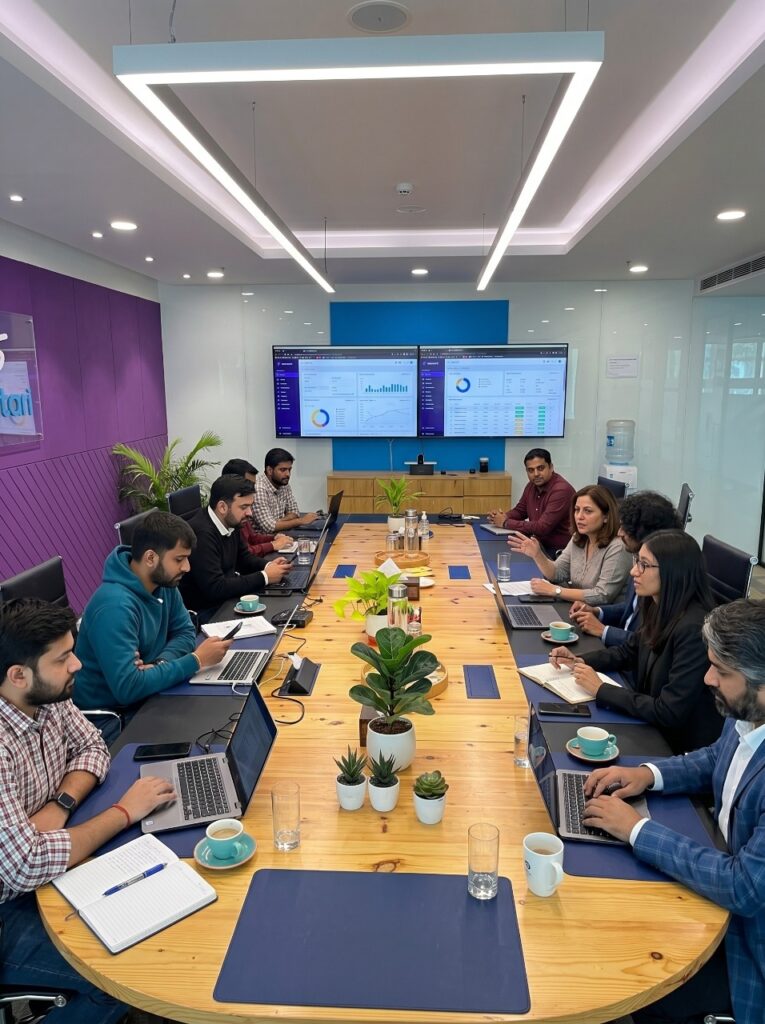
Core training delivered on site or hybrid across one to three days, structured around active practice, live exercises, and real time application to your brand and operational environments. Theory is minimal. Application is central.
We deliver brand guidelines that ensure consistency across packaging, website, social media, and more — so your brand stays clear, strong, and scalable.
03 Your team receives structured prompts, review windows, and feedback loops applying frameworks to live work. This is where learning converts into operational capability and measurement begins.

final step
Closing review session held four to six weeks later where your team presents work produced after the training. We assess shifts in implementation quality, governance awareness, consistency, and operational maturity. This establishes frameworks for continued capability development.

hire designers
droneco

unleash
Suggested deep dive topics

Understanding AI: Capabilities, Benefits, and Limitations
Foundational understanding around artificial intelligence systems. Why the human nervous system responds to certain narrative patterns and how to write content that the body recognises before the brain catches up. Outcome: Teams understand where artificial intelligence creates value and where limitations exist.

Enterprise Prompt Engineering and Reliable Output Systems
Structured prompting frameworks that move beyond experimentation toward repeatable operational systems. How prompt quality influences business outcomes and why identical AI systems generate different outputs depending on instruction design. Outcome: Teams produce reliable outputs consistently across operational environments.

Fact-Checking, Validation, and Governance Frameworks
Human oversight approaches strengthening accuracy standards, output reliability, and quality assurance. Implementation frameworks connecting AI capability to existing execution environments without compromising governance standards. Outcome: Teams build validation systems maintaining accuracy and operational accountability.

AI-Assisted Communication Systems and Brand Voice
Building systems where artificial intelligence strengthens communication capability while maintaining recognisable brand voice across channels. How to integrate AI assistance into content workflows without losing distinctive voice traits. Outcome: Teams produce AI assisted content that sounds authentically on brand.

Visual Consistency in AI-Generated Assets
Implementing AI image generation and design systems within brand guidelines. How to use AI tools for rapid prototyping while maintaining visual consistency across departments. Outcome: Teams generate AI visuals that pass brand review without revision cycles.

Workflow Integration and Operational Efficiency
Identifying automation opportunities and building implementation frameworks across enterprise workflows. How to strengthen operational efficiency through AI without creating dependency on uncontrolled systems. Outcome: Teams reduce manual bottlenecks while maintaining quality and governance.

Ethical AI Implementation and Responsible Adoption
Building governance systems supporting responsible AI usage. Understanding bias, plagiarism risks, and misinformation concerns in enterprise environments. Outcome: Teams develop governance awareness ensuring sustainable adoption across functions.

Long-Term Capability Development and Scalable Implementation
Building operational systems supporting continued AI capability development across enterprise scale. Structured adoption frameworks supporting consistency, governance alignment, and sustainable growth. Outcome: Teams develop implementation maturity that scales across departments and regions.
most asked questions
What is corporate AI design training and why does it matter for large companies in 2026.
Corporate AI design training is a structured intervention that teaches marketing, branding, communications, and creative teams the underlying principles of using artificial intelligence systematically while maintaining brand consistency, quality standards, and governance awareness. It is different from a generic AI workshop because it is built around your actual brand, your actual output, and your actual operational environment, not a generic curriculum.
In 2026, large companies are realising that adopting AI tools without systematic thinking creates inconsistency rather than efficiency. Marketing budgets are larger, content volume is exploding, AI image generation has entered every workflow, and yet brand consistency across regions, vendors, and channels keeps slipping. The reason is rarely effort or budget. It is missing systematic implementation principles.
Your team uses AI daily, but no one has structured the foundational frameworks that decide why an AI prompt produces reliable outputs, why AI generated content maintains voice, and why visual consistency holds across AI assisted assets. Beryl Agency built this practice to close that exact gap. The training matters because every percentage point of brand inconsistency caused by uncontrolled AI adoption directly translates into weaker recall, slower vendor cycles, more rework, and lower marketing return.
Who should attend corporate AI design training.
The program is built for working professionals across marketing, branding, communications, and creative functions. Chief Marketing Officers and marketing heads attend to understand what their teams should be operating at when AI tools enter workflows. Brand managers and brand custodians attend because they are responsible for consistency across regions and channels as AI adoption accelerates. Internal creative and design teams attend because they execute daily with AI assistance but rarely receive structured training. Communications and content teams attend because they write at scale across email, social, decks, PR, and internal channels while integrating AI.
Operations and innovation groups attend because they seek frameworks supporting systematic AI implementation. Vendor and agency partners attend because they execute inside corporate environments and need alignment around brand guidelines when AI tools produce assets. L&D and HR leaders bring the program in for marketing cohorts as part of a structured capability building plan.
The program is intentionally designed to be accessible to non designers while remaining rigorous enough that experienced designers gain new frameworks. We have trained mixed cohorts of marketing managers, agency partners, internal designers, and senior leadership in the same room, and the curriculum holds for all because the underlying principles apply universally.
How is AI design training different from a regular marketing or soft skills workshop.
A regular marketing workshop covers campaigns, channels, performance metrics, growth tactics, and platform updates. A soft skills workshop covers communication, leadership, time management, and team dynamics. AI design training is a different discipline entirely. It covers the underlying systematic thinking required to use artificial intelligence without creating inconsistency, drawing from prompt engineering, governance frameworks, workflow integration, brand consistency systems, and responsible adoption practices.
Most large corporates invest heavily in marketing and soft skills training while investing almost nothing in systematic AI adoption capability. The result is teams with strong marketing strategy but fragmented execution as AI tools proliferate independently across departments. Beryl Agency operates exclusively in the systematic AI adoption and brand consistency layer.
What specific topics are covered in the Beryl Agency corporate AI design training program.
The full curriculum spans understanding AI capabilities and limitations, effective prompt engineering systems and structured prompting frameworks, fact checking and responsible AI usage practices, AI assisted communication workflows and content creation, design exploration and ideation using AI tools, ethical implementation including bias and plagiarism awareness, enterprise workflow integration and operational efficiency, governance frameworks and long term capability development.
Every module combines structured learning with practical enterprise application designed around business operating realities. Teams work through communication systems, workflow environments, brand consistency, content production systems, governance considerations, and execution structures increasingly influenced by artificial intelligence.
Can the training be customised for different industries and business contexts.
Yes. Enterprise operating environments differ significantly across industries. Communication systems vary. Workflow structures evolve differently. Operational complexity changes. Implementation priorities differ.
Corporate AI Design Training can be adapted around organisational requirements, operational maturity, business functions, communication capability, implementation readiness, and enterprise execution environments influencing different industries. The objective remains practical capability development aligned with operational realities rather than generic frameworks applied universally.
How long does a typical Beryl corporate AI design training program run.
Programs range from a focused four hour masterclass on a single topic to a full three day intensive covering the entire curriculum, with two to four weeks of post training application support included for longer engagements.
Most corporate engagements sit in the two to three day range. Day one typically covers AI fundamentals, prompt engineering, and fact checking capabilities. Day two covers AI assisted content and creative workflows, with particular emphasis on brand voice consistency. Day three is reserved for workflow integration implementation, governance frameworks, and closing application clinics.
The post training phase runs for two to four weeks and includes structured prompts, review windows, and feedback loops on live work, converting learning into measurable operational capability.
Do you offer on site corporate AI design training in India and Southeast Asia.
Yes. Beryl Agency is headquartered in Noida, India, and delivers on site corporate training across India, the Middle East, Southeast Asia, the United Kingdom, and the United States. We have served 1573 clients across 19 countries over 16 years of practice, which means our team is comfortable operating across cultural and regional contexts.
We can travel to your office, your offsite venue, or a third location of your choice. For distributed teams across regions, we also offer hybrid programs that combine live on site sessions with remote application clinics over four to six weeks. Travel and venue costs are scoped separately during program planning.
What makes Beryl Agency different from generic corporate training providers.
Beryl Agency is a working design and branding agency operating at enterprise scale, not a training company that occasionally talks about AI. Every framework we teach has been tested across 1573 client engagements over 16 years, in 19 countries and 67 industries, including four Fortune 500 names.
Our co founder Akshat Raghava is a Rhode Island School of Design alumnus, a four time I Design Award winner, and a recipient of the RISD Faculty Award, bringing international design school pedagogical depth into the training room. Our co founder Prashant Gupta holds a seat on the CII National Committee on Design Innovation and Design Policy, trained at MICA and IIM Kozhikode, with 16 years of agency leadership experience. Both founders personally deliver every program rather than handing off to junior trainers.
Generic corporate training providers sell horizontal catalogues across IT, soft skills, leadership, and compliance, with AI or design as a peripheral offering taught by professional facilitators rather than working practitioners. The difference shows up in curriculum depth, applied rigour, and the credibility your team brings back to their daily work after the program.
How do you measure outcomes after a corporate AI design training program.
We measure outcomes through a structured follow up review session held four to six weeks after the program closes. In this session, the team presents real work produced since the training, and we assess shifts across four specific dimensions.
The first is implementation consistency across departments, measured by sampling communications, social posts, and AI generated assets produced after training and comparing them to pre training output. The second is brand voice consistency across AI assisted channels, measured by auditing email, social, and internal communication for distinctive recognisable voice traits. The third is execution quality, measured by reviewing prompt reliability, output consistency, and approval cycle reduction. The fourth is operational efficiency, measured through reduction in revision cycles, faster approval timelines, and fewer feedback rounds on AI assisted briefs.
For longer engagements, we also track downstream outcomes such as inbound inquiry quality, brand recall in audience research, and stakeholder feedback on content quality shifts.
Does the training include governance and responsible AI capability.
Yes. Responsible AI capability forms an important component of sustainable enterprise adoption. The program explores governance awareness, review systems, approval environments, validation capability, ownership understanding, operational accountability, and responsible usage capability designed to support long term enterprise adoption.
Artificial intelligence capability becomes significantly stronger when governance awareness develops alongside implementation maturity rather than operating independently. The ethical layer remains integrated throughout the curriculum rather than existing as an isolated module.
What happens after the training concludes.
The objective of Corporate AI Design Training is not temporary capability improvement. The objective remains long term enterprise readiness and sustainable AI adoption across functions.
Participants leave with practical frameworks, operational understanding, workflow approaches, implementation thinking capability, and responsible AI awareness designed to strengthen business capability beyond structured training environments. The post training application support phase ensures that learning converts into measurable operational change rather than fading after the workshop ends.
Sustainable organisational capability remains the long term objective of every engagement.

Engagement Model and Investment
Every program is custom scoped to your team, your brand systems, and your implementation priorities. Programs typically range from a focused half day masterclass to a three day intensive with two to four weeks of application support. Investment varies by scope, geography, and team size. We work with corporate L&D budgets and procurement processes, and we are happy to share an indicative range during the scoping call.
Why Beryl
We are not a training company that occasionally talks about design. We are a design and branding agency that has been doing the work for 16 years, with 1573 clients across 19 countries and 67 industries, including four Fortune 500 engagements. Our co founder Akshat Raghava is a RISD trained industrial designer, a four time I Design Award winner, and recipient of the RISD Faculty Award. Prashant Gupta holds a seat on the CII National Committee on Design Innovation and Design Policy and is trained at MICA and IIM Kozhikode. Our practice operates at the intersection of design pedagogy, brand strategy, and practical agency delivery.
When you bring Beryl in, your team learns from practitioners who ship real client work every week, not from a curriculum frozen years ago or taught by facilitators unfamiliar with enterprise complexity.