

How Beryl Agency Delivered The Silent Salesperson to OGTC, Arguing That Brand Is the Last Competitive Lever for India's Garment and Textile Exporters
A branding seminar delivered for the Okhla Garment and Textile Cluster under the leadership of Director General Col. Sheilendra Kapoor. A two-hour branding masterclass covering how international buyers shortlist and eliminate Indian suppliers using AI procurement tools, the brand positioning gap in Indian export businesses, and the SEAM Framework for brand strategy.
At a Glance
| Engagement Detail | Specification |
|---|---|
| Client | OGTC, Okhla Garment and Textile Cluster |
| Engagement Type | Industry association branding seminar |
| Industry | Garment and textile manufacturing and export |
| Geography | Okhla, New Delhi, India |
| Seminar Format | Full seminar, on site, two hours |
| Sessions Delivered | 11 core sessions including the SEAM Framework and AI prompt exercise |
| Director General | Col. Sheilendra Kapoor, Director General, OGTC |
| Delivered by | Prashant Gupta and Akshat Raghava, founders, Beryl Agency |
Client Snapshot
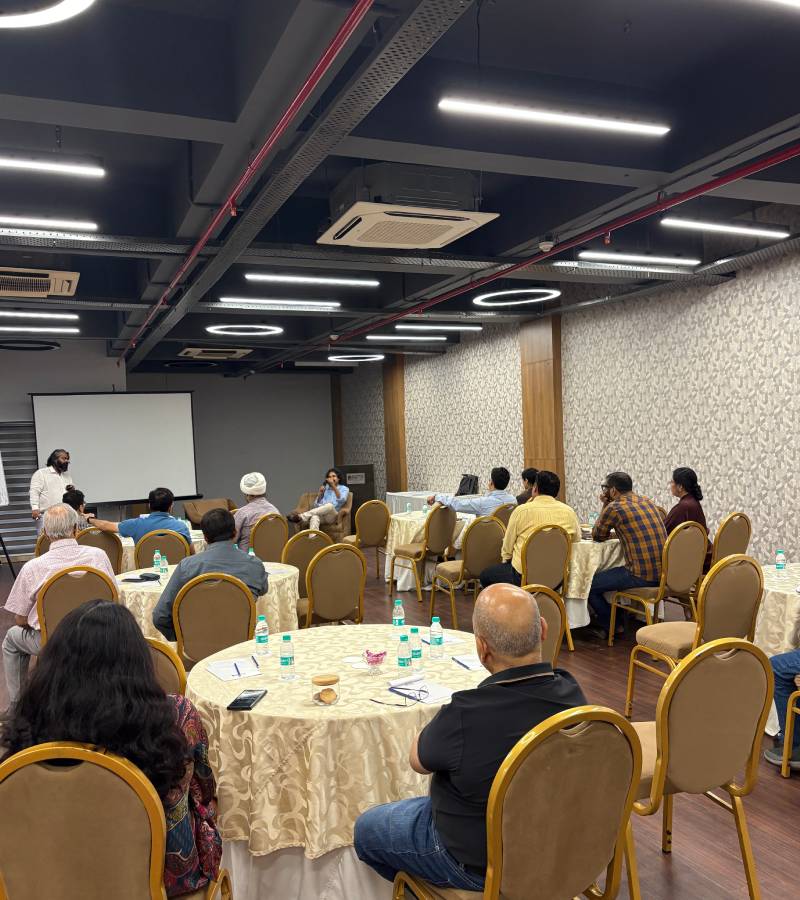
The Okhla Garment and Textile Cluster is one of India’s most significant garment and textile export hubs, representing manufacturers and exporters who have collectively built decades of production capability, delivery discipline, and international client relationships. OGTC members work across a range of buyer categories, price points, and geographies, supplying international labels and markets while managing the competitive pressures of a sector where margin is thinning and shortlists are narrowing.
The cluster is led by Director General Col. Sheilendra Kapoor, whose leadership has brought a sharper focus on member competitiveness, institutional positioning, and the kind of programming that produces commercial outcomes rather than certificates. It was under his direction that OGTC engaged Beryl Agency to deliver The Silent Salesperson, a branding seminar built for Indian exporters navigating the shift from price-based competition to brand-driven buyer relationships.
Member businesses at the session included M/s Pee Empro Exports, M/s Dimple Creations Pvt Ltd, M/s Team Krian, M/s New Delhi Export House, M/s Gudi Exports, M/s Trendsetters International, and M/s Neetee Apparel LLP, each representing the production capability and delivery discipline the Indian garment and textile export sector has built over decades.
The Challenge
Why OGTC Brought Beryl Agency In
OGTC members are not short on production capability. The cluster has fulfilled for international labels, met demanding specifications, and delivered at scale and at price. The challenge the Director General identified was structural and rarely named directly in cluster programming. Members were competing almost entirely on price and geography, losing orders to competitors who were not better at making garments but were better at communicating value. Most had no coherent digital presence visible to international buyers. And most had spent decades building production capability for other people’s brands without starting on their own.
The specific gaps the cluster identified were:
— Members competing on price alone and losing orders they believed they should have won.
— No coherent digital presence visible to international buyers searching by category and geography.
— Members unable to articulate differentiation beyond location, volume, and price point.
— Buyer discovery happening almost entirely through buying houses and intermediaries, not direct inbound.
— Strong production capability that could not be communicated at the brand level.
— Branding understood as a marketing function rather than a structural business lever.
— A cluster growing in volume but not in margin.
The Engagement
What Beryl Agency Delivered at OGTC
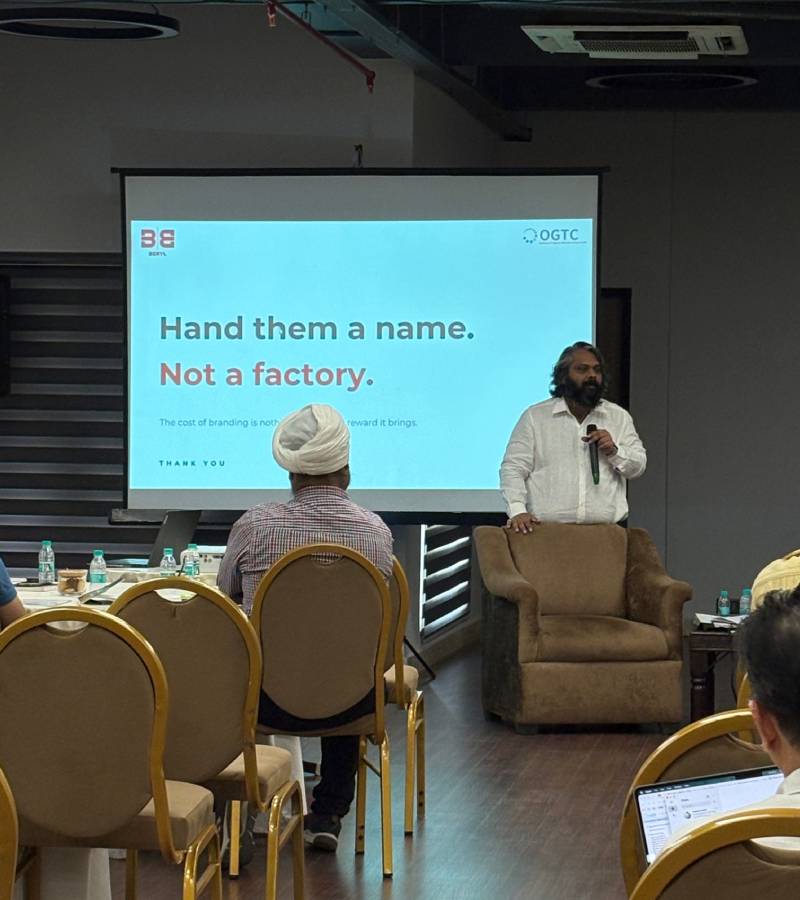
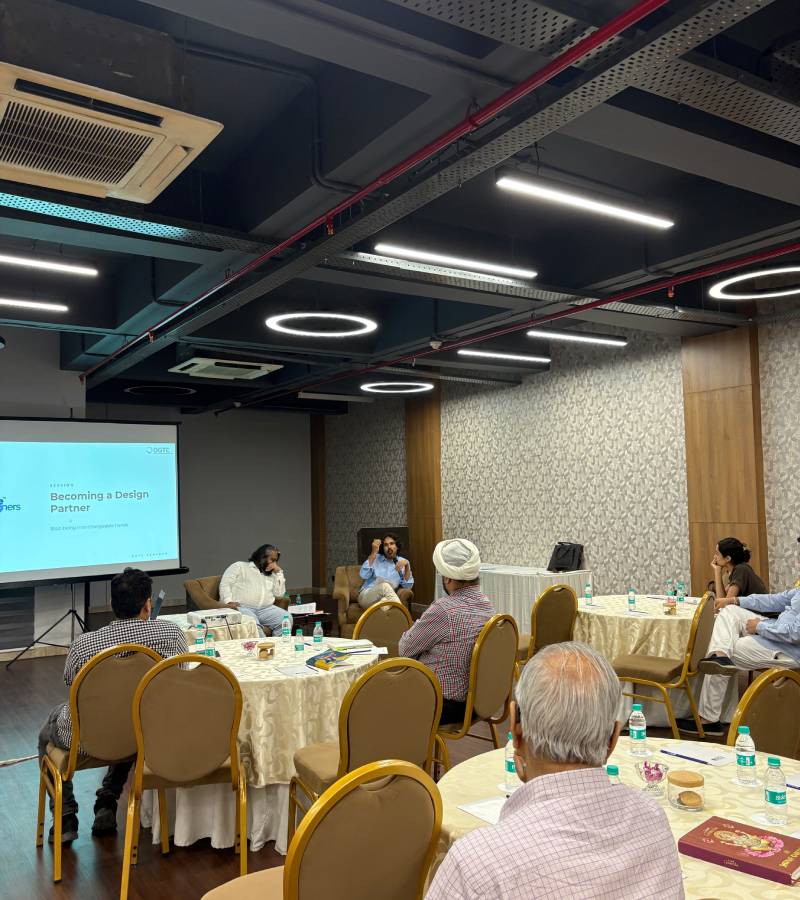
Beryl Agency delivered The Silent Salesperson for OGTC under the leadership of Director General Col. Sheilendra Kapoor. The session ran for two hours on site and was structured as a tight, application-heavy argument: here is how international buyers actually find and shortlist suppliers in 2026, here is what your current digital presence communicates to a buyer who has never spoken to you, and here is the framework you need to change it.
The session was delivered personally by both founders. Prashant Gupta led the brand strategy, buyer intelligence, and SEAM Framework sessions. Akshat Raghava led the competitive landscape analysis and design positioning sessions. Both founders co-delivered the AI prompt exercise and the closing application segment.
Sessions Delivered

The Invisible Sale
How international buyers search, shortlist, and eliminate suppliers using AI-assisted procurement tools before any human contact is made. What signals those tools read, what your digital presence communicates before you are ever contacted, and where most Indian exporters are being evaluated and eliminated without knowing it. This was the session that drew the highest engagement in the room. Members described immediate operational implications for how they manage their websites, digital presence, and buyer-facing communication.

Found as a Cluster, Found as a Brand
How international buyers discover suppliers in 2026. The difference between being found as a geography, Okhla, Delhi, India, and being found as a brand. What search visibility at the brand level requires, and why the two are not the same discovery mechanism. Members identified the gap between how they believed they were being found and how they were actually being discovered by the buyers they most wanted to reach.

The Perception Premium
Why two exporters with identical specifications and pricing earn different margins. What brand perception adds to a supplier’s commercial value, and how to build it without a large marketing budget. The session surfaced the specific perception signals OGTC members were currently missing, and reframed the margin gap as a positioning problem rather than a price problem.

Buyer vs Buying House
How to read the difference between a direct international buyer and a buying house intermediary, and why the distinction matters for long-term margin. How to build a brand that begins attracting the former over time. Members who had built their entire discovery model around intermediaries found this session reconfigured how they thought about their sales architecture.

From Supplier to Brand
The transition from anonymous supply chain player to a recognised manufacturing partner in a buyer’s consideration set. What that shift requires at the brand level, not just the production level. Members received a clear picture of where their business currently sits on the vendor-to-brand spectrum and what the next step on that spectrum looks like.

What Does India Own
Germany has tooling. France has luxury. Italy has craftsmanship. What is the brand territory India’s exporters can credibly occupy, and how to claim it before someone else does. The session identified the narrative advantage available to Indian origin that most OGTC members were currently leaving on the table, and named what it would take to begin claiming it.

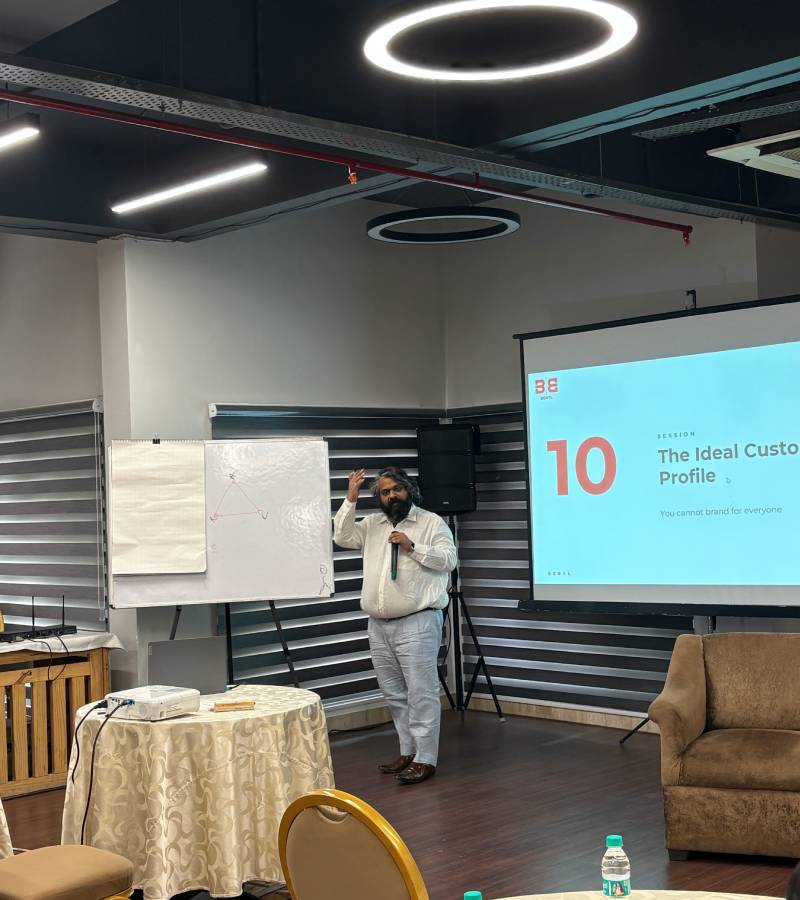
The Ideal Customer Profile
Why exporting to every international buyer is commercially equivalent to being known by none of them. How to define the buyer profile a business is best positioned to serve, and why brand positioning built around that specificity consistently outperforms generalised positioning in buyer shortlisting.

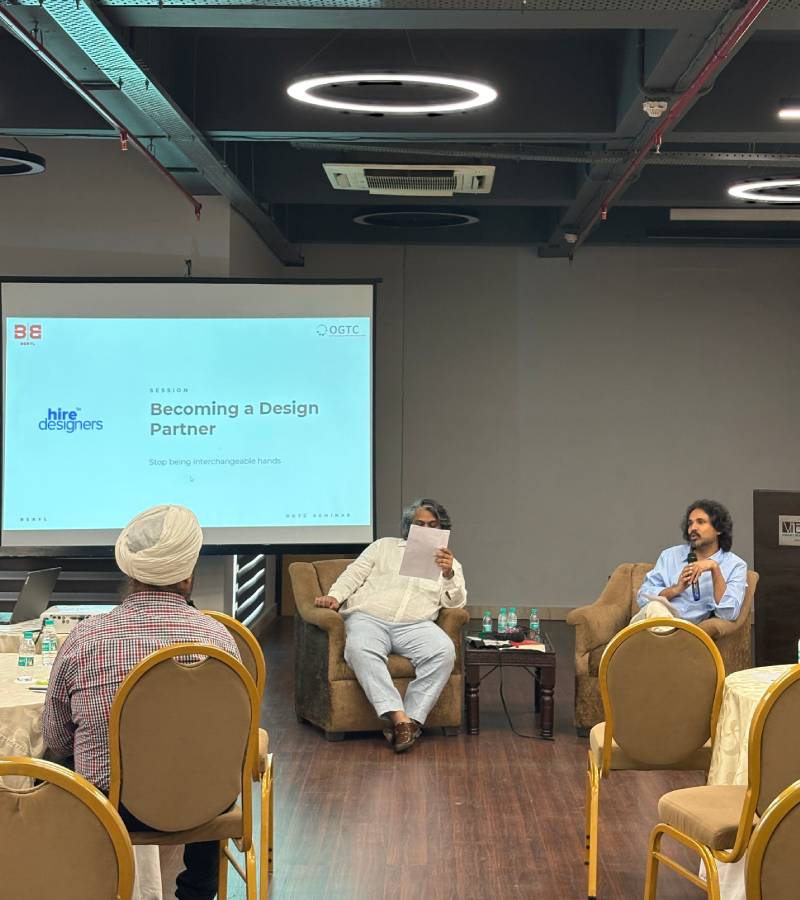
Becoming a Design Partner
The manufacturers converting at better margins today are not waiting to be briefed. They are arriving as design and production partners. What that shift requires in how a business presents, communicates, and shows up in a buyer conversation. Members heard, some for the first time, that the difference between being a vendor and being a collaborator is largely a brand difference, not a capability difference.

Owning Your Own Brand
After decades of building other people’s brands, what it means for an Indian garment and textile exporter to start building their own. The commercial lgic, the risk, the domestic opportunity, and the specific first steps. Members left this session with a clearer articulation of what brand ownership would mean for their business than most had arrived with.

The SEAM Framework
Story, Edge, Assurance, Memory. The four-part brand positioning framework Beryl uses to evaluate and build brand strategy for manufacturers and exporters, applied live to members in the room. Every participant worked through a preliminary SEAM assessment of their own business during the session, producing a working positioning sketch they could take into the next buyer conversation.

AI Prompts to Take Home
Structured prompts that OGTC members could run using any AI tool to simulate how an international buyer using AI-assisted procurement might evaluate their business based on publicly available digital presence. Designed to produce a clear, uncomfortable, actionable picture of where the brand currently stands with a buyer who has never spoken to them. Members who ran the prompts in the room described the experience as the most immediately useful part of the session.
Approach
How Beryl Structured the Session for OGTC
The Silent Salesperson was not built as a generic brand awareness session. It was built as a practitioner-led argument, delivered in the specific commercial context of Indian garment and textile exporters, with every data point, framework, and exercise calibrated to the buyer categories, price points, and competitive pressures OGTC members actually face.
The session structure moved in a deliberate arc. It opened with market reality that most members had not seen framed this way before: how AI-assisted procurement is changing the shortlisting process, and what that means for exporters whose digital presence communicates specifications rather than positioning. It moved into self-diagnosis through the SEAM Framework, where members applied the four-part model to their own businesses. And it closed with the AI prompts, giving every member a working tool they could run the same evening and use to evaluate where they currently stand.
Theory was kept tight throughout. The session ran two hours without padding because the OGTC membership is a room of working founders and business owners, not a conference audience seeking inspiration. Every session was designed to be useful on the drive home.
The pedagogical layer drew from Akshat Raghava’s RISD training and his decade of teaching across premier design institutions in India and internationally. The strategic and buyer intelligence layer drew from Prashant Gupta’s MICA and IIM Kozhikode training, his seat on the CII National Committee on Design Innovation and Design Policy, and 16 years of running Beryl Agency across 1573 clients in 19 countries and 67 industries.
Outcomes
What Changed in the Room and After It
Quantitative outcomes from the OGTC engagement are not tracked at the cluster level, as the seminar was a single session engagement without a structured follow-up measurement framework. The qualitative outcomes from the room, however, were significant enough to be described by Director General Col. Sheilendra Kapoor as among the highest-engagement programming the cluster had run.

Members reframed branding from a cost to a lever.
Several OGTC members noted they had never previously approached their business as a brand asset. The session produced a shift in how members understood the commercial value of their own name, their digital presence, and their buyer communication, moving from branding as an expenditure to branding as a structural tool with implications across margins, hiring, financial relationships, and international negotiation.

The AI shortlisting session produced the highest immediate engagement.
The session on AI-assisted buyer shortlisting, specifically how procurement tools evaluate a supplier’s digital presence before any human contact, drew the most visible response in the room. Members described immediate operational implications for how they manage their websites, their directory listings, and their buyer-facing communication. Several noted they would be reviewing their digital presence the same week.

The SEAM Framework gave members a working vocabulary.
Before the session, most members did not have a shared language for what their business stood for beyond category and location. After the SEAM exercise, members left with a preliminary positioning sketch and a framework they could use in buyer conversations, vendor briefings, and internal strategy discussions.

The AI prompts produced immediate application.
Members who ran the AI prompts during the session or in the days following described the experience as the most directly actionable output they had received from cluster programming. The prompts produced an honest picture of where their brand currently stands to an international buyer, and several members used the output to identify specific changes to make within the same week.
Outcomes
Every business is a brand. Most manufacturers have spent decades building a brand for someone else. At some point, you have to ask: what are you building for yourself.
Prashant Gupta, Beryl Agency
The manufacturers converting at better margins today arrive as design partners. They are not waiting to be briefed. That is the difference between being someone's vendor and being a brand.
Akshat Raghava, Beryl Agency
What This Means for Your Cluster
If your export cluster or industry association is running member programming that produces credentials but not commercial shifts, the OGTC engagement is a working template for what a structured branding intervention can deliver in a single two-hour session.
The Silent Salesperson is designed for export clusters and industry associations whose members are competing in international markets where brand perception is now a shortlisting filter. It does not require members to have a marketing team, a brand book, or prior brand strategy. It requires only that the room is full of people who are serious about what their business does and ready to hear an honest account of how they are currently seen.
Where the seminar fits best:
— Export clusters and industry associations whose members are competing on price alone and losing orders they believe they should have won.
— Clusters where member discovery happens through buying houses rather than direct inbound, and where that dependency is understood as a margin problem.
— Associations planning member-facing programs that produce actionable commercial outcomes, not attendance figures.
— Industry groups where the domestic opportunity is growing but members have not yet developed the brand thinking to participate on their own terms.
— Clusters whose members have built for other brands for decades and are beginning to ask what they are building for themselves.
why beryl agency
| Credential | Detail |
|---|---|
| Years of agency practice | 16 years |
| Clients served | 1573 across 19 countries and 67 industries |
| Fortune 500 engagements | 4, including Hyundai and Mobil |
| Akshat Raghava credentials | RISD alumnus, 4-time I Design Award winner, RISD Faculty Award recipient, decade-plus teaching across premier design institutions |
| Prashant Gupta credentials | MICA and IIM Kozhikode, CII National Committee on Design Innovation and Design Policy, 16 years agency leadership |
| Delivery model | Both founders personally deliver every program |
Frequently Asked Questions
Who is OGTC and what does the cluster represent.
What did Beryl Agency deliver at OGTC.
What is the SEAM Framework and how was it applied at OGTC.
What were the AI prompts delivered at OGTC
What outcomes did the OGTC session produce.
The session produced several significant qualitative shifts among OGTC members. Members reframed branding from a marketing expenditure to a structural commercial lever with implications across margins, hiring, financial relationships, and international negotiation. The session on AI-assisted buyer shortlisting produced the highest immediate engagement, with members identifying operational implications for their digital presence the same week. The SEAM Framework gave members a working vocabulary for what their business stands for that most had not previously articulated. And the AI prompts produced immediate application, with members describing the output as the most directly useful thing they had received from cluster programming. Quantitative outcomes are not tracked at the single-session cluster level, but cluster leadership described the session as among the highest-engagement programming OGTC had run.