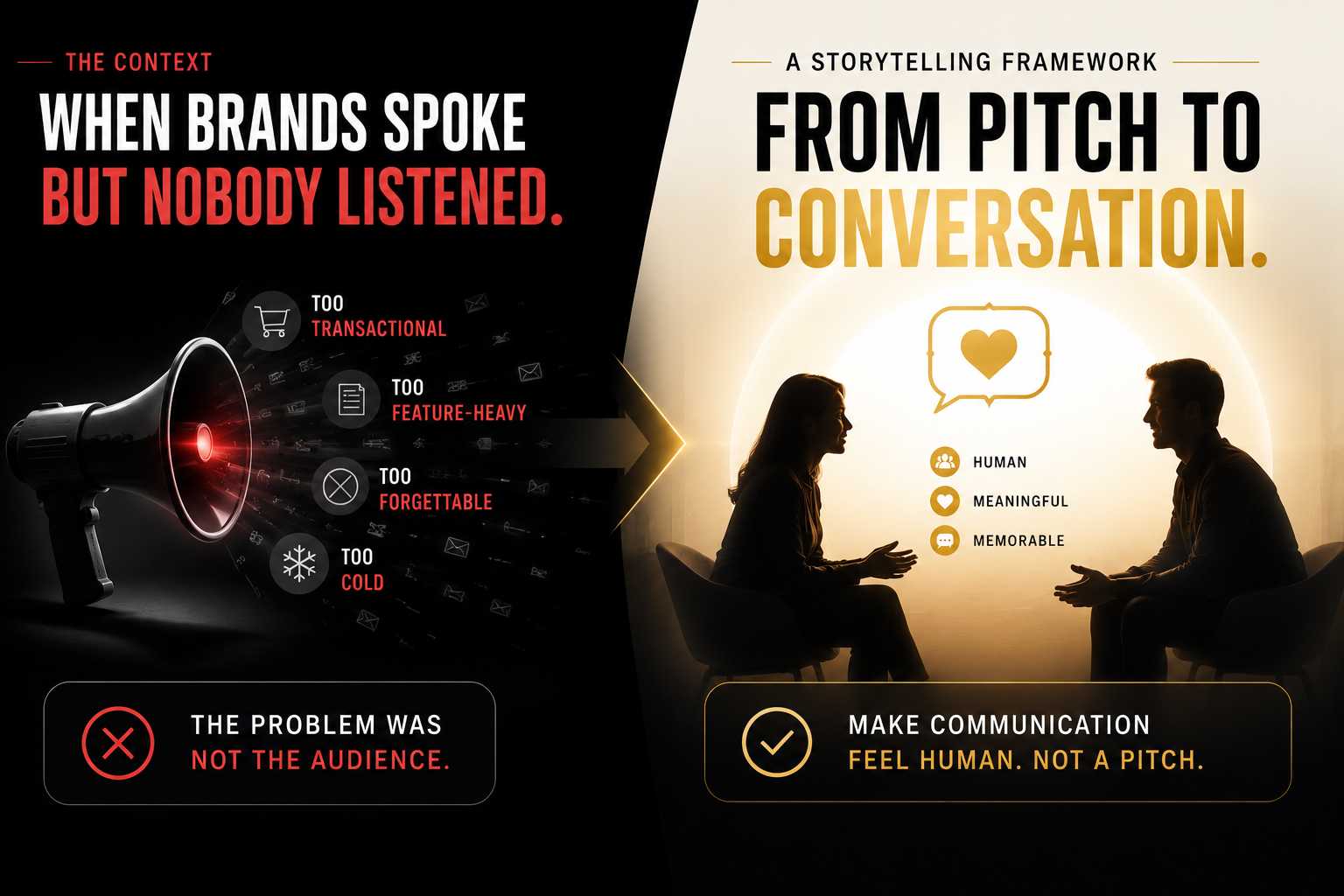
The Context. When Brands Spoke But Nobody Listened
Marketing budgets were growing, but attention was shrinking. Too transactional. Too feature-heavy. Too forgettable. Too cold.
The problem was not the audience. It was how brands chose to speak to them. A storytelling framework was built to make communication feel less like a pitch and more like a conversation.
The Challenge. To Build a Framework That Feels Universal
The brief was clear. A structure that works for product brands. For service companies. For every organisation that needs to be heard.
It needed to be strategic but not mechanical. Emotional but not manipulative. Simple but not shallow.
A framework that does not choose a format. A framework that includes every story worth telling.
The Insight. Why Audiences Reject Most Brand Communication
Our research revealed a familiar truth. People disconnect instantly when communication feels irrelevant or self-serving.
Storytelling psychology showed
Customers want familiarity. Teams want direction. A voice system must speak to both.
feature-led messages reduce emotional engagement
overly polished content feels inauthentic
jargon-heavy language creates distance
brand-first narratives feel one-sided
We approached the framework like system design.
Our strategy revolved around three principles
-Purpose: create a human-first, emotion-led communication structure -Design: ensure clarity at every stage of the narrative arc -Tone: honest, warm, and emotionally resonant
The goal was not to entertain audiences. It was to make them feel understood.
The Strategy. Designing Connection, Not Just Content
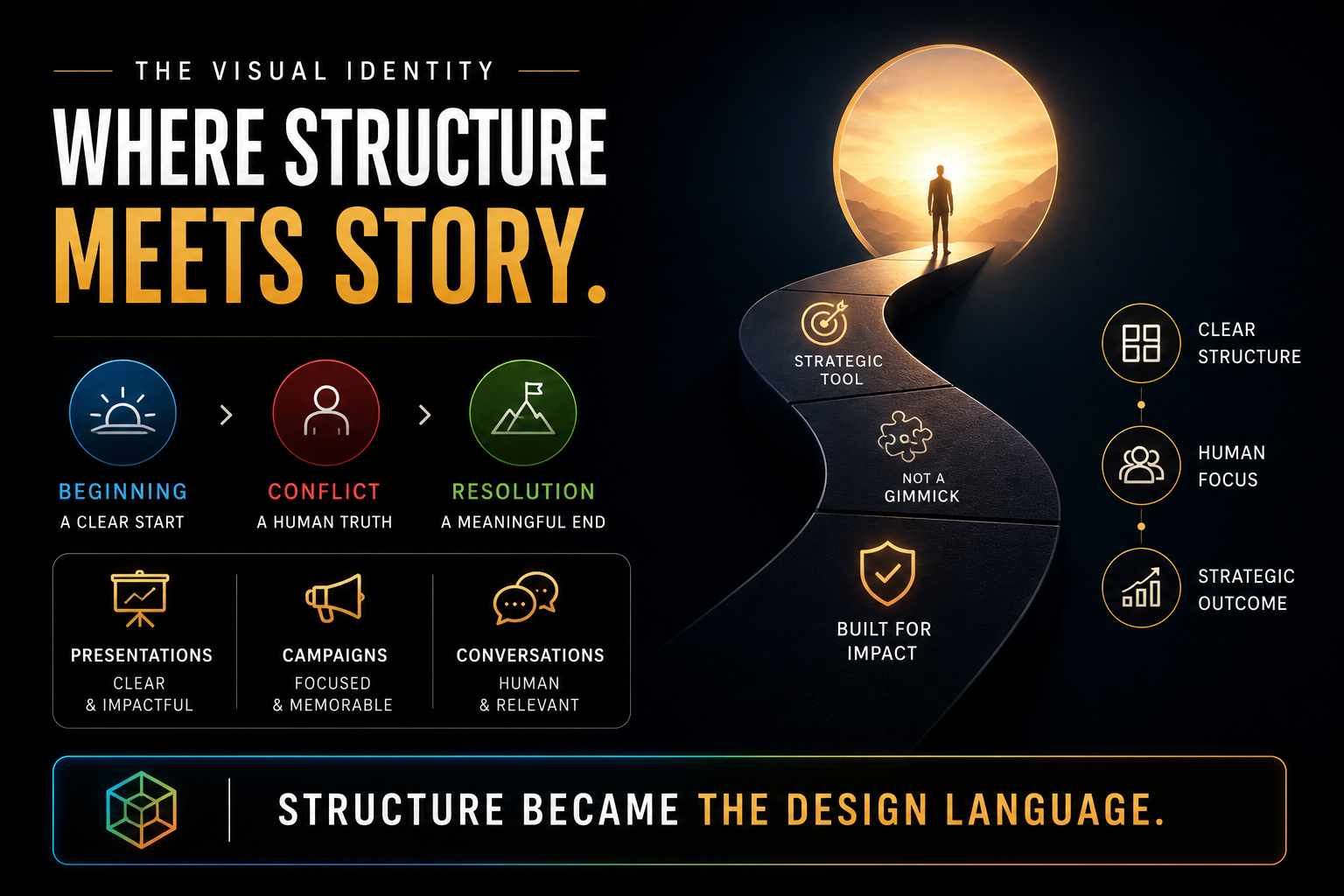
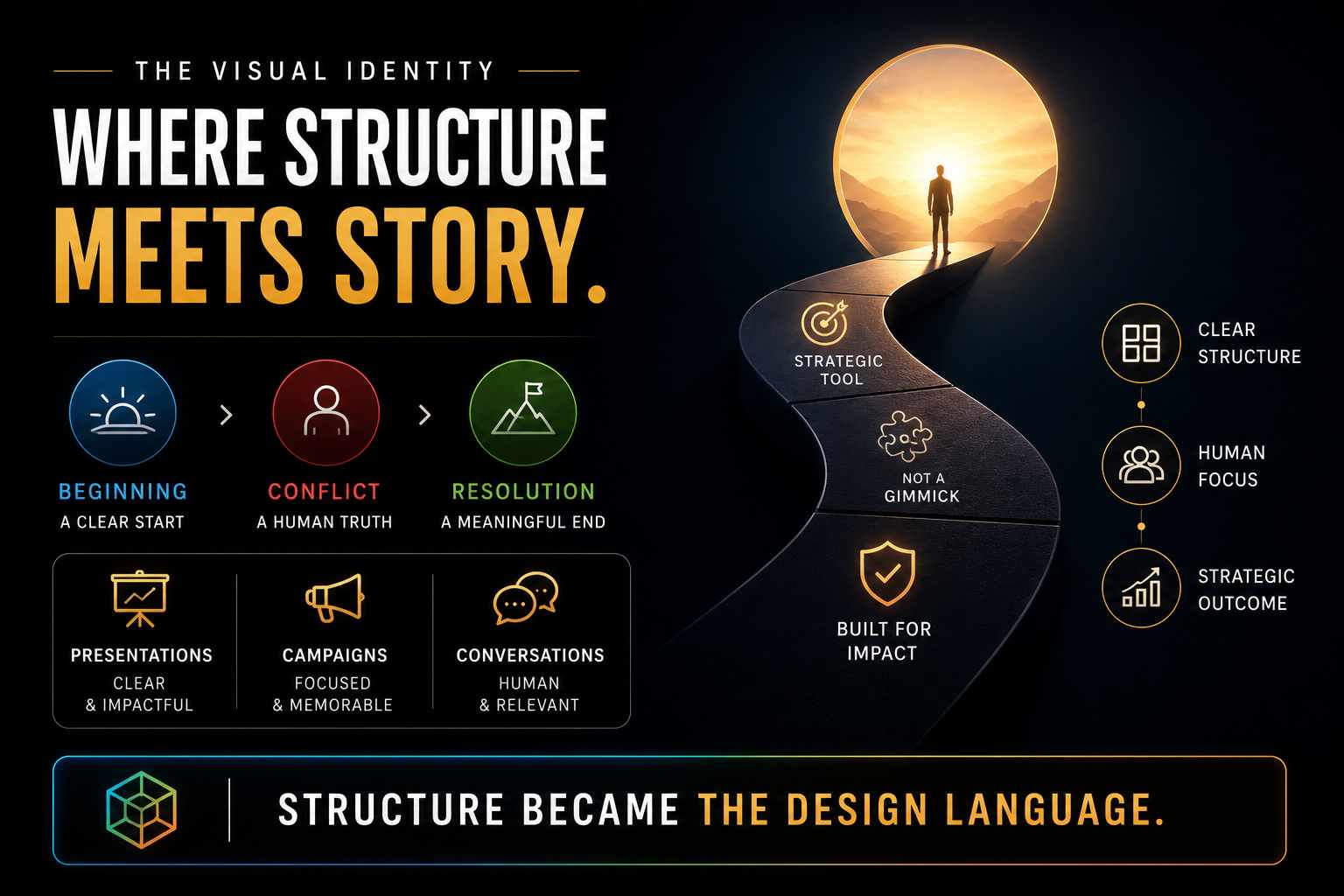
The Visual Identity. Where Structure Meets Story
Even though this was a communication framework, the shape of the narrative guided the entire system.
A clear beginning. A human conflict. A meaningful resolution.
The framework sits comfortably in presentations, campaigns, and conversations. It behaves like a strategic tool, not a creative gimmick.
Structure became the design language.
The Color Psychology. Why Clarity Matters
In brand communication, clarity creates trust. Just as color psychology guides emotional perception, narrative clarity guides audience acceptance.
The storytelling framework feels purposeful without being prescriptive emotional without being manipulative structured without losing spontaneity
The framework creates emotional safety the same way balanced design does.
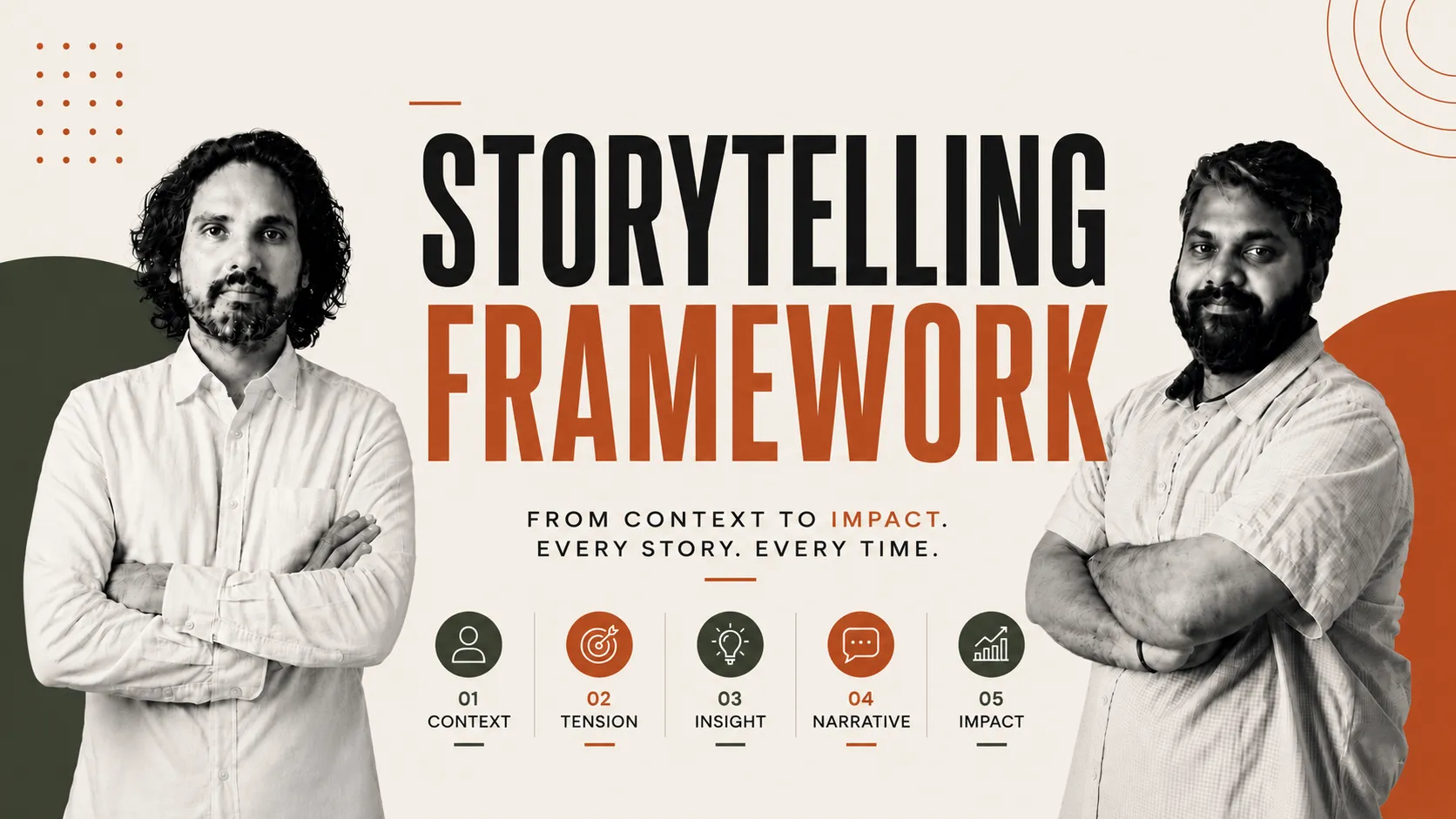
The narrative system behind the framework is built on five elements
Character, a relatable human at the centre Conflict, a tension the audience recognises Clarity, a message that lands without effort Resolution, an outcome that feels earned Relevance, rooted in the audience’s real world
These elements create a story that belongs wherever the audience belongs.
The Design Language. The Five Elements of Memorable Storytelling
audience recall increased across every channel and format
campaigns felt coherent and emotionally consistent
teams aligned faster around a shared communication structure
the framework supported long term brand narrative architecture
The framework did not just organise content. It made the brand feel real, trustworthy, and worth remembering.
The Tangible Impact. When Storytelling Redefined Communication
After introducing the storytelling framework, the impact was immediate.
The Achievement. Turning Simplicity Into Strength
The storytelling framework transformed from a creative tool into a strategic system. It redefined what brand communication could feel like.
For Beryl, this became a benchmark in human-centred communication design. Proof that simplicity, when crafted carefully, becomes strategic power.
What This Means for the Future of Brand Communication
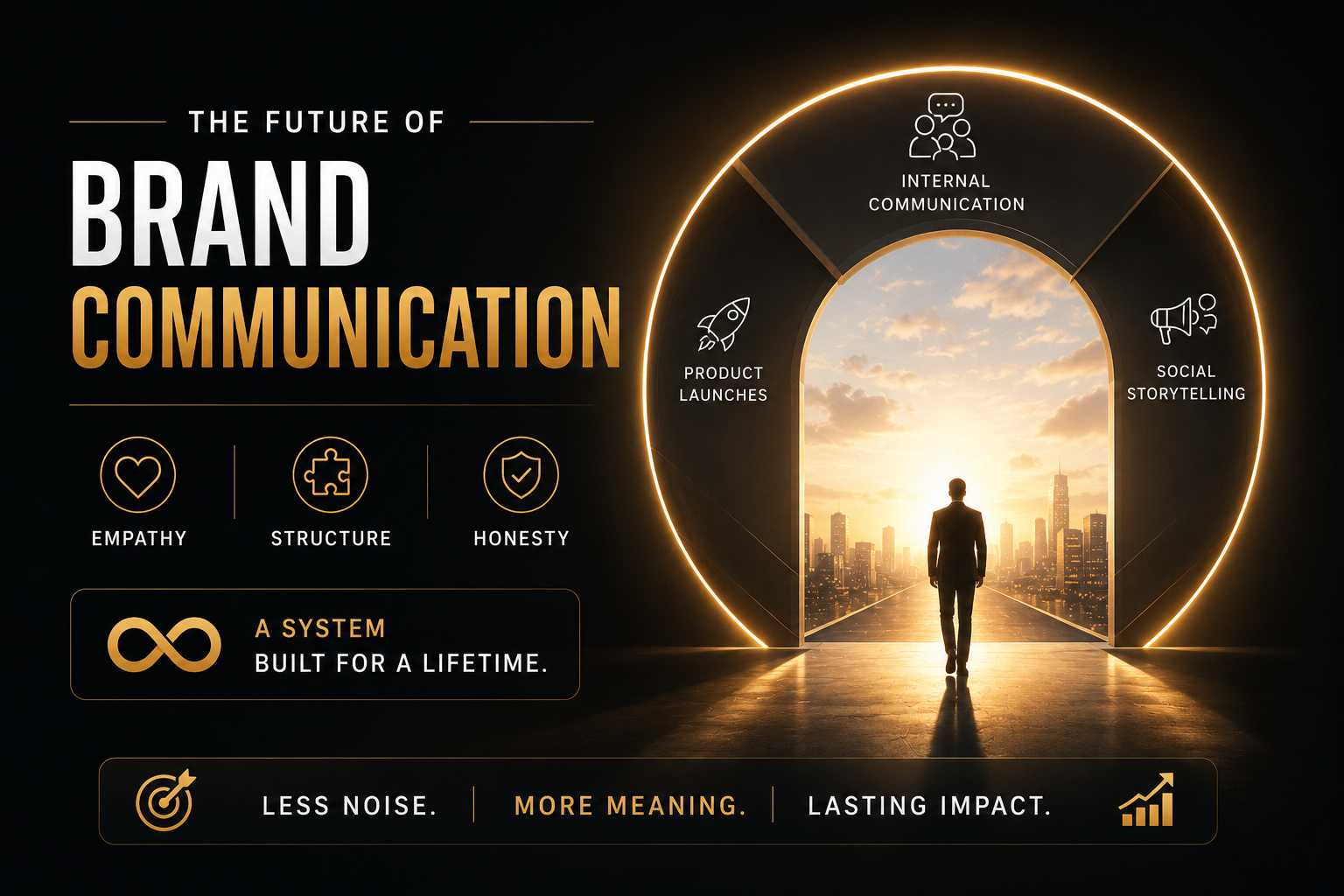
The storytelling framework proves that brands do not need noise or complexity. They need empathy, structure, and honesty.
The framework creates space for growth into internal communication, product launches, and social storytelling. A system built not for a moment, but for a lifetime.
Storytelling for brands requires psychology, not just creativity. It demands understanding how people feel and how they decide.
Our approach allowed every brand to be human, structured, and emotionally grounded.
What We Delivered
– storytelling strategy and narrative territory mapping – emotional arc and character framework design – audience relevance and conflict identification – shortlist refinement from over ninety narrative directions – final story structure and meaning architecture
Each step ensured the framework was honest, scalable, and timeless.
The Beryl Edge
With fifteen plus years in branding, Beryl understands how to merge psychology, culture, and strategy.
Our storytelling approach combines emotional insight, narrative structure, and long term brand vision.
That is why the result was a framework that feels like it belongs. A system that makes every brand story worth hearing.
What We Learned
Audiences do not want to be sold to. They want to be spoken to.
The storytelling framework reminded us that structured emotion is not softness. It is strength built with empathy.
FAQs
Why does storytelling work better than feature-led communication
Because stories create emotional connection, and connection creates trust.
How many narrative directions were explored
More than ninety storytelling territories across multiple brand categories.
What makes this framework future ready
Its simplicity allows application across every channel, format, and audience.
Why does storytelling matter so much for brands
Because trust, recall, and belonging start with a story that feels real.
What is narrative design in brand communication
A blend of psychology, structure, emotional clarity, and strategic restraint.