The Context. When Brands Looked But Nobody Noticed
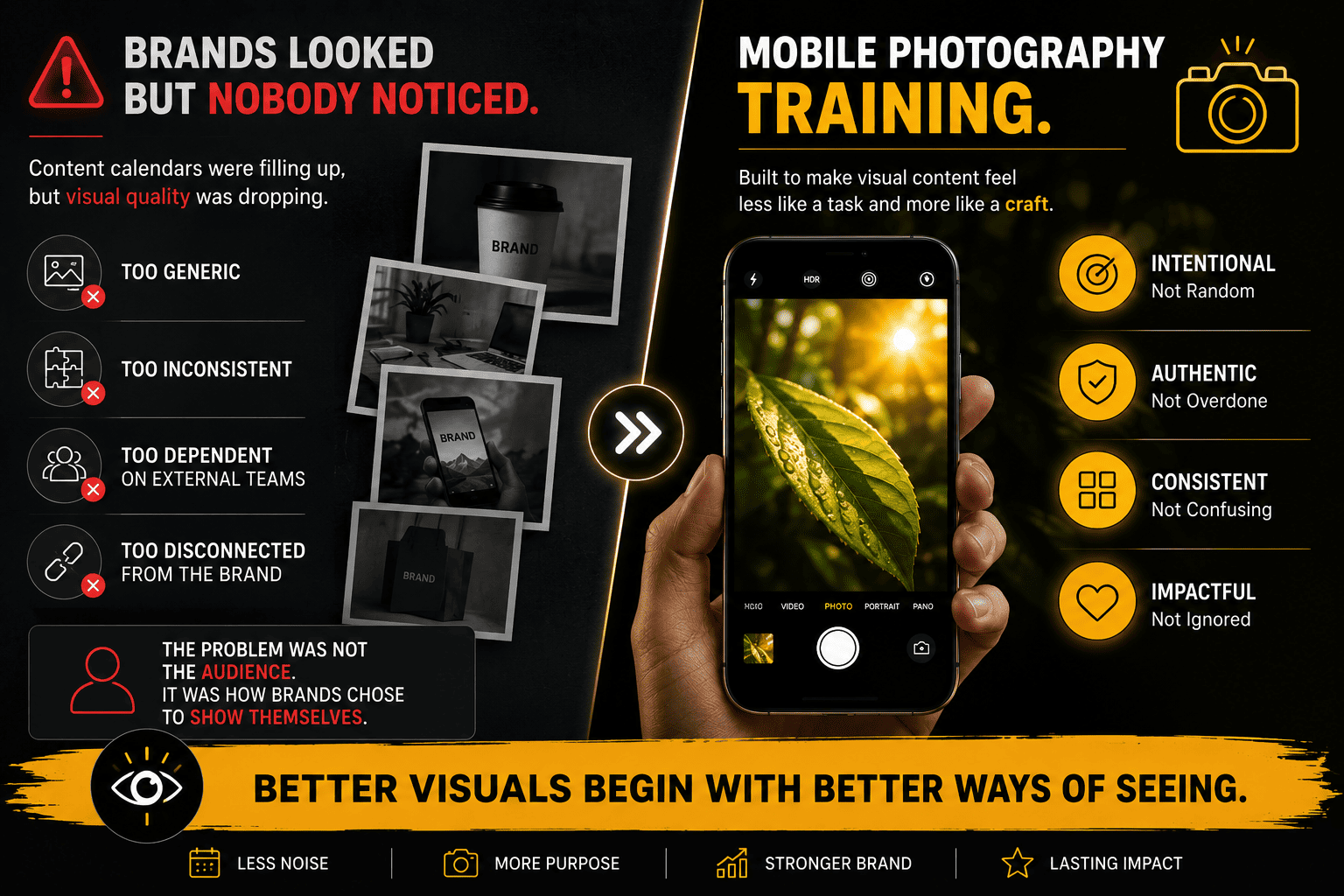
Content calendars were filling up, but visual quality was dropping. Too generic. Too inconsistent. Too dependent on external teams. Too disconnected from the brand.
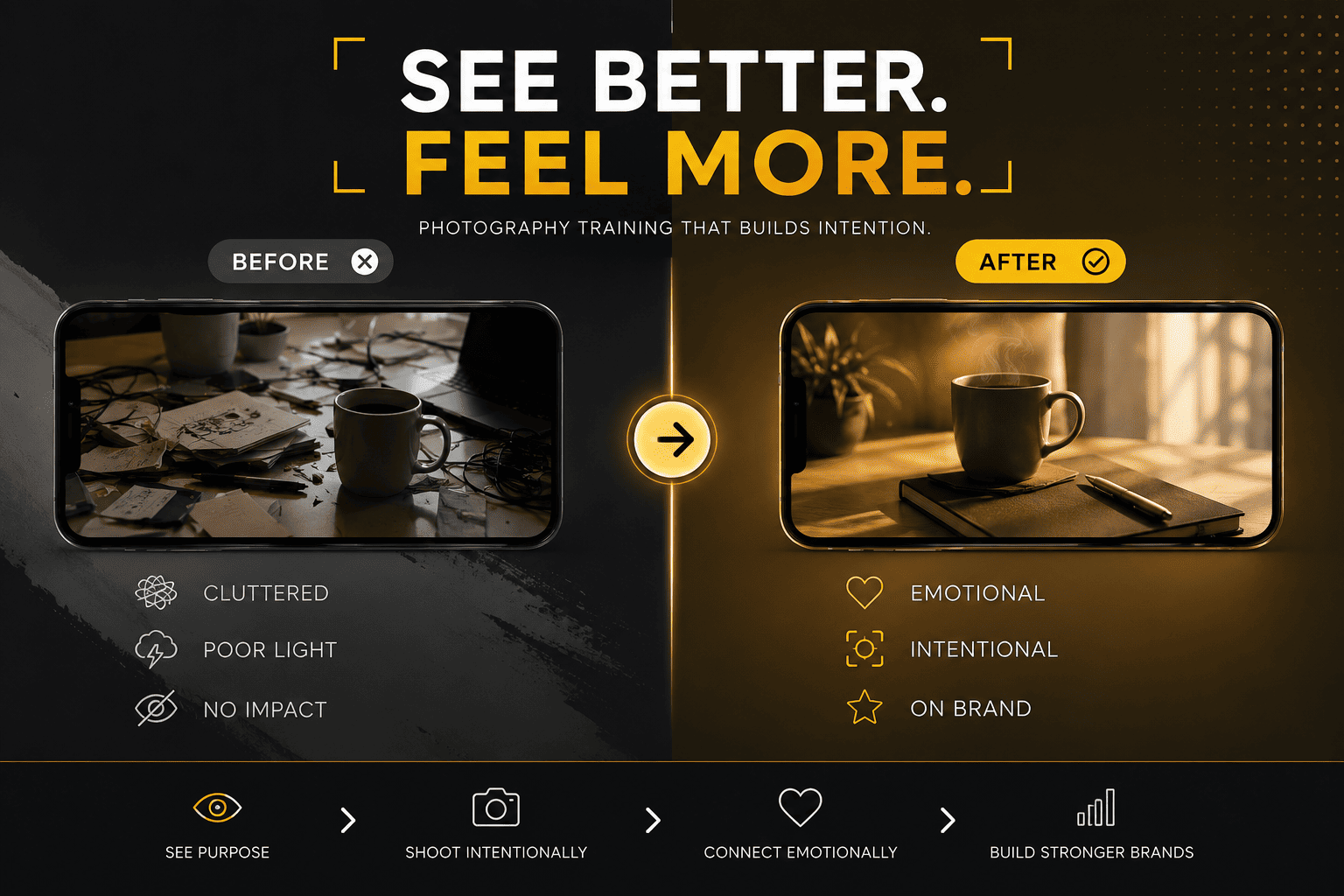
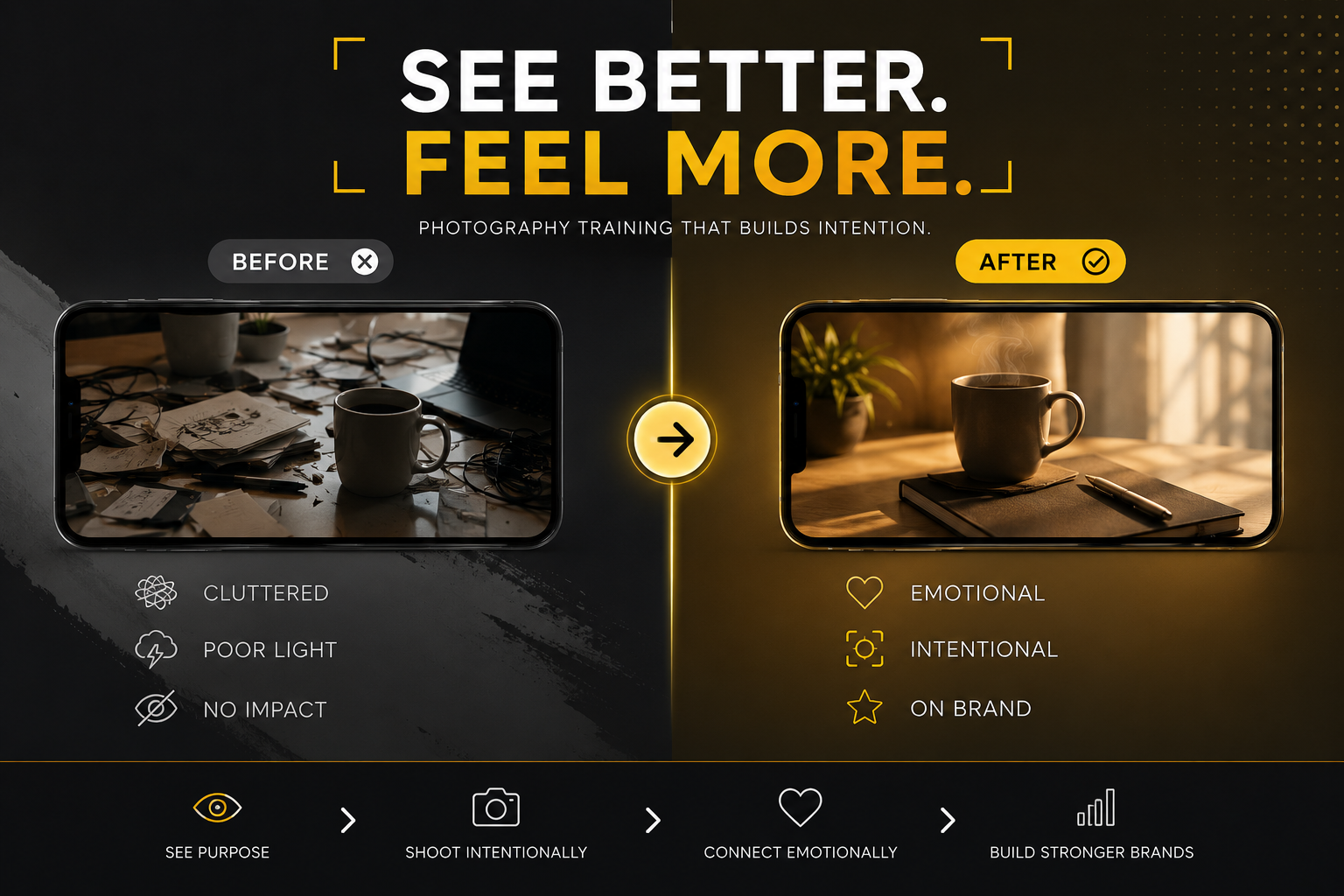
The problem was not the audience. It was how brands chose to show themselves. Mobile photography training was built to make visual content feel less like a task and more like a craft.
The Challenge. To Build a Training That Feels Universal
The brief was clear. A programme that works for marketing teams. For founders and solo creators. For every professional who needs their visuals to speak.
It needed to be technical but not overwhelming. Creative but not abstract. Structured but not rigid.
A training that does not choose a skill level. A training that includes every eye worth developing.
The Insight. Why Teams Struggle With Visual Content
Our research revealed a familiar truth. People disconnect from content creation when it feels too complex or too far from their current skill.
Visual psychology showed
Teams want to feel capable. Brands want to look credible. A training must serve both.
-Purpose: create a skill-first, confidence-led visual education programme -Design: ensure progression at every stage of the learning arc -Tone: practical, encouraging, and creatively empowering
The goal was not to create photographers. It was to make every team member feel like one.
The Strategy. Designing Confidence, Not Just Technique
The Visual Identity. Where Skill Meets Story
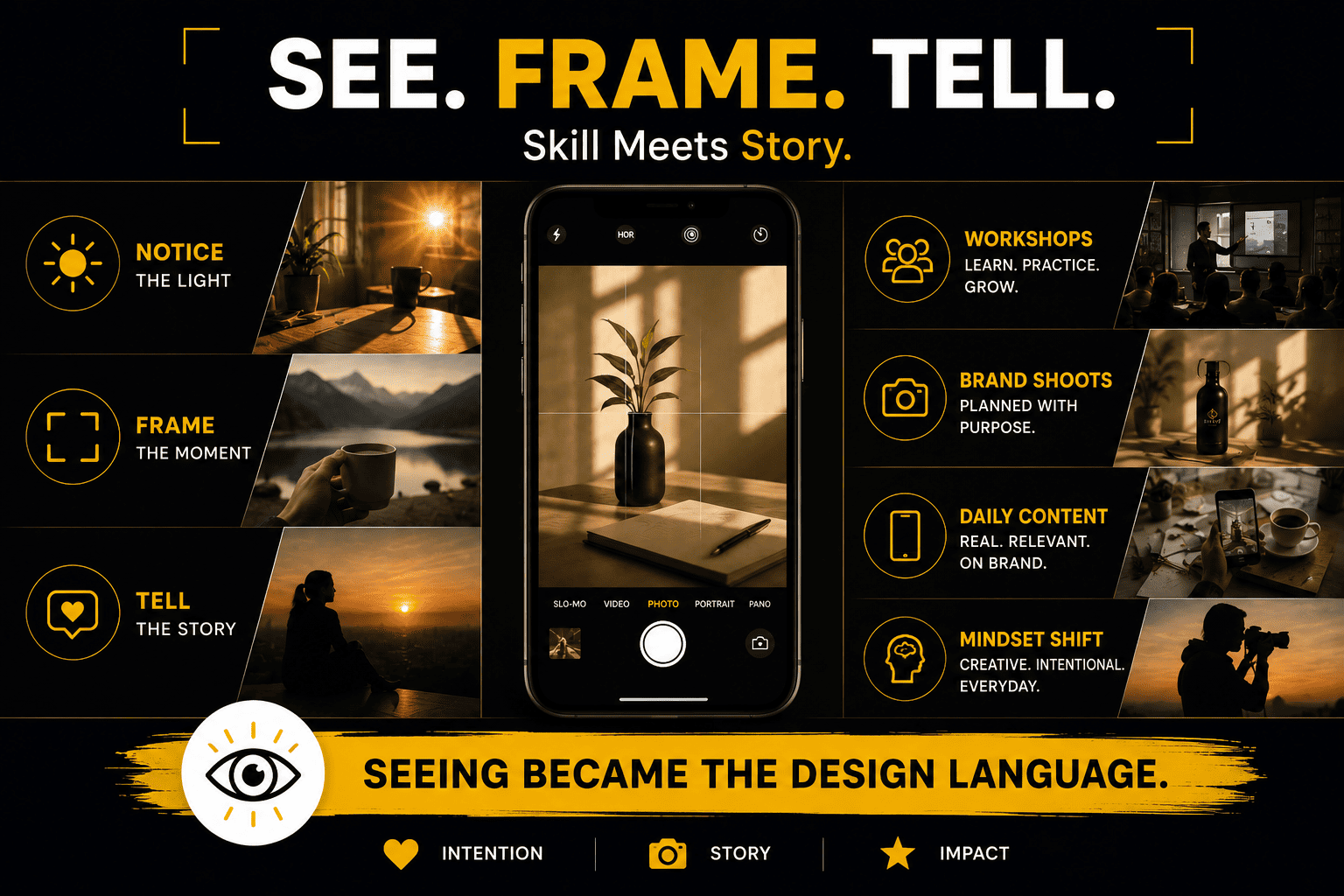
Even though this was a training programme, the act of seeing shaped the entire system.
Learning to notice light. Learning to frame a moment. Learning to tell a story in a single image.
The training sits comfortably in workshops, brand shoots, and day-to-day content creation. It behaves like a creative mindset shift, not a technical manual.
Seeing became the design language.
The Color Psychology. Why Consistency Matters
In visual branding, consistency creates recognition. Just as color psychology guides emotional perception, visual consistency guides brand acceptance.
Mobile photography training makes content feel intentional without being overproduced authentic without being careless structured without losing spontaneity
The training creates visual confidence the same way a strong design system does.
The visual system behind the training is built on five elements
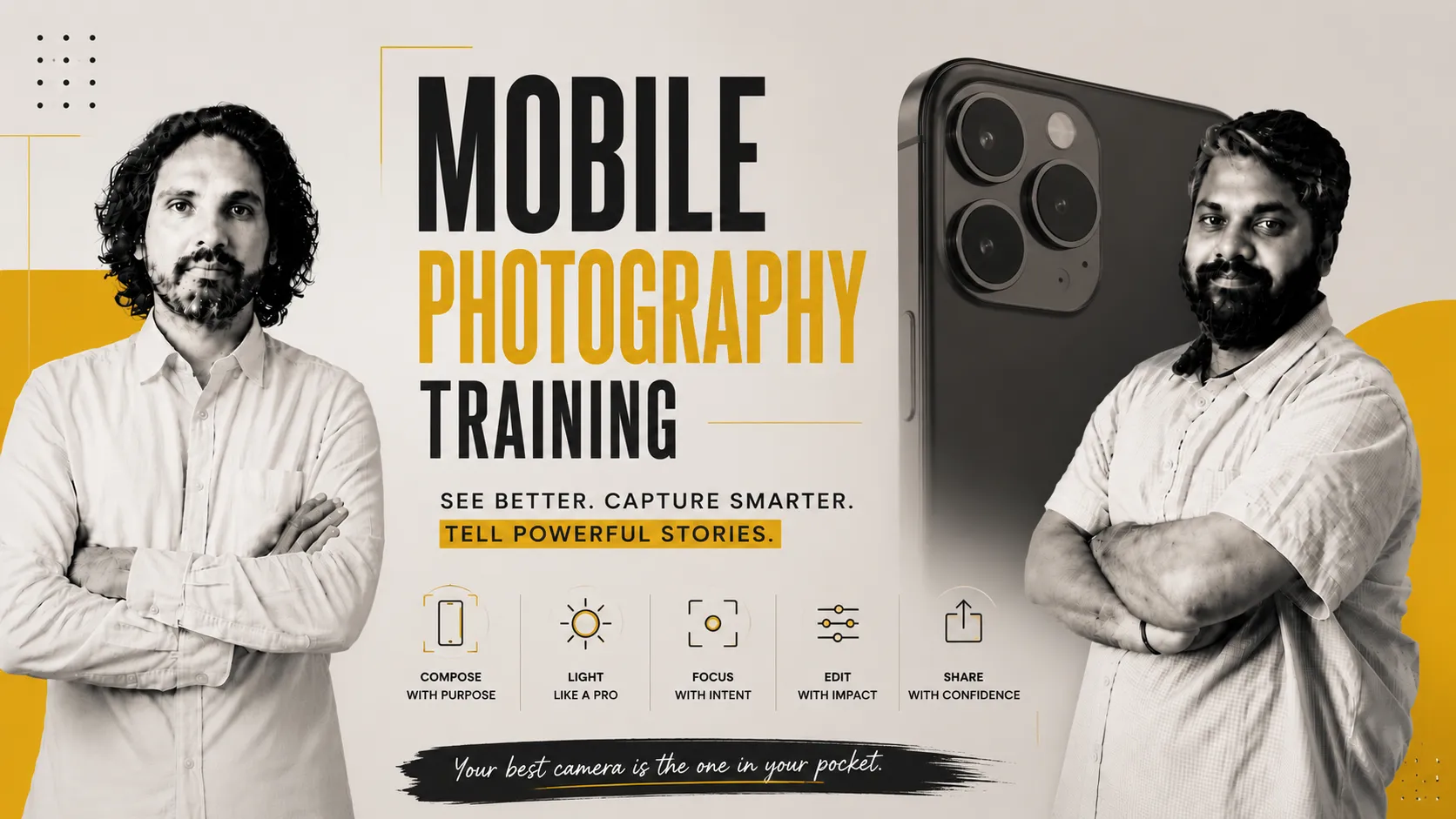
Light, understanding natural and available sources Composition, framing that guides the eye with purpose Colour, consistency that reinforces brand identity Story, every image communicates something real Simplicity, rooted in what the phone already does well
These elements create imagery that belongs wherever the brand belongs.
The Design Language. The Five Elements of Powerful Mobile Photography
content quality increased across every platform and format
shoots felt faster and more intentional without external crews
teams aligned quickly around a shared visual language
the training supported long term brand content architecture
The training did not just improve photos. It made the brand feel present, polished, and worth watching.
The Tangible Impact. When Training Redefined Visual Output
After introducing the mobile photography training, the impact was immediate.
The Achievement. Turning Simplicity Into Strength
Mobile photography training transformed from a skill session into a strategic visual capability. It redefined what in-house content creation could look like.
For Beryl, this became a benchmark in visual empowerment for brands. Proof that simplicity, when crafted carefully, becomes strategic power.
What This Means for the Future of Brand Visual Content
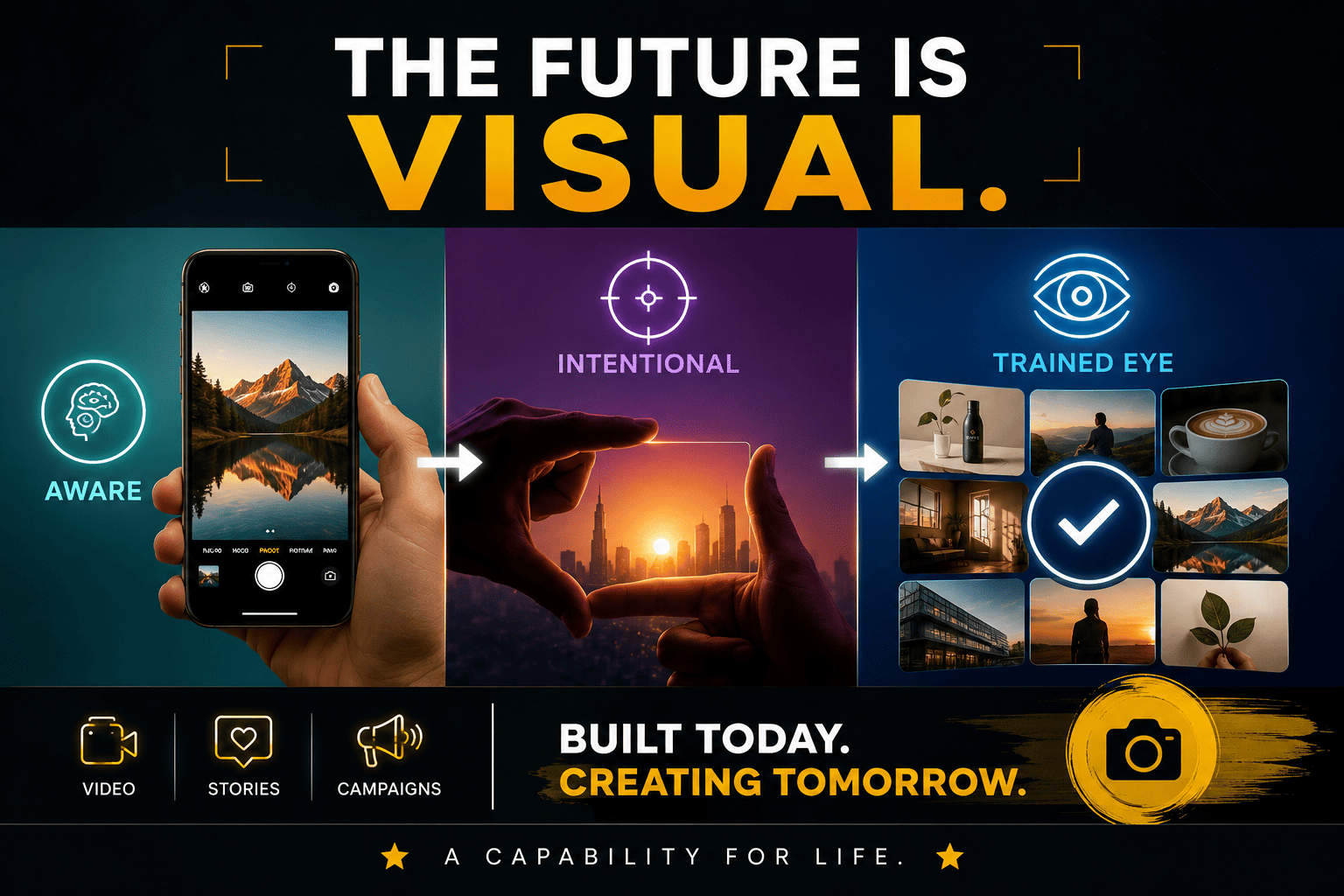
Mobile photography training proves that brands do not need big crews or expensive equipment. They need awareness, intention, and a trained eye.
The training creates space for growth into video content, social storytelling, and campaign production. A capability built not for a moment, but for a lifetime.
Our Perspective. Why Visual Training Requires Emotional Intelligence
Photography training for brands requires psychology, not just technique. It demands understanding how people see and how audiences feel.
Our approach allowed every team to be capable, intentional, and visually grounded.
What We Delivered
– visual strategy and photography territory mapping – light, composition, and colour framework design – brand visual consistency and style guide development – shortlist refinement from over eighty visual direction references – final photography framework and meaning architecture
Each step ensured the training was practical, scalable, and timeless.
The Beryl Edge
With fifteen plus years in branding, Beryl understands how to merge psychology, culture, and strategy.
Our visual training approach combines creative insight, technical structure, and long term brand vision.
That is why the result was a training that feels like it belongs. A programme that makes every brand image worth seeing.
What We Learned
Teams do not want to be overwhelmed. They want to be empowered.
Mobile photography training reminded us that accessible skill is not simplification. It is strength built with empathy.
FAQs
Why does mobile photography work as well as professional equipment
Because intention and skill matter more than the device in your hand.
How many visual directions were explored during the training design
More than eighty visual references across multiple brand categories and content styles.
What makes this training future ready
Its simplicity allows application across every platform, format, and visual need.
Why does visual quality matter so much for brands
Because trust, recognition, and recall start with an image that feels real.
What is visual design thinking in photography training
A blend of psychology, composition, colour awareness, and strategic restraint.