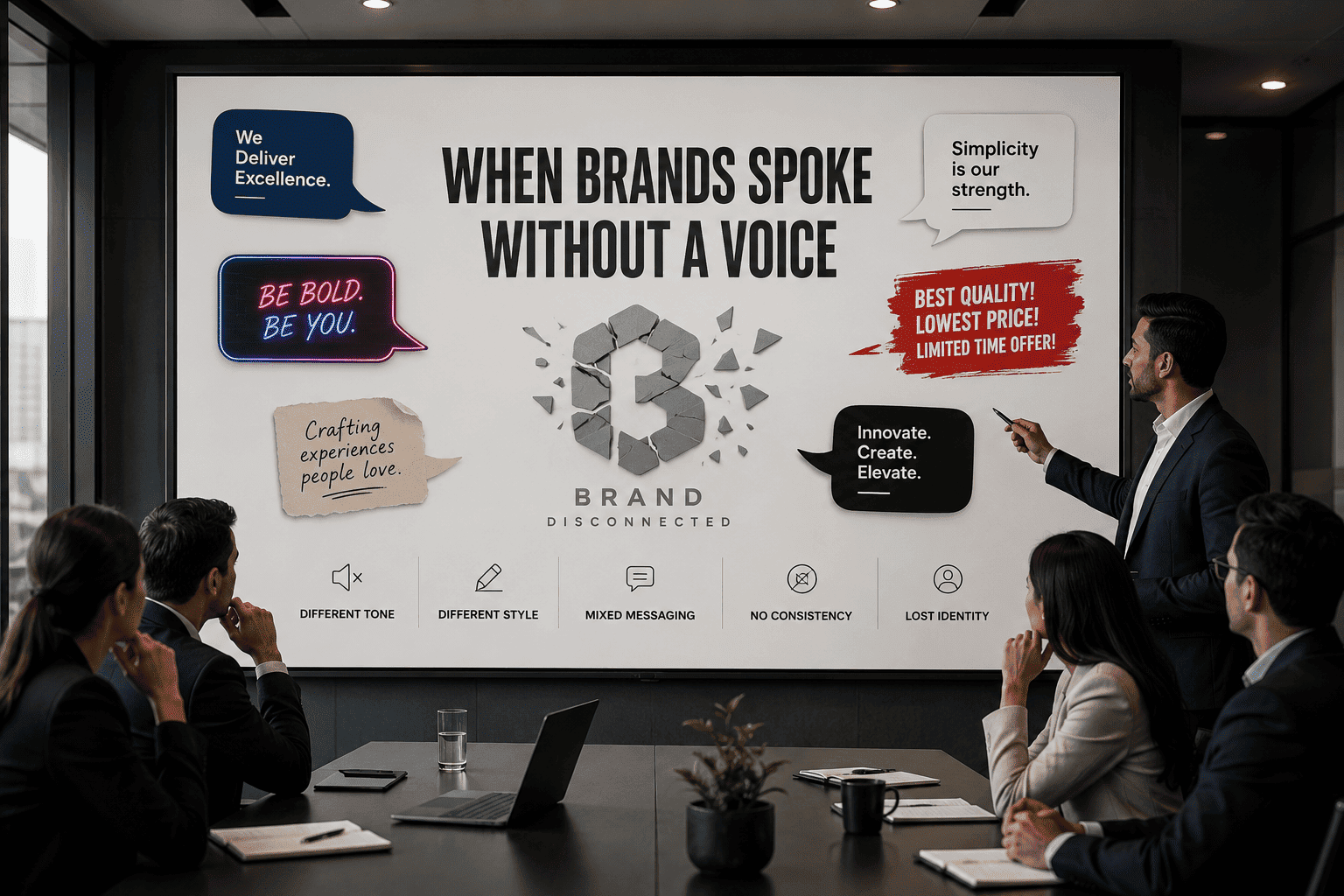
Content was everywhere, but personality was nowhere.
Too corporate.
Too inconsistent.
Too mechanical.
Too forgettable.
The problem was not the audience.
It was how the brand spoke to them.
A brand voice system was created to sound like a person teams could trust and customers would remember.
The Challenge. To Build a Voice That Feels Unmistakably Consistent
The brief was clear. A voice that works on Instagram. On a pitch deck. In an error message. In an apology email.
It needed to be human but not sloppy. Confident but not arrogant. Warm but not naive.
A voice that does not choose a mood. A voice that holds its character across every context.
The Insight. Why Brands Sound Inconsistent
Our research revealed a familiar truth. Audiences disconnect instantly when a brand sounds different every time.
Communication psychology showed
Customers want familiarity. Teams want direction. A voice system must speak to both.
inconsistent tone erodes trust
overly formal writing creates distance
hollow brand words feel meaningless
reactive tone shifts feel uncontrolled
We approached voice design like system design.
Our strategy revolved around three principles
– Purpose: create a distinct, ownable brand personality – Design: ensure the voice works across formats and functions – Tone: adaptive, intentional, and emotionally grounded
The goal was not to write rules. It was to define a character.
The Strategy. Designing Character, Not Guidelines
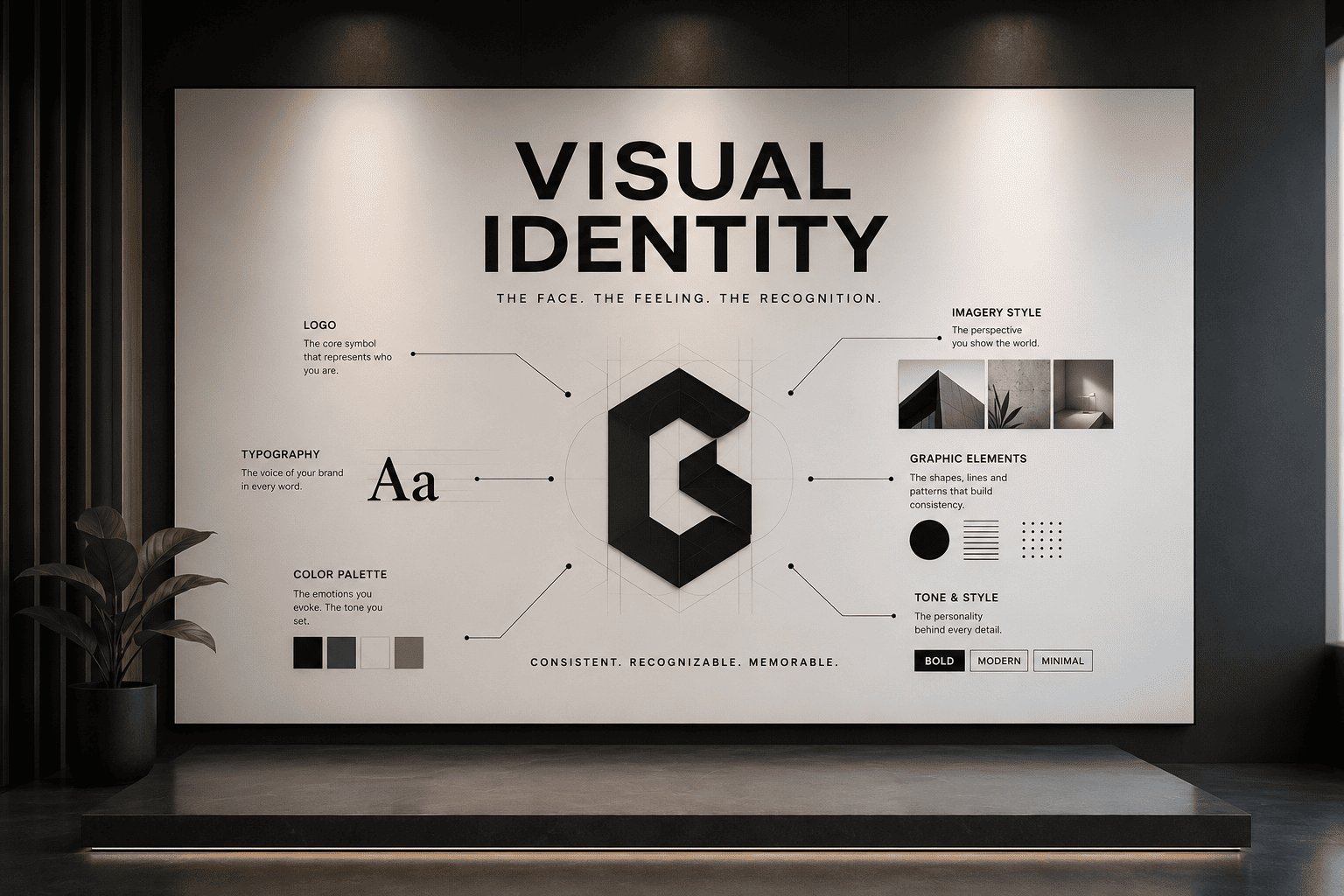
The Visual Identity. Where Voice Meets Visuals
Even though this was a language project, the tone of the words shaped the visual system.
Precise vocabulary. Grounded sentence rhythm. No filler. No fluff.
The voice system sits comfortably in long-form content, social captions, and one-line taglines. It behaves like a person, not a product manual.
Clarity became the design language.
The Tone Psychology. Why Consistency Creates Safety
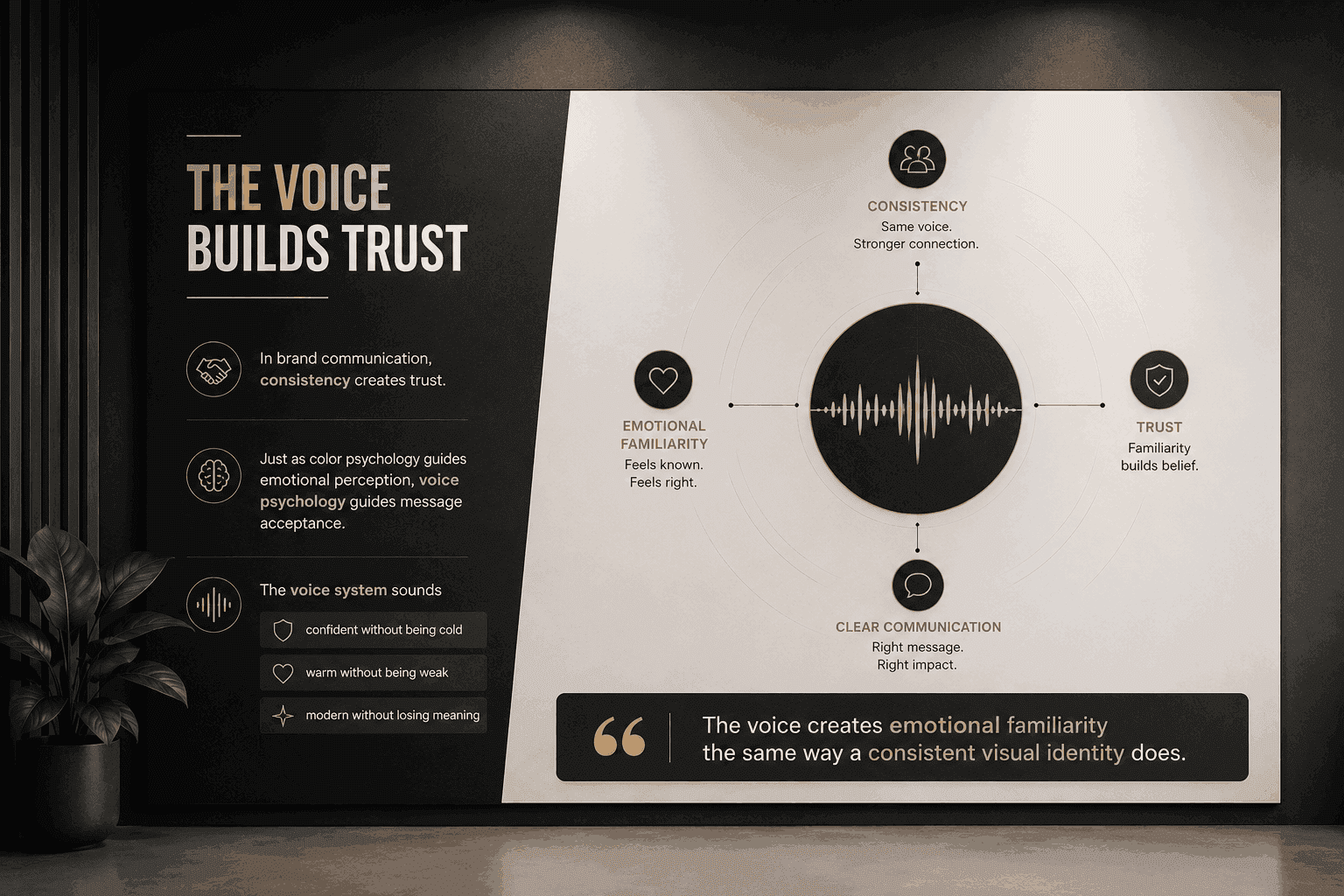
In brand communication, consistency creates trust. Just as color psychology guides emotional perception, voice psychology guides message acceptance.
The voice system sounds confident without being cold warm without being weak modern without losing meaning
The voice creates emotional familiarity the same way a consistent visual identity does.
The linguistic system is built on five elements
Character, the personality that never changes Tone, the emotional register that adapts by context Vocabulary, the words the brand owns and avoids Rhythm, the sentence structure and pacing Rules, the do this not that framework every writer can use
These elements create a voice that belongs everywhere the brand belongs.
The Design Language. The Five Elements of a Voice System
content production time reduced across all teams
customer engagement increased across digital and print touchpoints
onboarding new writers became faster and more consistent
the voice supported long term brand architecture across every category
The system did not just guide writing. It made the brand feel coherent, human, and alive.
The Tangible Impact. When Voice Redefined Perception
After introducing the brand voice system, the impact was immediate.
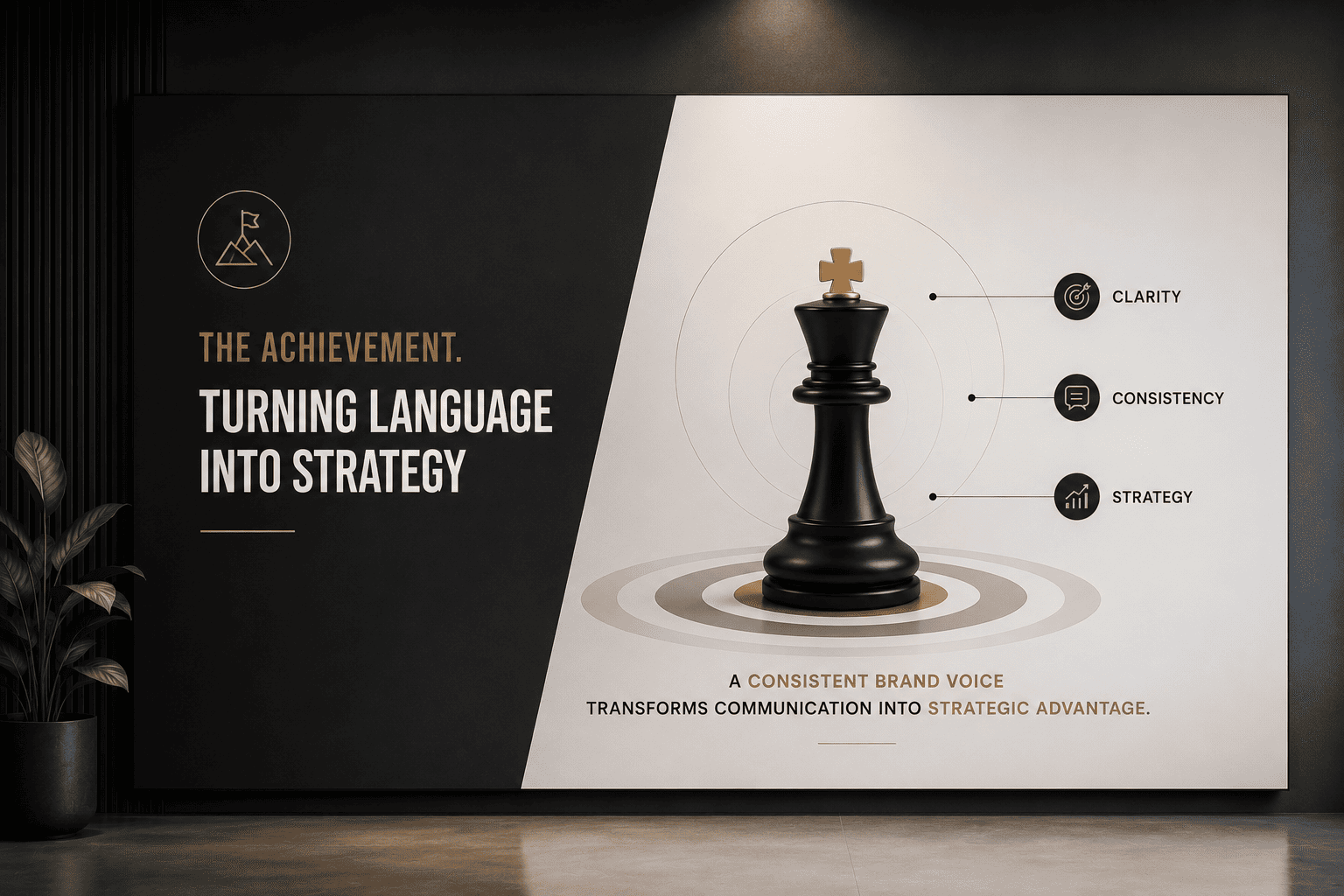
The Achievement. Turning Language Into Strategy
The brand voice system transformed from a communication direction into a universal identity tool. It redefined what consistent brand language could feel like.
For Beryl, this became a benchmark in voice and language design. Proof that clarity, when crafted carefully, becomes strategic power.
What This Means for the Future of Brand Communication
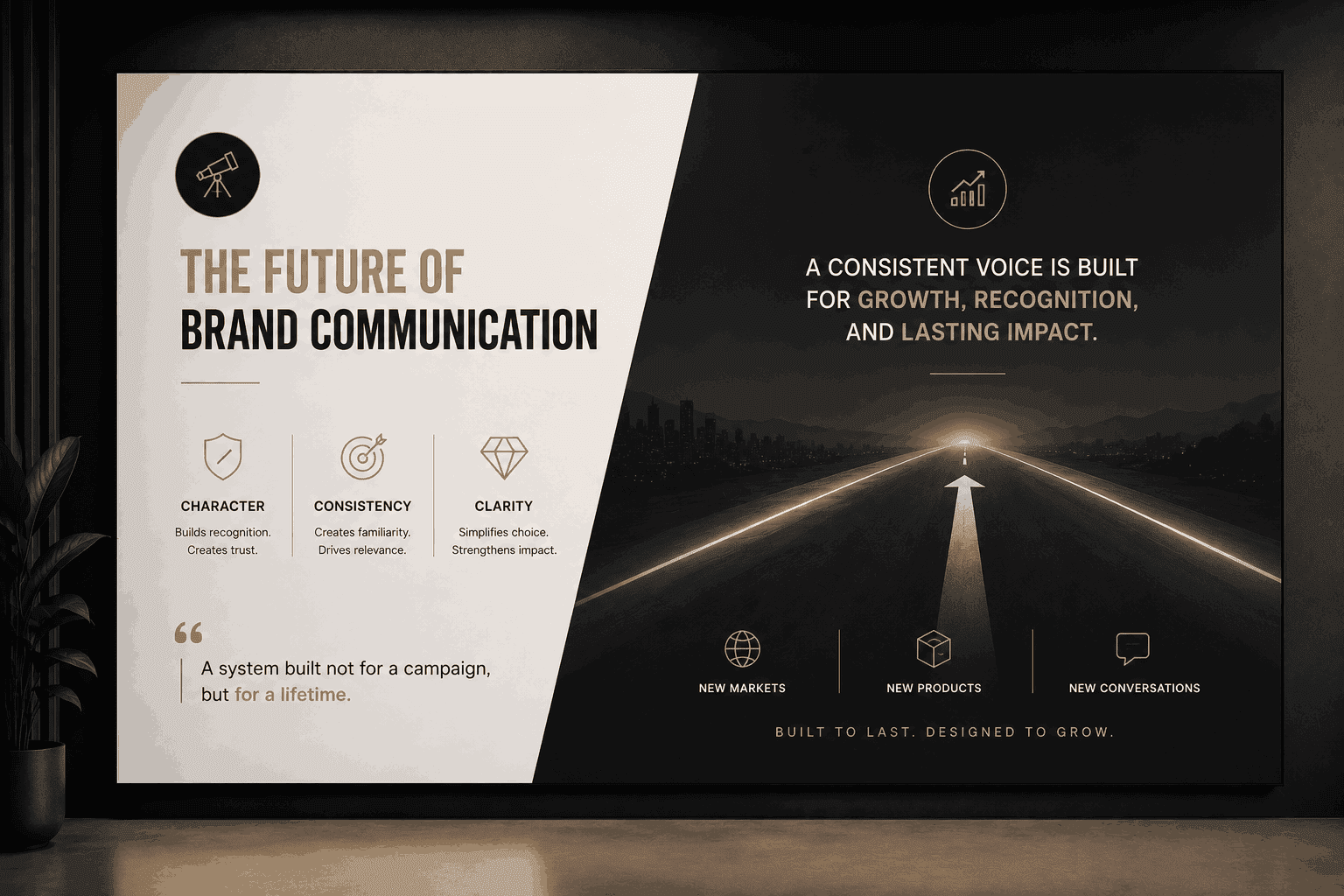
This work proves that brands do not need volume or noise. They need character, consistency, and clarity.
The voice creates space for growth into new markets, new products, and new conversations. A system built not for a campaign, but for a lifetime.
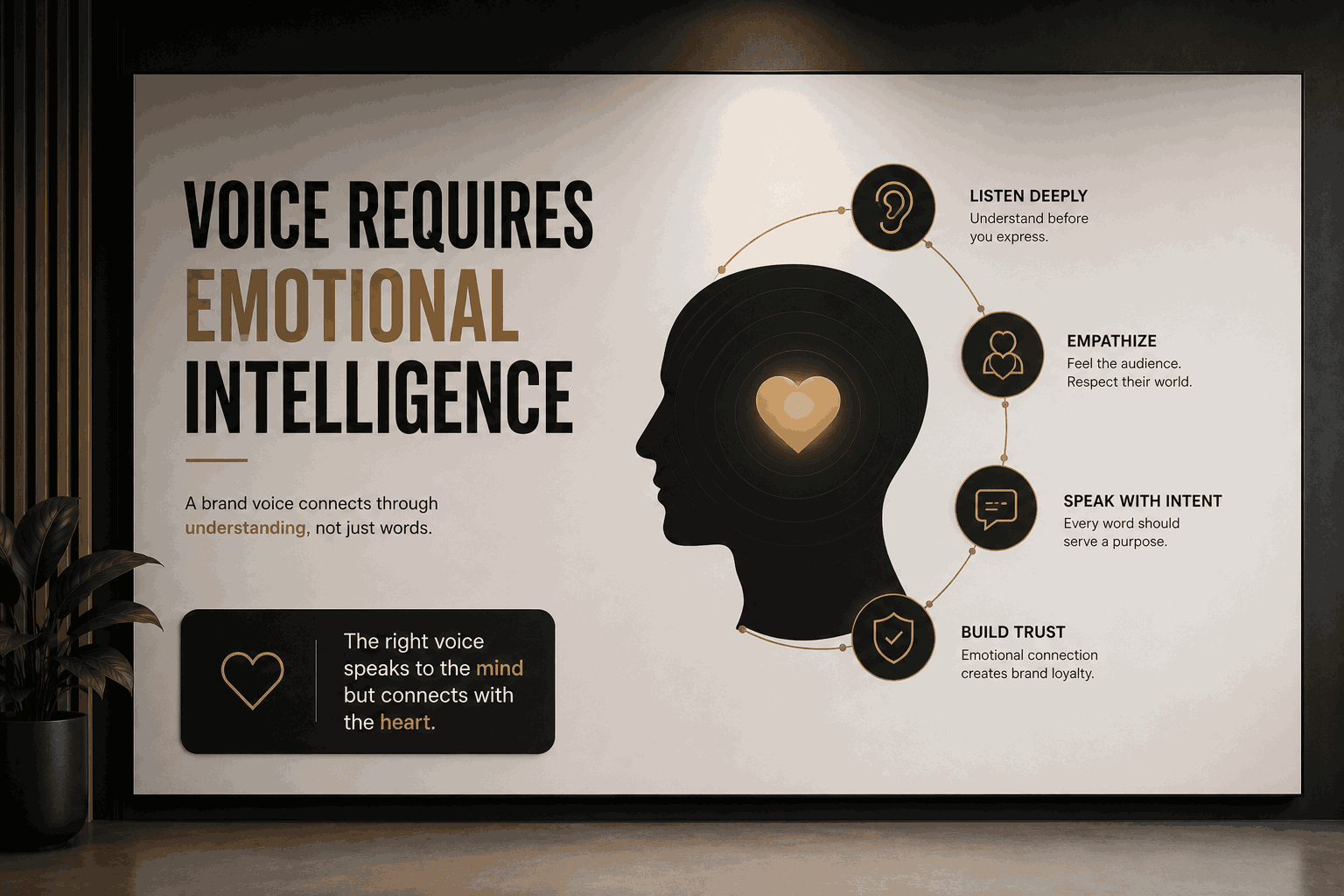
Writing a brand voice requires psychology, not trend chasing. It demands understanding how people read, feel, and decide.
Our approach allowed the voice system to be grounded, scalable, and emotionally resonant.
What We Delivered
– voice strategy and personality mapping – tone of voice framework across contexts – vocabulary architecture, words to use and words to avoid – this not that writing examples across formats – brand voice guidelines and editorial rulebook
Each step ensured the voice was human, scalable, and timeless.
The Beryl Edge
With fifteen plus years in branding, Beryl understands how to merge psychology, culture, and strategy.
Our voice design approach combines emotional insight, linguistic structure, and long term brand vision.
That is why the result was a voice system that feels like a person. A voice that belongs.
What We Learned
Brands do not want to be heard. They want to be felt.
This project reminded us that voice design is not writing. It is character building with empathy at the center.
FAQs
What is a brand voice system
It is the complete framework that defines how a brand sounds, speaks, and expresses itself consistently across every touchpoint.
How many directions were explored
More than one hundred twenty voice territories across tone, vocabulary, and personality mapping.
What makes a voice system future ready
Its adaptability. A strong voice system holds character while allowing tone to shift by context, channel, and audience.
Why does voice matter so much for brand strategy
Because trust, recognition, and belonging start with how a brand speaks, not just how it looks.
What is tone of voice design
A blend of psychology, linguistics, emotional clarity, and strategic restraint applied to every word a brand puts into the world.