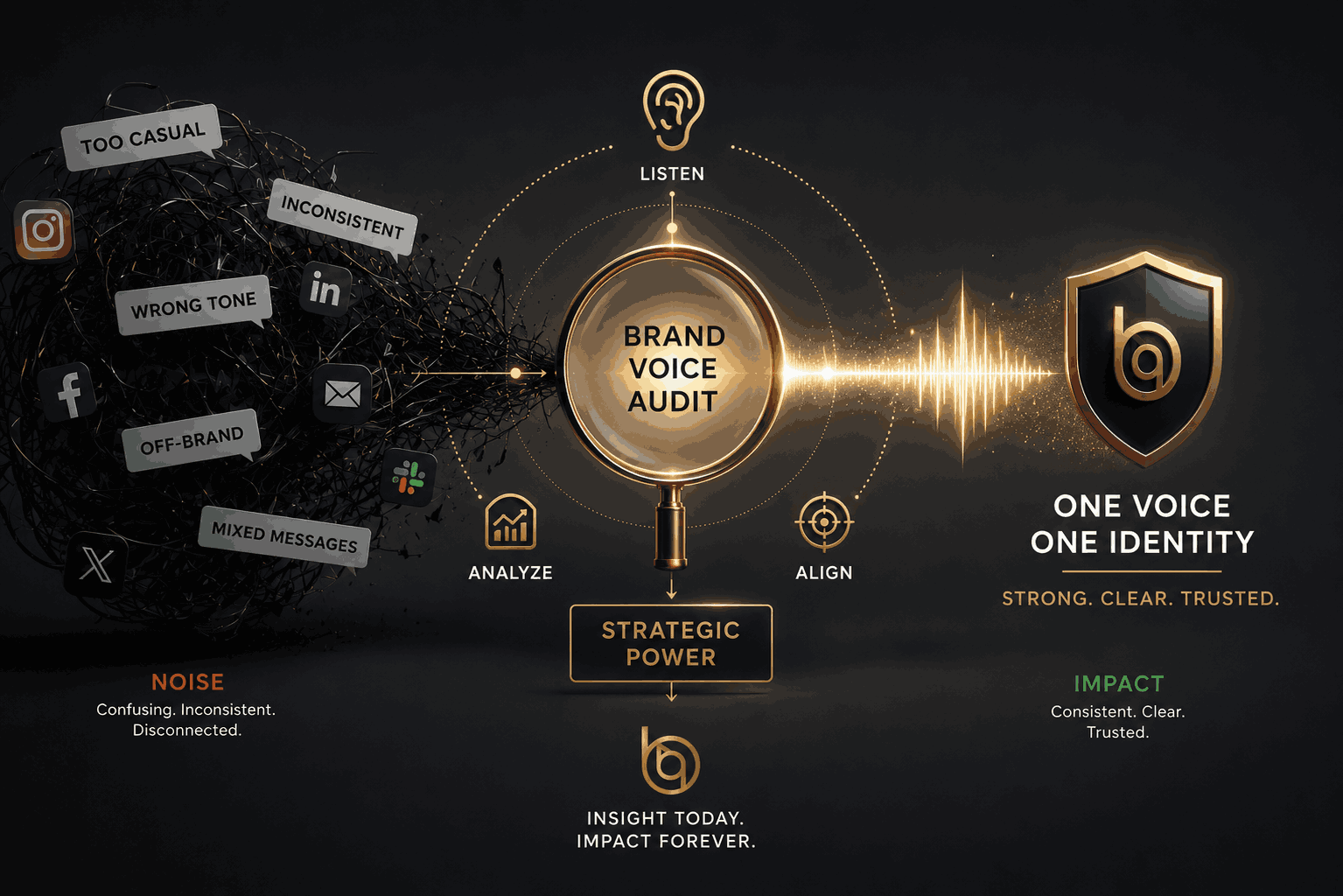
Content output was increasing, but brand recognition was softening.
Too inconsistent.
Too departmentalised.
Too far from the original brand intent.
Too comfortable with the drift.
The problem was not the content.
It was that nobody had stopped to listen to what the brand actually sounded like.
A brand voice audit was built to make communication feel less like noise and more like identity.
The brief was clear.
A process that works for established corporations.
For growing startups and scaling teams.
For every organisation that suspects its voice has drifted but cannot prove it.
It needed to be analytical but not clinical.
Honest but not devastating.
Structured but not bureaucratic.
A diagnostic that does not choose a channel.
A diagnostic that listens to everything the brand has ever said.
Our research revealed a familiar truth.
Organisations disconnect from their own voice gradually, not suddenly.
Communication psychology showed
Organisations want to sound coherent.
Audiences want to feel a consistent presence.
A diagnostic must serve both.
team growth introduces individual writing styles that dilute brand tone
platform expansion creates channel-specific voices that contradict each other
absent guidelines leave interpretation gaps that compound over time
familiarity with content blinds internal teams to inconsistency
We approached the audit like system design.
Our strategy revolved around three principles
-Purpose: create an evidence-first, insight-led brand voice evaluation process
-Design: ensure actionable findings at every stage of the diagnostic journey
-Tone: honest, constructive, and strategically empowering
The goal was not to expose failure.
It was to make every organisation understand exactly where it stood and exactly where it needed to go.
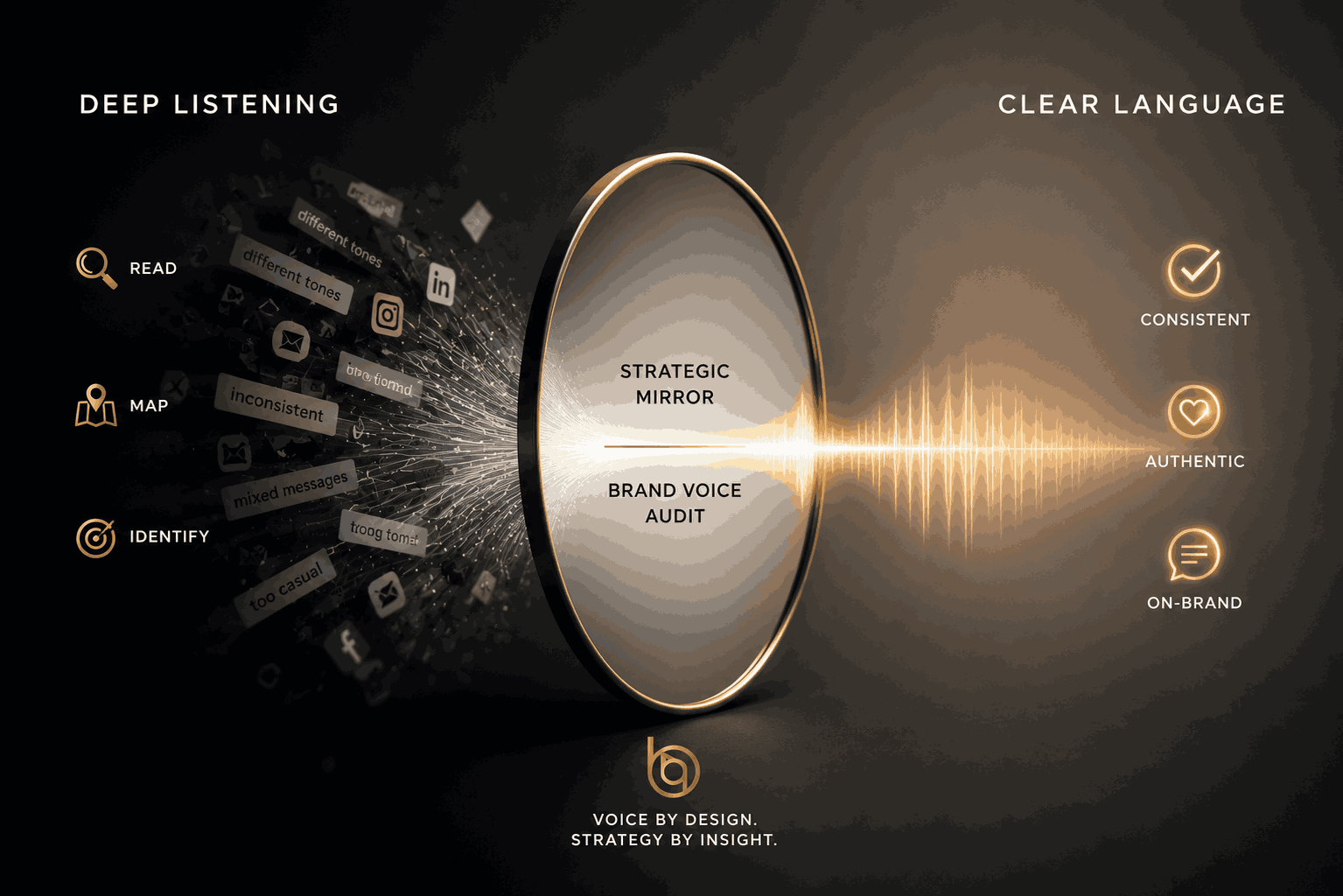
Even though this was a diagnostic process, the act of deep listening shaped the entire system.
Reading every word the brand had published.
Mapping every tone shift across every channel.
Identifying every moment the voice became someone else.
The audit sits comfortably in brand reviews, relaunch preparations, and organisational communication resets.
It behaves like a strategic mirror, not a creative opinion.
Listening became the design language.
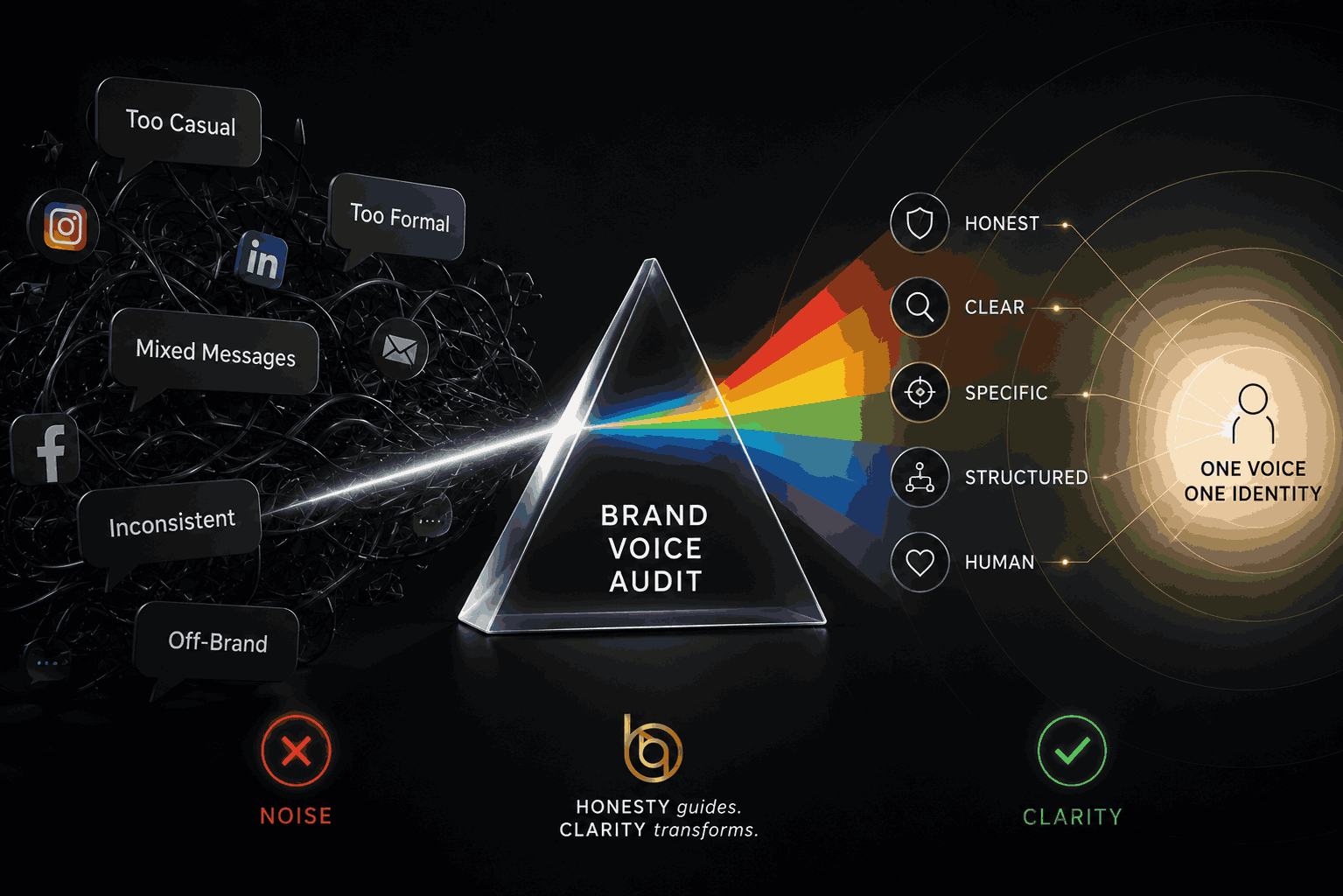
In brand communication, honesty creates transformation.
Just as color psychology guides emotional perception, honest diagnostic findings guide organisational change.
The brand voice audit makes the findings feel
clear without being brutal
specific without being overwhelming
structured without losing the human story behind the data
The audit creates communicative self-awareness the same way a rigorous brand health check does.
The evaluative system behind the audit is built on five elements
Consistency, measuring how uniformly the voice appears across channels
Clarity, assessing how easily the brand message is understood
Tone accuracy, comparing actual output against intended brand personality
Gap mapping, identifying where drift has occurred and why
Relevance, rooted in how the audience actually receives and responds to the voice
These elements create a diagnostic that belongs wherever the brand needs to find itself again.

communication inconsistencies were identified and mapped across every active channel

leadership aligned quickly around evidence rather than internal opinion

content teams received clear, actionable direction rooted in diagnostic findings

the audit supported long term brand voice governance and content strategy architecture
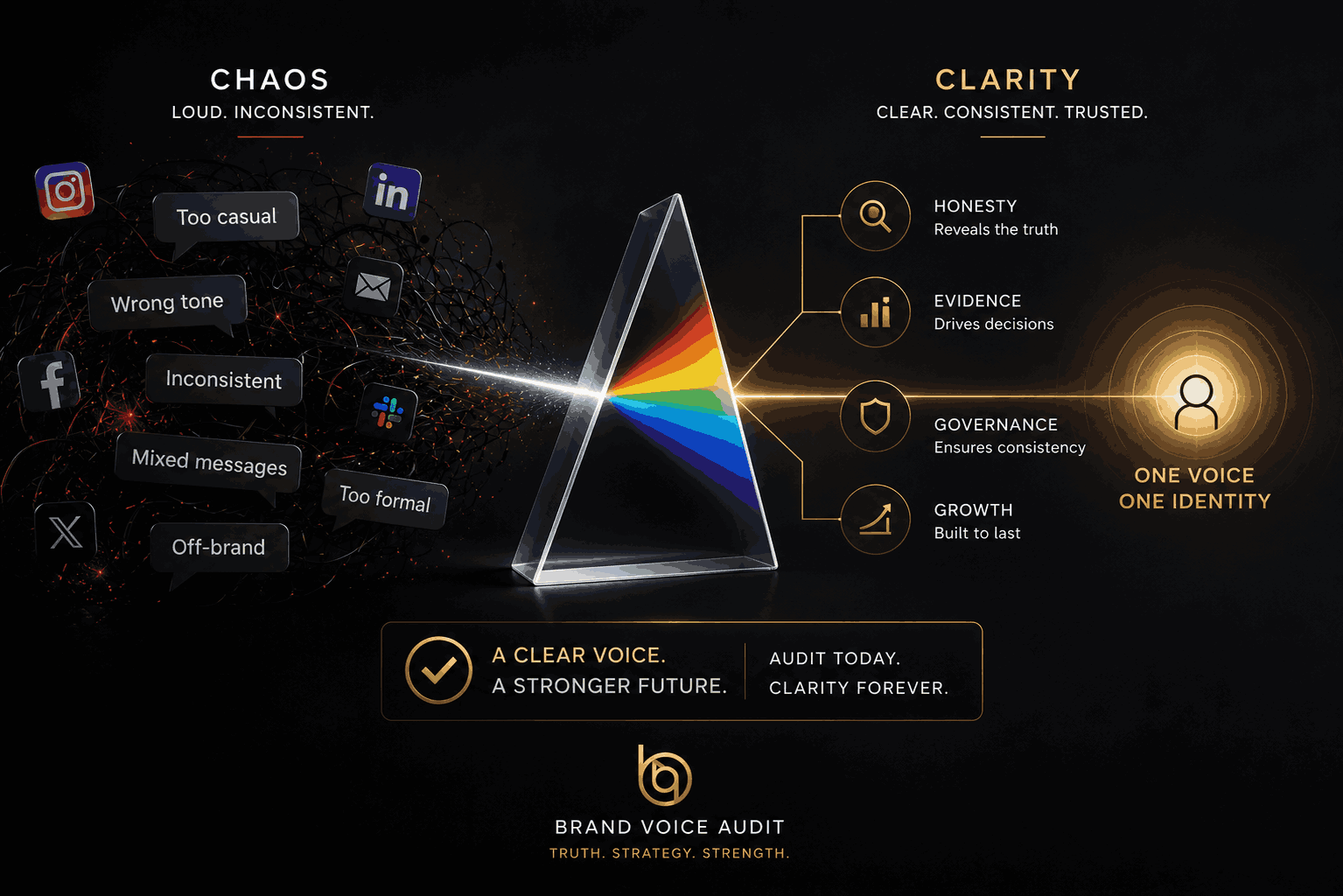
The audit did not just find the problems.
It made the brand feel seen, understood, and ready to be rebuilt with intention.
After introducing the brand voice audit and diagnostic, the impact was immediate.
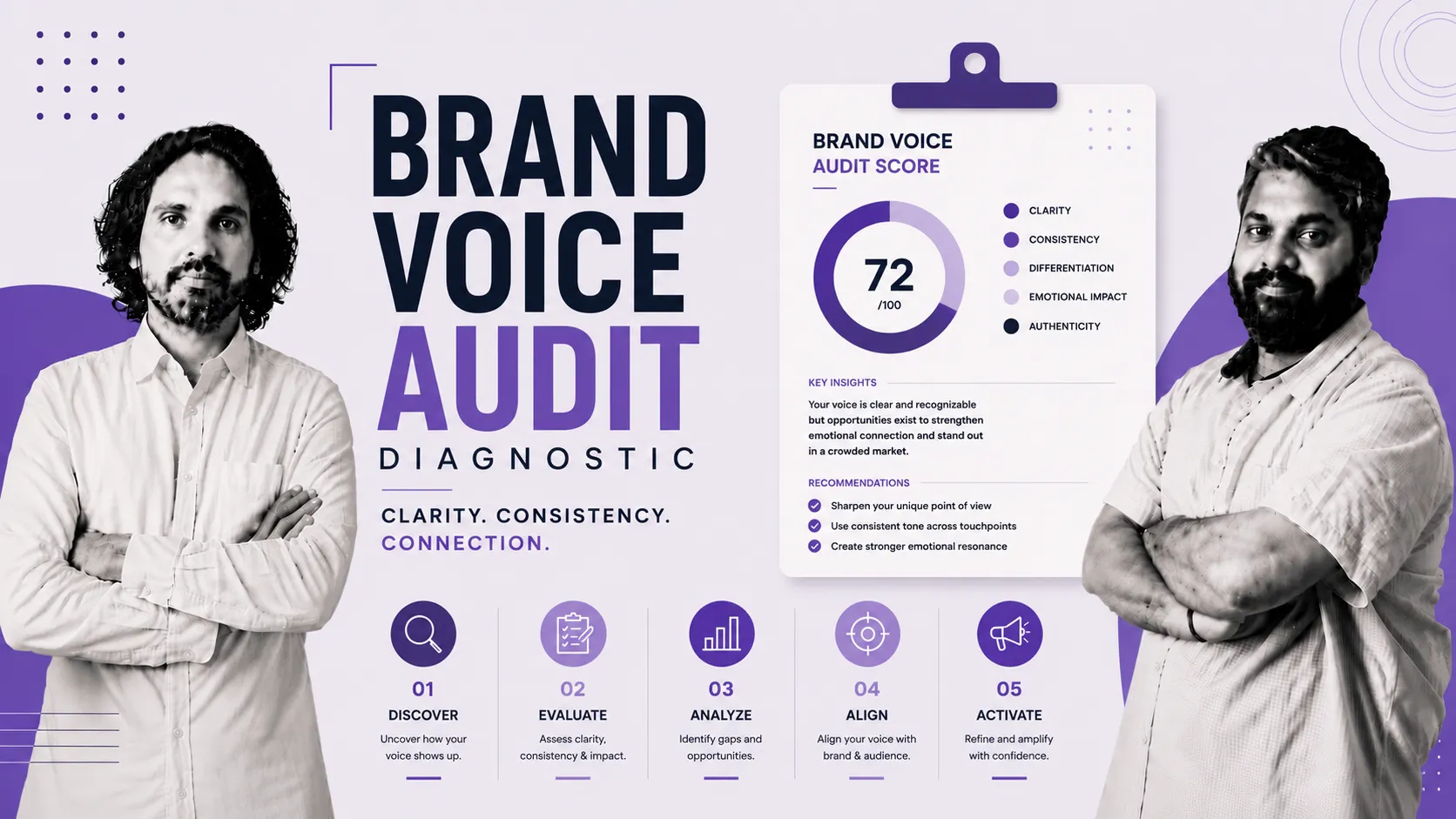
Brand voice audit and diagnostic transformed from an evaluation exercise into a strategic communication reset.
It redefined what brand self-awareness could look like inside an organisation.
For Beryl, this became a benchmark in evidence-led brand communication design.
Proof that listening, when done carefully, becomes strategic power.
Brand voice audit and diagnostic proves that organisations do not need more content or louder messaging.
They need honesty, evidence, and the courage to hear what they actually sound like.
The audit creates space for growth into full voice system development, content governance frameworks, and long term communication strategy.
A capability built not for a moment of crisis, but for a lifetime of clarity.
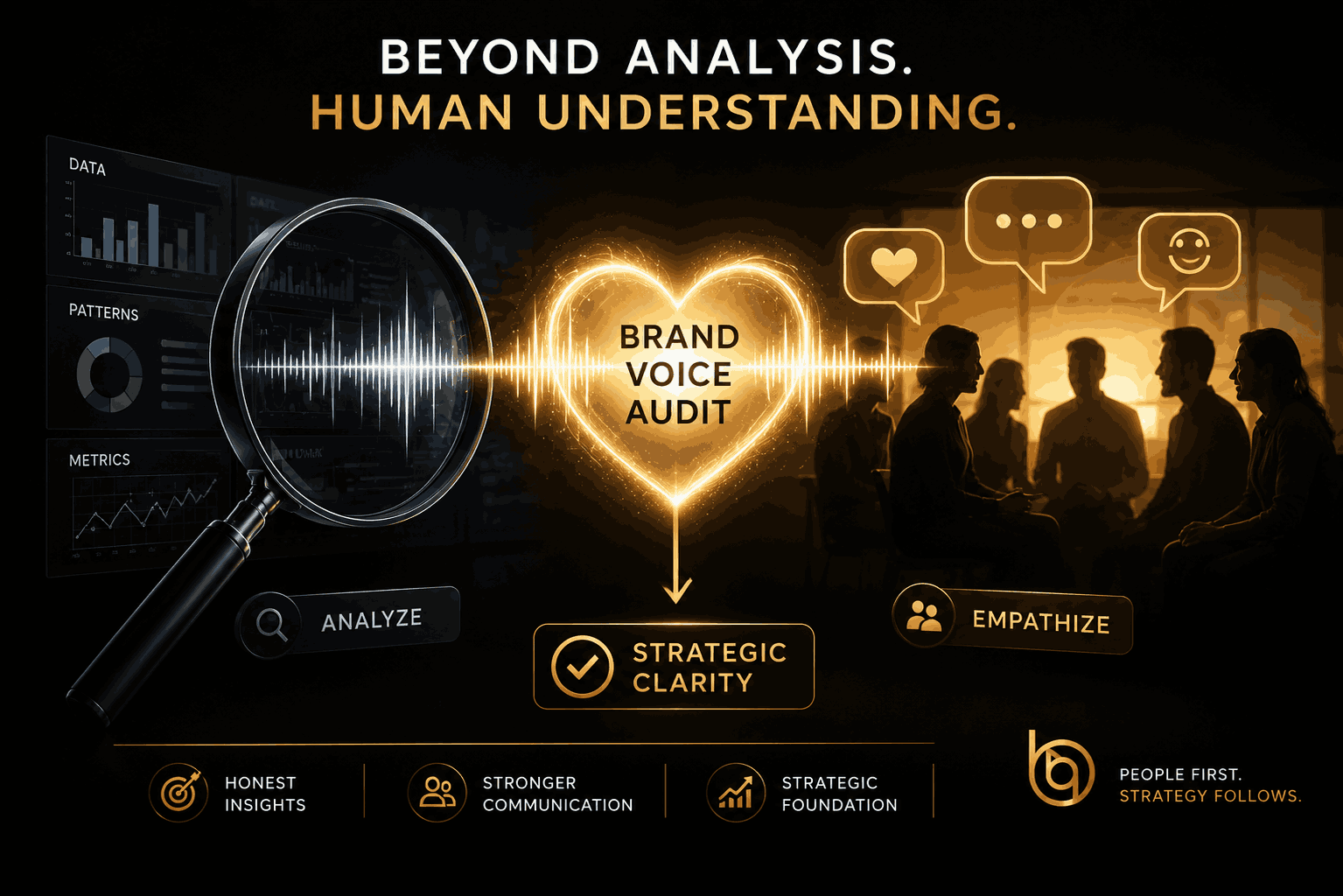
Brand voice auditing for organisations requires empathy, not just analysis.
It demands understanding how teams communicate and how audiences listen.
Our approach allowed every organisation to be honest, clear, and strategically grounded in its next communication chapter.
– brand voice audit strategy and channel mapping framework
– tone consistency and clarity evaluation across all active platforms
– gap analysis and drift identification report
– shortlist refinement from over eighty diagnostic criteria across multiple brand communication categories
– final audit findings, recommendations, and voice realignment architecture
Each step ensured the diagnostic was honest, actionable, and timeless in its strategic application.
With fifteen plus years in branding, Beryl understands how to merge psychology, culture, and strategy.
Our audit approach combines communicative insight, analytical structure, and long term brand vision.
That is why the result was a diagnostic that feels like it belongs.
A process that makes every brand sound like itself again.
Organisations do not want to be told they are wrong.
They want to be shown exactly where to go right.
Brand voice audit and diagnostic reminded us that honest evaluation is not criticism.
It is strength built with clarity and care.
Because guidelines describe intention, but an audit reveals reality.
More than eighty evaluative criteria across multiple channels, content types, and brand communication categories.
Its evidence-based foundation allows application across every brand size, industry, and communication evolution stage.
Because recognition, trust, and loyalty are built as much through how a brand sounds as how it looks.
A blend of linguistic analysis, tone evaluation, audience perception insight, and strategic diagnosis.