Switcher operated in a distribution ecosystem worth more than one hundred crore rupees, yet one core issue kept repeating. Whenever a salesperson left, they did not leave alone. They took dealers, retailers, influence, and trust with them. The company had strong products but no brand infrastructure to hold loyalty. What Switcher needed was not better marketing. It needed control.
After the brand system launched, the shift was immediate. Dealers started depending on the company, not individuals. Brand recall increased because every touchpoint carried one unified identity. The sixty three page guideline book standardized more than ten thousand assets. And for the first time, the brand stayed even when people left.
That is the power of branding that builds systems, not decoration. When structure becomes visible, leakage becomes preventable.
The Context. When Distribution Lost its Grip
Switcher’s challenge was not design. It was control.
A one hundred crore network was losing stability every time a salesperson moved. Dealers were loyal to people, not the company. The relationship was personal, not institutional. And the brand remained invisible in the process.
This made the business vulnerable at every exit point.
The Challenge. To Build a Brand That Replaces Dependency
The core question guiding the project was simple.
Can design reduce dependency on individuals
Can a brand hold relationships even when people change
Can a system be stronger than a salesperson
Switcher needed a structure where the company, not the rep, became the anchor.
The Insight. Why Channel Loyalty Fails
Our analysis showed that dealers trusted familiarity, not brands. Salespeople became the face, the voice, the relationship. When they left, loyalty left.
Brand absence equals business leakage.
This was not a marketing issue.
It was a structural identity issue.
Dealers needed to feel connected to the company, not the person walking in.
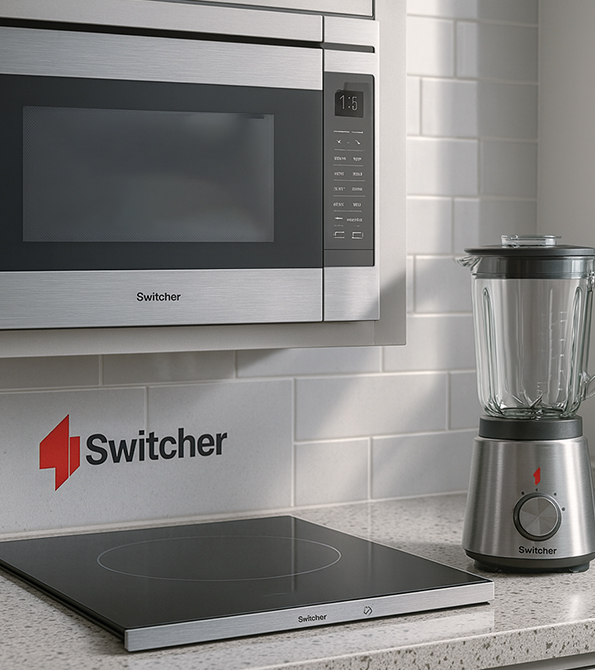
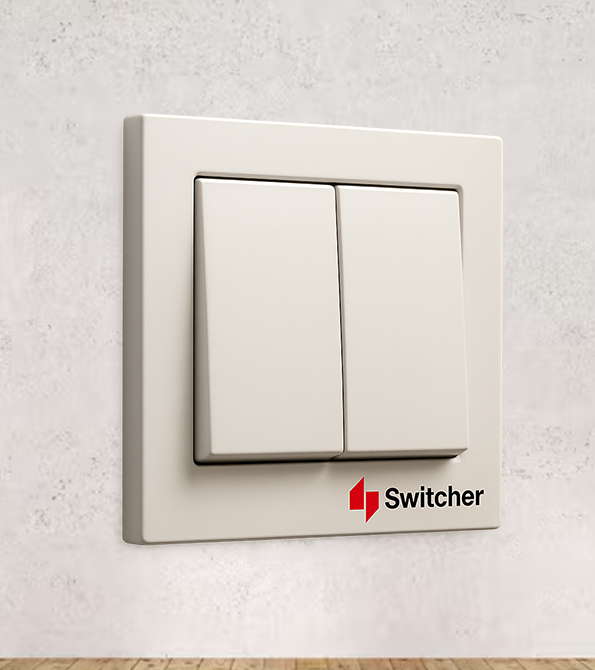
We mapped every single touchpoint between the company and its channel partners. Every form, certificate, poster, message, symbol, van, uniform, communication.
The objective was clear. Make the brand show up before the salesperson. And keep it present long after the salesperson moves.
Everything needed to be centralized and standardized.
The Strategy. Designing Infrastructure, Not Aesthetics
Every piece reinforced the brand as the authority. Every message came from the company, not the individual.
This is how loyalty began shifting.
The Output. Codifying the Brand
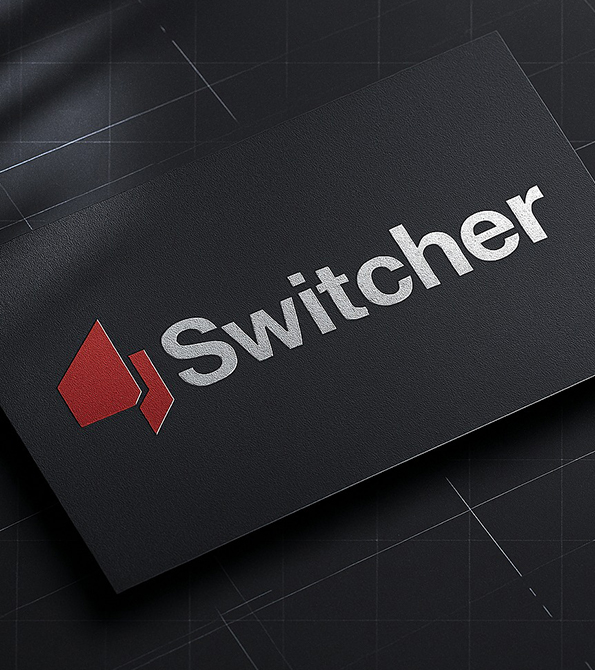
This system required rules. Margins, clear spaces, minimum sizes. Fifteen color codes tested across real surfaces. Multilingual typography. Iconography. Patterns. Uniforms. Vehicle branding.
More than one hundred forty decisions documented with precision.
All built into a sixty three page brand guideline book.
A tool designed to align more than ten thousand assets across India.
Dealers began seeing Switcher before seeing the salesperson. Templates became consistent. Communication became structured. Approvals became easier. Identity became stable.
And retention improved because the relationship shifted from personal to institutional.
The brand finally outlasted people.
The Impact. When the Brand Shows Up First
This was not a beauty project.
This was operational.
A system built to stop leakage.
A brand designed to hold channel loyalty.
A structure created to protect revenue.
This is the business impact of design when used correctly.
The Achievement. When Branding Becomes Infrastructure
What This Means for the Future of Distribution Branding
Most distribution businesses rely on people. Switcher proved that brand systems can replace dependency.
Control comes from clarity. Retention comes from structure. Scale comes from consistency.
Branding is not cosmetic. Branding is infrastructure.
Our Perspective. Why Systems Matter in Channel Driven Businesses
Many companies lose money silently through dealer churn. Most do not realize it is a brand problem, not a sales problem.
Design thinking converts brand into a control mechanism. Systems reduce leakage. Consistency builds trust. Trust builds retention.
Switcher validated this approach across its entire network.
What We Delivered
Every deliverable was created to standardize, stabilize, and scale.
Brand architecture and control strategy
Touchpoint mapping and redesign
Channel communication systems
One hundred forty documented design rules
Sixty three page brand guideline book
Templates for more than ten thousand future assets
With more than fifteen years of experience designing systems for complex businesses, Beryl approaches branding as operational strategy, not visual decoration.
Our work blends structure, psychology, and business logic so brands can function without dependency on individuals.
Switcher is one such example.
The Beryl Edge
In channel driven categories, design is not about aesthetics. It is about authority. It is about presence. It is about replacing chaos with structure.
This project reaffirmed that brand governance is the strongest defence against leakage.
What We Learned
FAQs
What was Switcher’s core issue?
Dealers were loyal to salespeople, not the brand, causing business leakage.
Why is a guideline book important?
It standardizes assets and maintains consistency across thousands of touchpoints.
How does design improve retention?
By creating central authority and reducing dependency on individuals.
What makes Switcher’s system unique?
More than one hundred forty rules built into a sixty three page operational design system.
Can this model apply to other industries?
Yes, any channel driven business benefits from brand infrastructure.
Green Yolk Farm
Ekkana
Sharda Containers
Related Case Studies
Let’s Build Something That Creates Control
At Beryl, we design branding that works for the business, not just the brochure.
If your company runs on channels, distribution, or dealer networks, your brand must become the system.