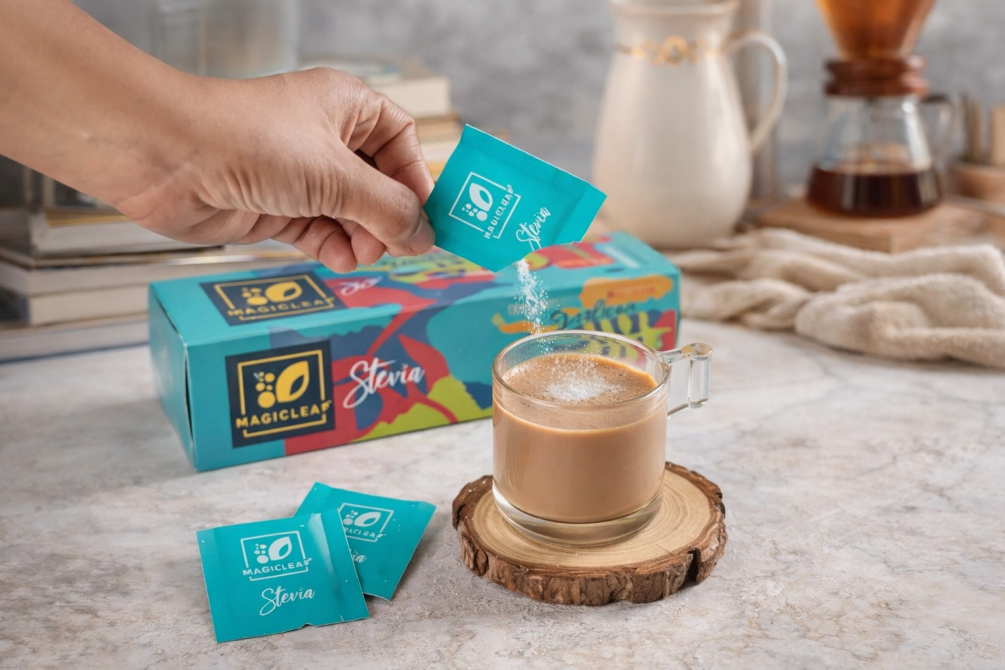
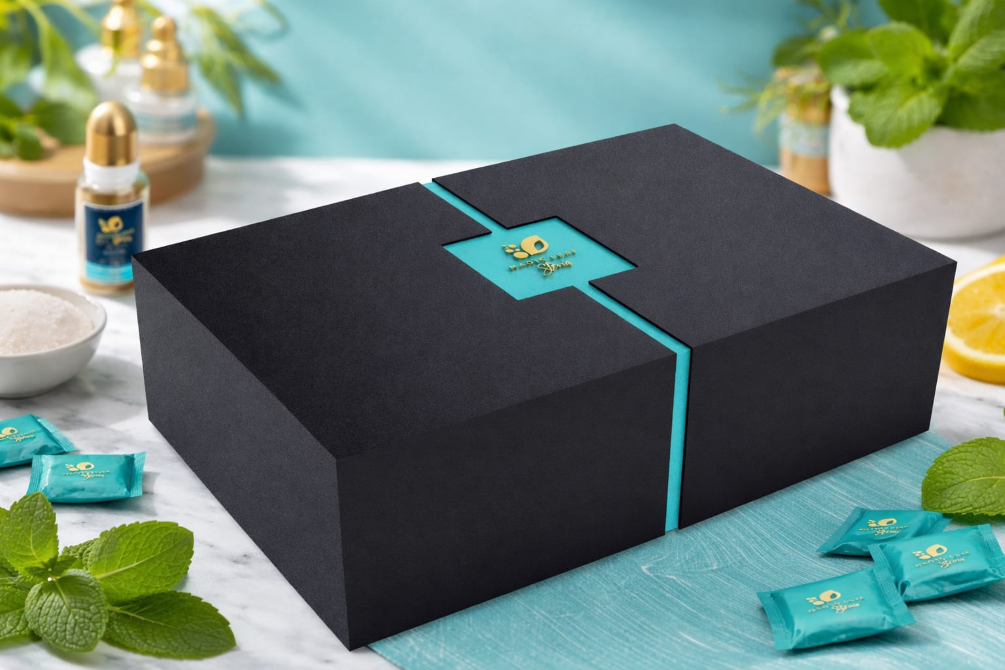
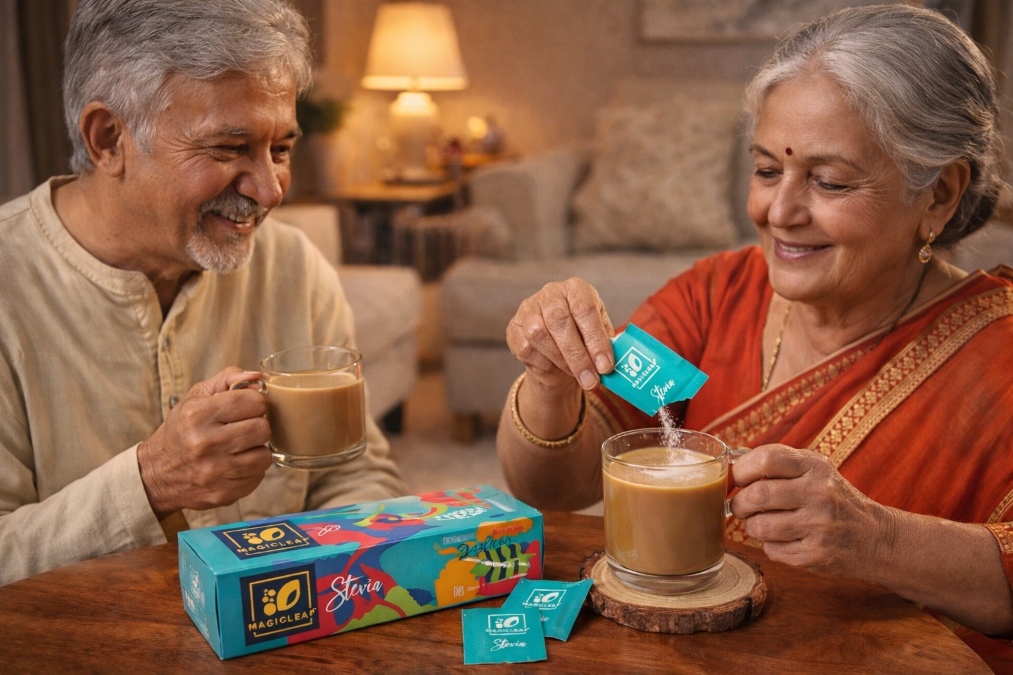
Is among the earliest and largest stevia suppliers in India, led by two passionate co founders. The product already had serious B2B adoption, but the Indian consumer market was still hesitant. Not because stevia did not work. Because the story around it was broken.
Two battles had to be won. Myths around stevia. And the aftertaste perception that makes first time users quit.
1. So we did a packaging redo and experience redo that treated the pack like a conversion tool, not a label.
2. In a category where sugar has shaped habits for generations, the packaging had to do what ads usually do.
3. Educate, reassure, and guide usage.
That is what we built. Not just a better looking pack. A system that helps people switch.
The Context: Sugar is Not Just Taste, It is Habit
People do not buy sugar only because it tastes good. They buy it because it is familiar. That is why switching is hard.
The health context makes the shift even more urgent. India has been estimated to have 101 million people living with diabetes and 136 million with prediabetes. At the same time, WHO recommends reducing free sugars to less than 10 percent of total energy intake, and suggests below 5 percent for additional benefits.
Arboreal sits right in the middle of that tension. A better alternative exists, but adoption needs trust.
The Challenge: Stevia Had Awareness, Not Acceptance
Arboreal was strong in B2B, where decisions are rational and formulation led.
But in consumer buying, two objections kept showing up
– people heard myths and did not know what to believe
– first time users experienced aftertaste, then gave up
This was not a product weakness alone. It was an experience design problem.
The Insight: Packaging is the First Conversation in Behaviour Change
In categories where people are trying something new, the pack is the salesman.
And stevia has a known sensory perception hurdle. Research on steviol glycosides notes bitterness and aftertaste challenges in commonly used forms like Reb A, and discusses alternatives with less bitterness. Consumer research also flags the same gap, many consumers believe stevia is healthy, but taste satisfaction remains a barrier.
So the packaging needed to do two jobs at once. Reduce anxiety, and increase successful first use.
We did not treat packaging as decoration. We treated it as a conversion funnel.
Our strategy revolved around three principles
– Purpose. Replace confusion with clarity
– Design. Build trust through structure, not hype
– System. Create a scalable framework for multiple products and use cases
This is how you win a segment that is fighting addiction level habits.
The Strategy: Make the Pack an Education System
The Packaging Architecture: Myth, Truth, Proof, Then Use
We created space on the pack to address what people actually ask, not what brands assume.
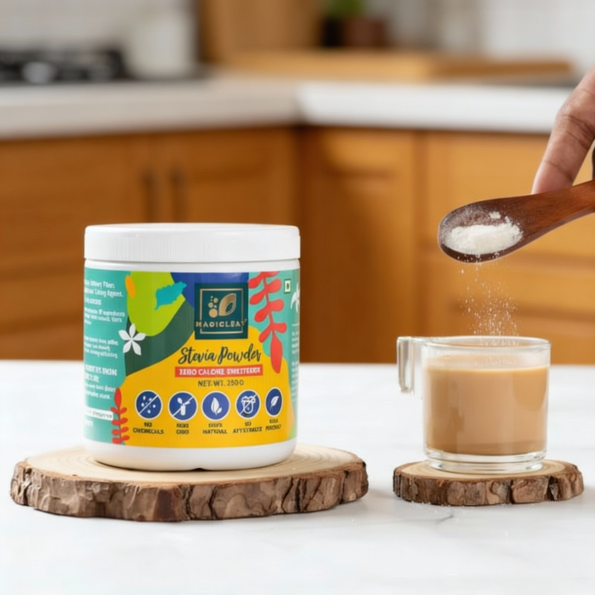
The packaging was designed to carry
– myth busting panels that can be rotated and refreshed
– simple explanations that families can understand
– trust language that feels calm, not preachy
– guidance cues that help people use stevia the right way
The goal was not to claim. The goal was to reassure.
The Aftertaste Problem: Designed as a Usability Issue
Aftertaste is not just chemistry. It is also usage.
So the pack experience was built to guide better outcomes
– how to use it by beverage type and temperature
– how to dose properly so sweetness does not spike into bitterness
– how to integrate into daily routines so the first week feels easy
When the first experience improves, repeat purchase becomes natural.
A single stevia product cannot solve every consumption moment.
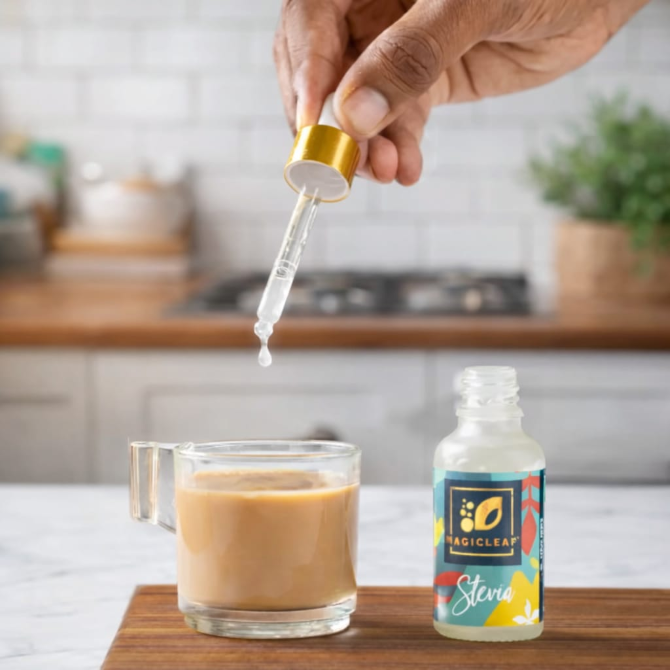
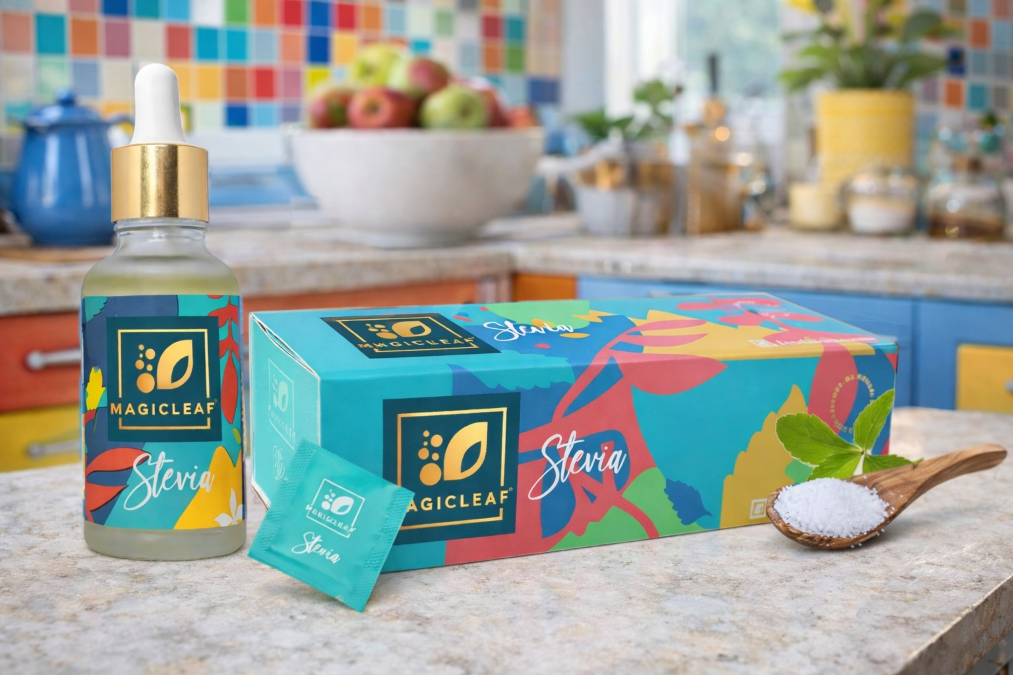
So the strategy revolved around launching different products for different use cases, each with clear intent and packaging cues. Not one generic pack for everyone. A system that lets people choose correctly.
This is where adoption moves from trial to habit.
The Range Strategy: Different Products for Different Use Cases
objection handling moves from the sales call to the shelf
first use success rate improves because usage guidance is built in
trust rises because the brand is addressing doubts openly
This matters in stevia specifically, because research and industry reporting repeatedly show taste perception as a key barrier to satisfaction.
The Tangible Impact: What Changes When Packaging Teaches
When packaging communicates clearly, three behavioural shifts happen.
The Achievement: Carving Space in a Sugar Dominated Segment
Arboreal was never competing with another stevia brand alone. It was competing with sugar.
And sugar is not just a commodity. It is a cultural default.
This project was about carving space in that segment by designing trust into the experience.
What This Means for Sugar Replacement Branding
Sugar replacement is not a branding category. It is a behaviour change category.
That means your packaging cannot be silent. It must inform, reduce fear, and guide correct usage.
Arboreal proves that when the pack becomes a system, adoption becomes scalable.
Our Perspective: In Habit Categories, Packaging is Product Design
In products like stevia, the pack is part of the product.
It decides
– whether a consumer believes you
– whether they try you
– whether they succeed on day one
– whether they come back
That is why we approached this like experience design, not label design.
What We Delivered
packaging redesign with a clear hierarchy and shelf readability
myth and FAQ framework built into the pack system
aftertaste reduction guidance structured into usability cues
scalable design system for multiple products and future launches
Beryl designs brands where education and trust are the real differentiators.
We merge
– behaviour insight
– messaging clarity
– and system led design
So the brand performs when the buyer is uncertain.
The Beryl Edge
If the category is misunderstood, beauty is not the solution. Clarity is.
Arboreal reinforced a simple rule. When the pack answers doubts, the brand earns adoption.
What We Learned
FAQs
Why is stevia adoption hard in India
Because myths and taste perception issues reduce trust and repeat purchase.
What is the biggest role of packaging in stevia
To educate, reassure, and guide correct use so the first experience is successful.
How did Beryl address the aftertaste concern
By treating it as a usability problem, designing guidance into the pack to improve first use outcomes.
Why launch variants by use case
Because consumption moments differ, and the right product choice reduces dissatisfaction and drop off.
Is this more than packaging design
Yes. In behaviour change categories, packaging becomes experience design and messaging strategy.