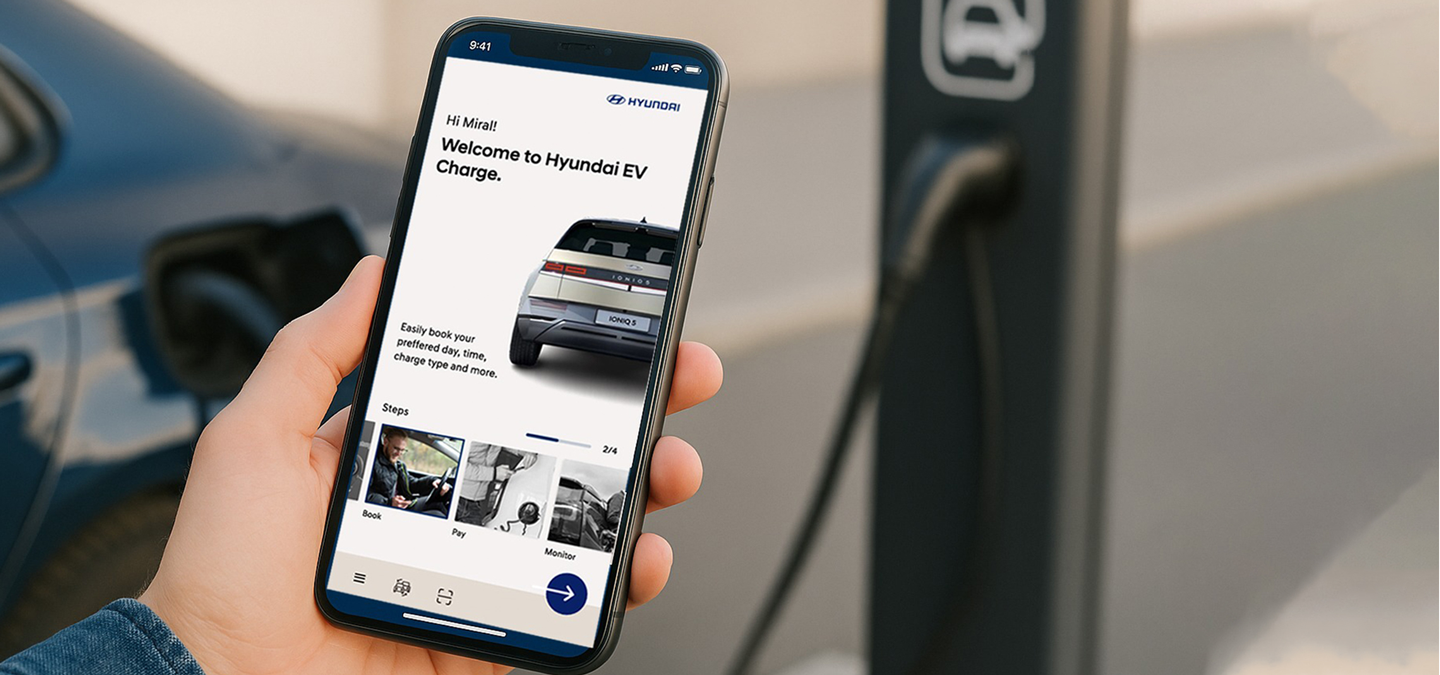
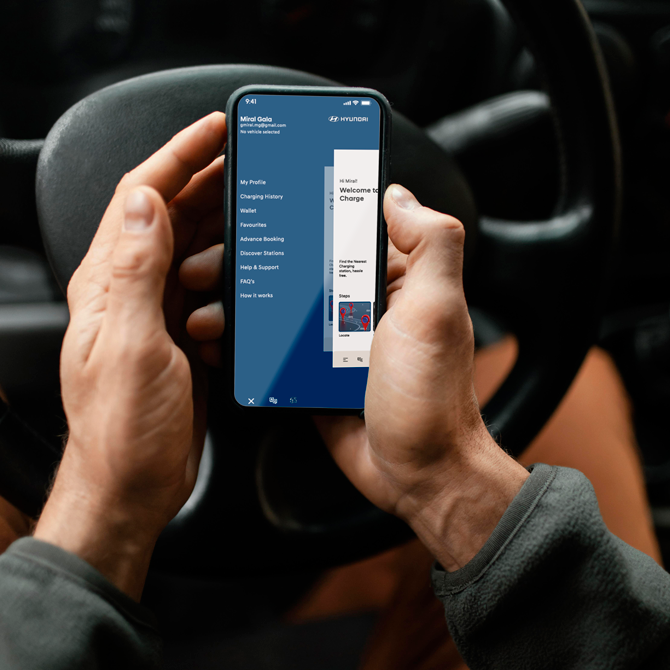
Hyundai entered the EV conversation at a critical moment. Electric vehicles were gaining attention, but ownership anxiety was holding adoption back. For most users, buying an EV wasn’t about performance or design anymore. It was about certainty. Where do I charge. Will it work. Will I be stuck waiting. The problem was not the car. It was the ecosystem around it.
After the new EV charging experience was designed, the shift was immediate.
1. Users reported lower range anxiety because charging information became predictable.
2. Decision confidence improved as real time station status replaced assumptions.
3. Time spent at charging stations reduced because waiting was replaced with planning.
4. And most importantly, owning a Hyundai EV started to feel effortless, not stressful.
That is the power of experience led system design. When certainty is designed in, adoption becomes natural.
The Context. When EV Ownership Felt Uncertain
EV adoption was rising. Infrastructure was expanding. But user confidence was lagging.
Most charging ecosystems showed locations. Not availability. Not reliability. Not real time usability.
For Indian conditions, this gap created anxiety. Hyundai saw this not as a tech problem, but as a design problem.
The Challenge. To Make EV Ownership Feel Reliable
The brief was clear.
Design an experience that removes uncertainty from charging.
It had to work across
multiple charging providers
different power levels
urban and highway contexts
The system needed to think ahead for the user.
Not react after frustration.
The Insight. Why Charging Information Was Not Enough
Our research revealed a critical insight. Knowing where a station is does not mean knowing if it is usable.
Key issues identified
stations could be occupied
chargers could be non functional
queues were unpredictable
slow charging increased wait times
Users didn’t want more locations.
They wanted certainty.
We reframed the problem. This was not a single provider solution.
Our strategy revolved around three principles
– Purpose: eliminate charging anxiety
– Design: unify fragmented charging data
– Tone: calm, confident, and predictive
The goal was to design trust into the system.
The Strategy. Designing an Ecosystem, Not an App
The Experience Design. From Searching to Reserving
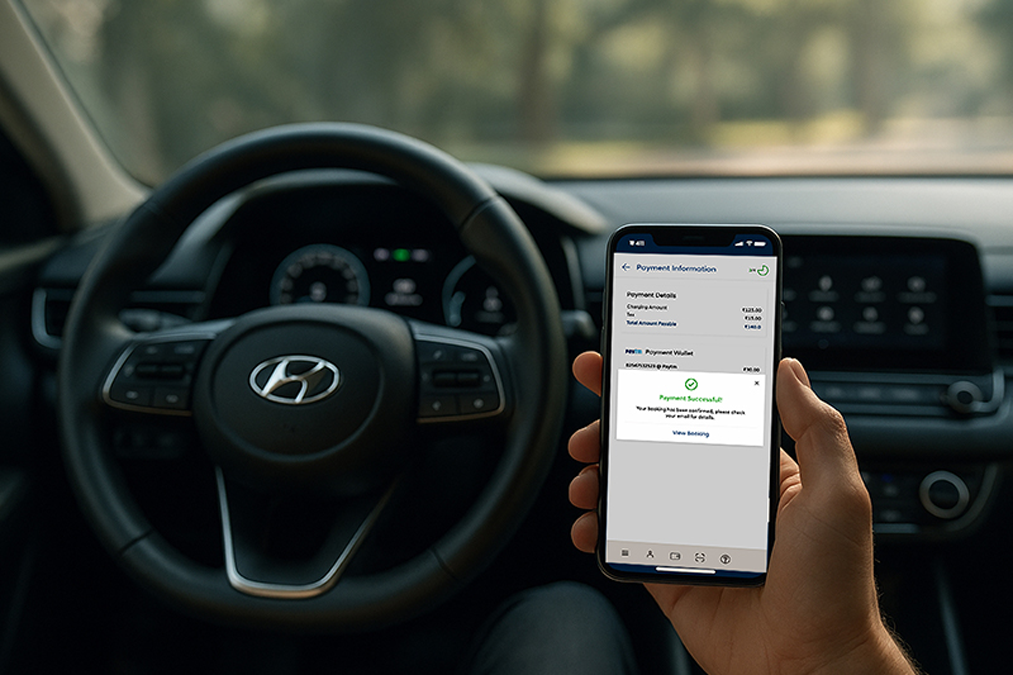
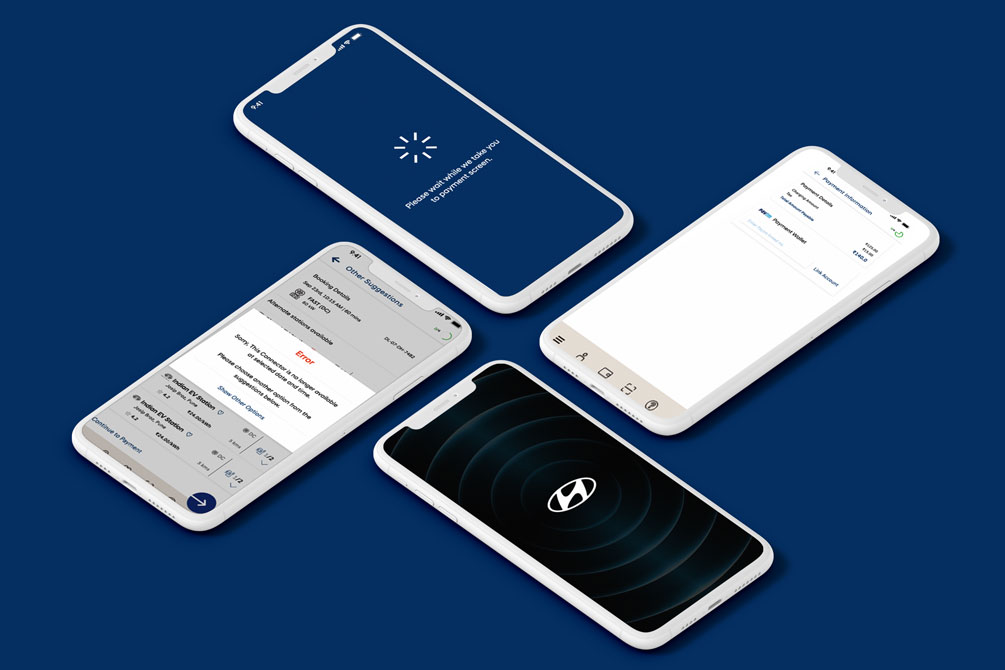
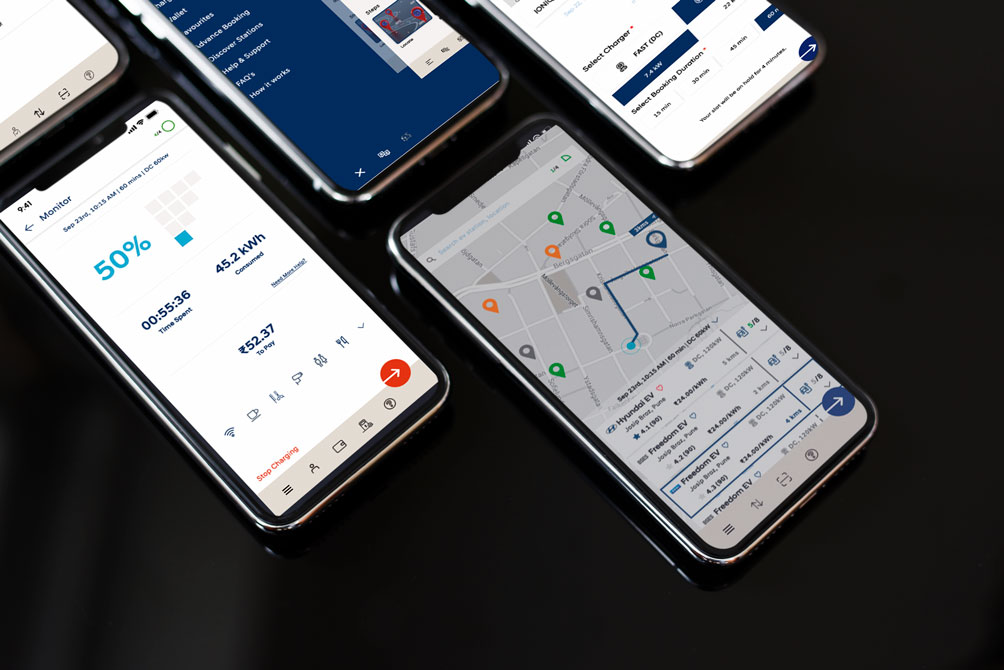
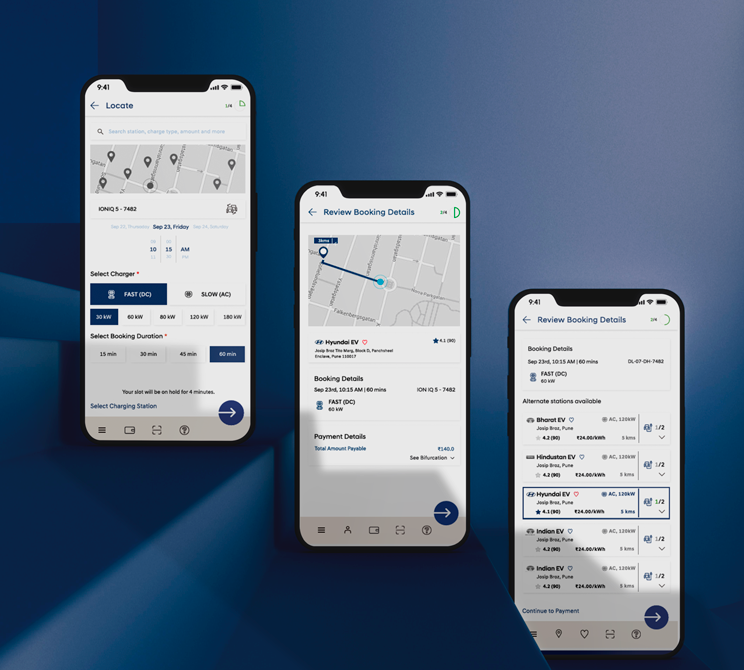
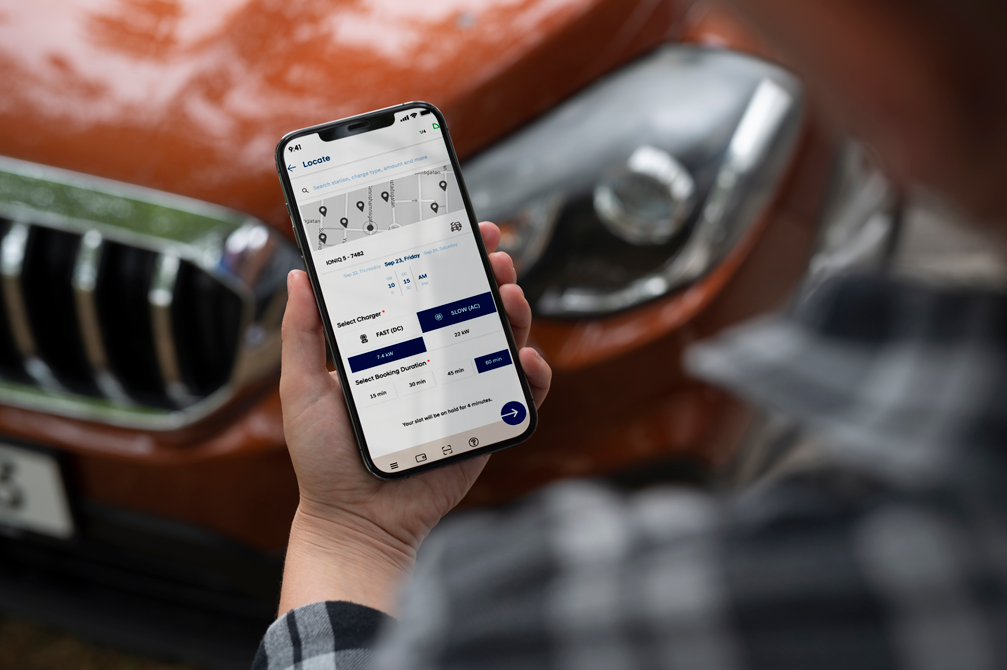
We introduced a reservation led charging experience.
Users could
– view all providers in one interface
– check real time availability
– reserve a charging slot in advance
Charging stopped being a gamble. It became a plan.
The Interaction Psychology. Why Control Changes Behavior
Uncertainty creates stress. Control creates confidence.
By allowing users to reserve and track charging, the system shifted behavior from waiting to planning. Time regained became perceived value.
The experience respected the user’s time.
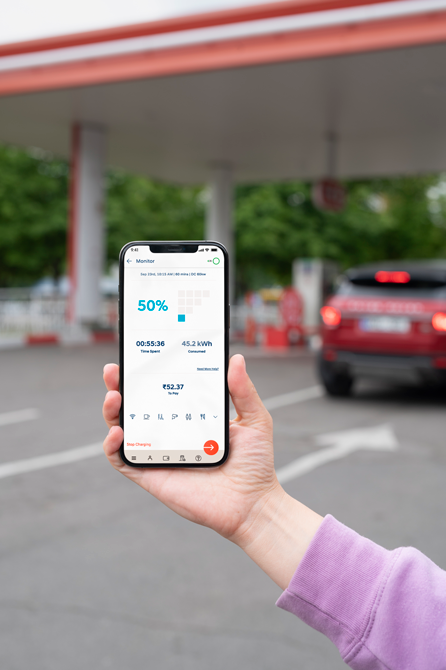
We designed real time tracking into the experience.
Users could
– see charging progress live
– estimate completion time
– plan their next activity
Waiting was replaced with awareness. Awareness reduced frustration.
The Information Layer. Track, Don’t Guess
users relied less on backup plans
charging sessions felt shorter due to predictability
confidence in long distance EV travel increased
Hyundai EV ownership scores improved
The system didn’t change infrastructure. It changed how infrastructure was experienced.
The Tangible Impact. When Certainty Changed Perception
Post launch, the experience showed clear behavioral change.
The Achievement. Turning Charging Into Confidence
Hyundai’s EV experience moved beyond hardware. It became an ecosystem advantage.
For users, charging felt dependable. For Hyundai, it strengthened trust in the brand’s EV vision.
For Beryl, this project demonstrated how design can solve systemic mobility problems.
What This Means for the Future of EV Adoption
EV adoption does not fail because of vehicles. It fails because of uncertainty.
Hyundai’s approach proves that experience design can accelerate adoption by removing fear before it appears.
Our Perspective. Why EV Systems Need Design Thinking
Mobility systems are emotional. Fear slows adoption. Certainty accelerates it.
Design thinking helped translate complex infrastructure into a simple, human experience.
What We Delivered
Each layer was designed to reduce anxiety and increase trust.
EV charging experience strategy
unified multi provider interface logic
reservation and slot booking flow
real time tracking experience
scalable system architecture
With experience designing coplex systems across mobility, energy, and digital platforms, Beryl understands how to humanize infrastructure.
Our work blends behavioral psychology, system design, and clarity to build confidence at scale.
The Beryl Edge
People don’t fear new technology. They fear uncertainty.
Hyundai reinforced that when experience leads, technology follows effortlessly.
What We Learned
FAQs
what problem did hyundai’s ev experience solve
Charging uncertainty and range anxiety.
why was reservation important
Because predictability matters more than proximity.
did this require new infrastructure
No. It re designed how existing infrastructure was accessed.
is this scalable across cities
Yes. The system is provider agnostic and expandable.
why was beryl involved
To translate infrastructure complexity into a human first experience.