entered a space where luxury is often seen, not experienced. At India Design ID, over 300 brands compete for visual attention. But in home furnishings, research shows that 70 to 80 percent of purchase decisions are influenced by physical interaction. The problem wasn’t awareness. It was absence of sensory proof. Window Passions needed an experience that could translate craftsmanship into instinct.
After the exhibition experience was designed, the shift was immediate.
1. Footfall conversion improved as visitors slowed down and stepped in.
2. Average dwell time increased by 2x, driven by touch led exploration.
3. Sales conversations shortened because materials communicated quality on their own.
4. And most importantly, the brand moved from visual noise to quiet authority.
That is the power of spatial experience design.
When touch leads the story, persuasion becomes redundant.

Home furnishings are not impulse buys.
They are sensed.
Touched.
Lived with.
Yet most exhibition stalls rely on visuals, brochures, and sales pitches.
For a 30 year old bespoke drapery brand, this approach diluted what truly mattered.
Window Passions needed a space that lets material quality do the talking.
The brief was multi layered.
Showcase a legacy brand.
Launch a new product.
And remain unforgettable at India’s most competitive design event.
The solution could not be loud.
It had to be felt.
Behavioural studies show that tactile interaction increases trust and recall dramatically.
Our insight was simple.
People buy fabric when they touch it.
They believe quality when they feel weight, texture, and fall.
We approached the stall like a behavioural map.
Our strategy revolved around three principles
Purpose: create moments of pause
Design: guide movement intuitively
Tone: quiet luxury, no noise
The goal was not to sell.
It was to let material truth emerge.
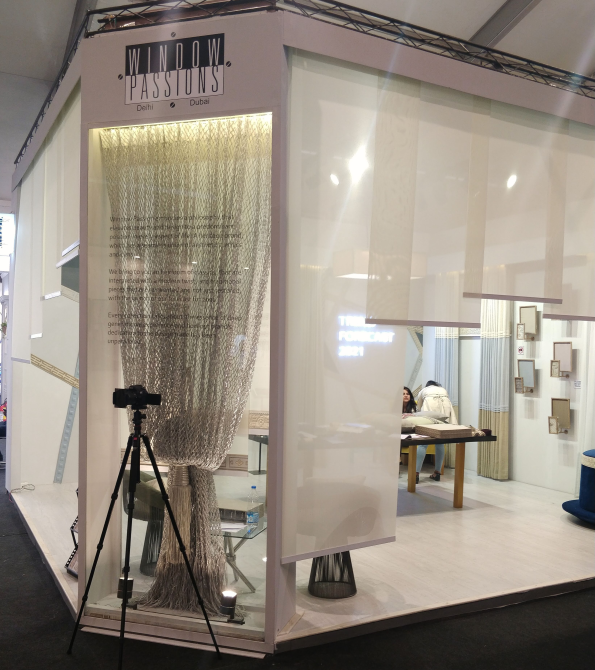
The space was designed in three concentric layers.
– Outer ring, a curiosity zone
– Centre stage, the hero product launch
– Core zone, a tactile play and touch lab
Each layer served a psychological function.
Draw in.
Anchor attention.
Create memory.
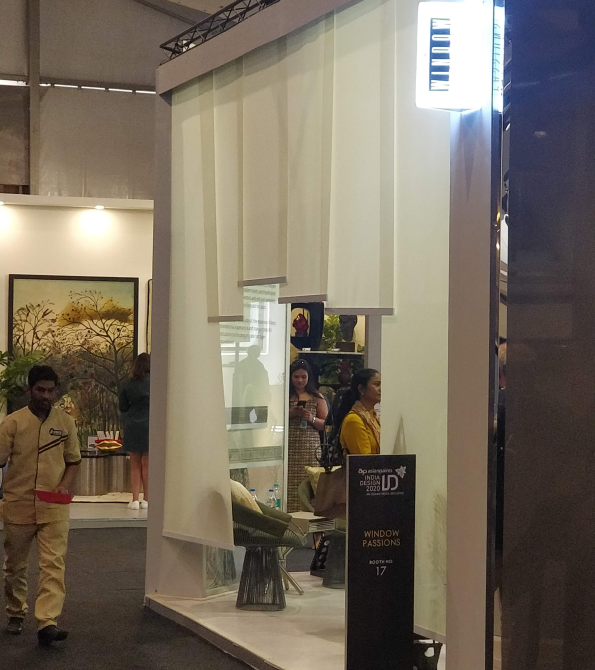
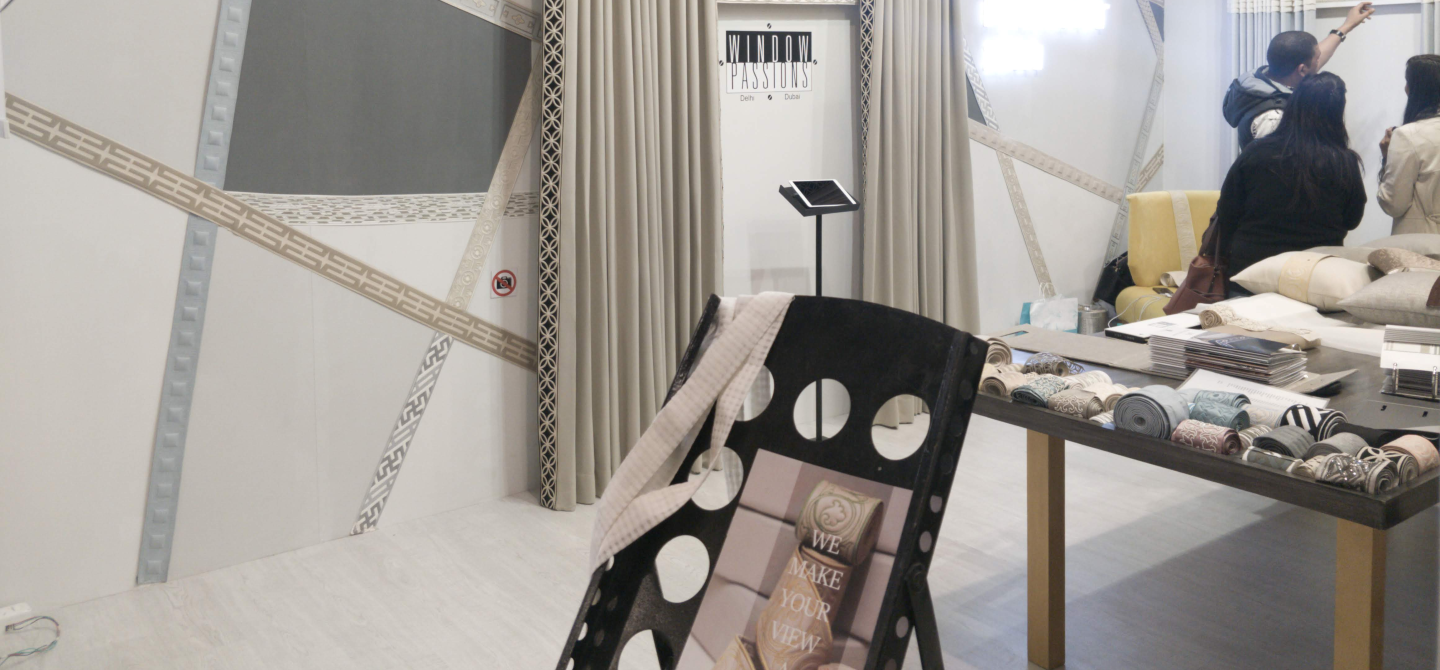
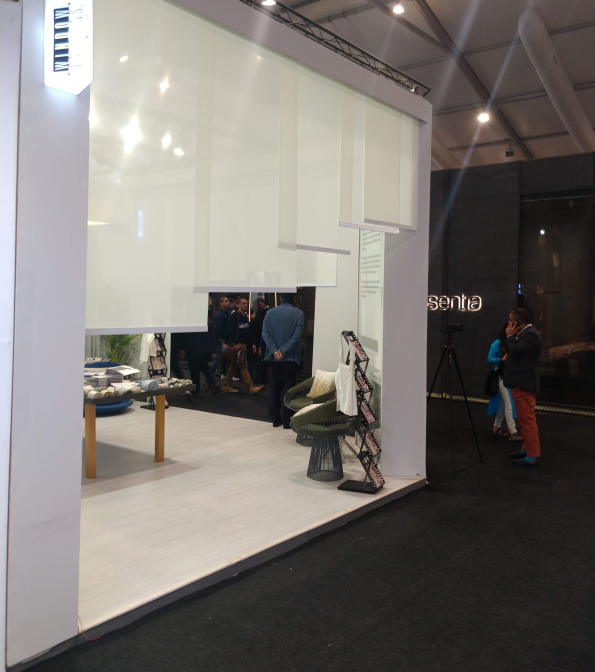
At the edge of the stall, drapes were hung outward.
Partial visibility.
Controlled curiosity.
Visitors could not see everything at once.
They had to step closer.
This single decision increased entry rate and dwell time naturally.
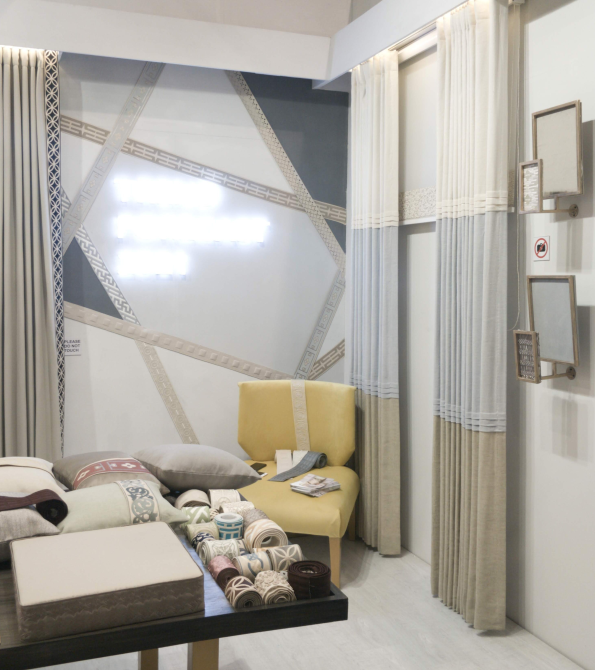
At the centre, the new product launch was framed deliberately.
Lit with intent.
Oriented toward the main aisle.
Visible from a distance.
The product became the anchor.
Everything else supported it.

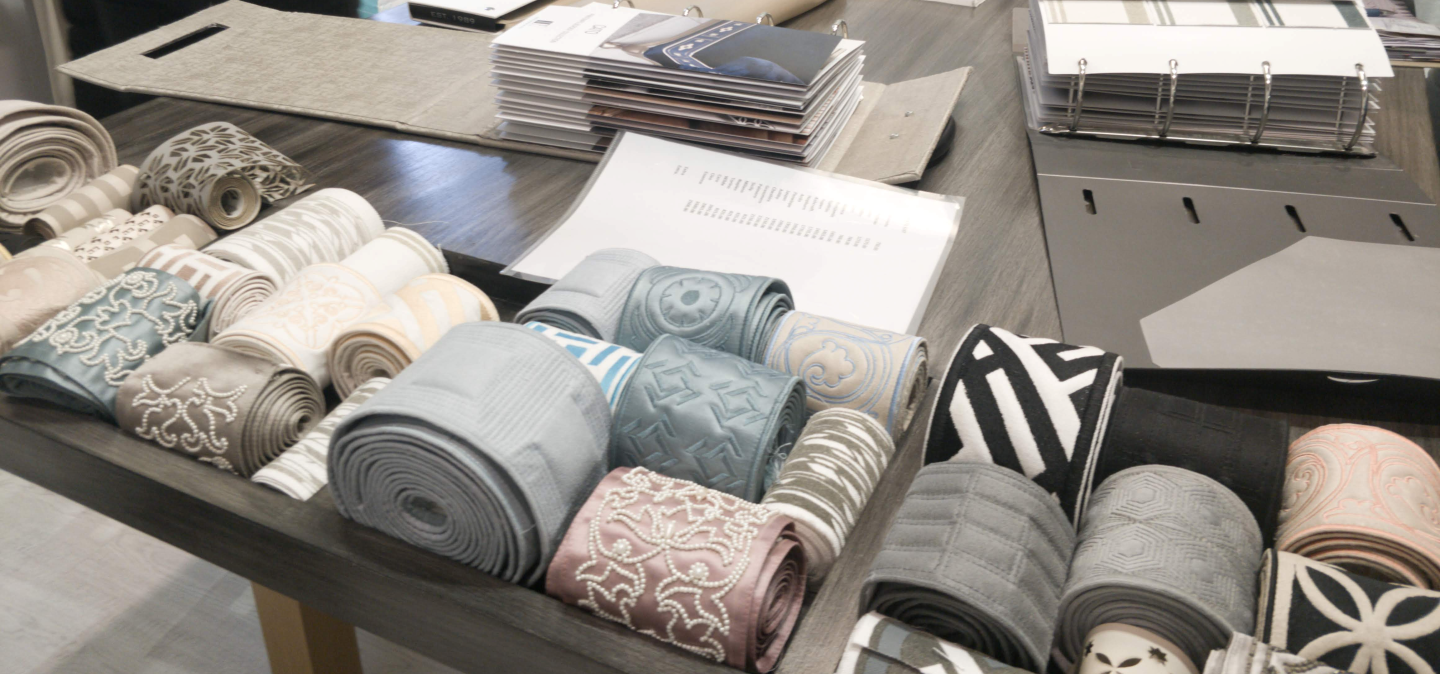
cushions

trims

fabric swatches

layered combinations
This was not decoration.
It was permission to explore.
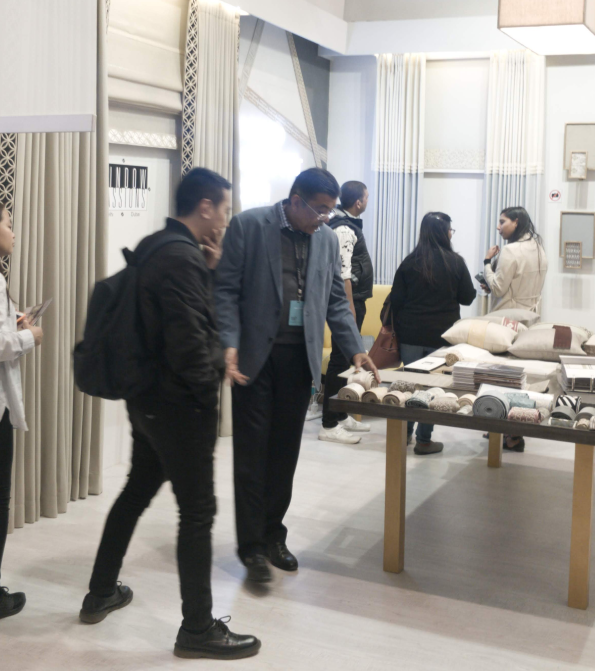
Inside the core zone, we created a tactile environment.
The space felt playful.
But every element was strategic.
Touch creates pause.
Pause creates conversation.
Conversation creates recall.
People stayed longer without being sold to.
The layout allowed the sales team to step back.
No pitch.
No pressure.
The fabric did the convincing.
Texture replaced talking.
This changed the nature of sales conversations completely.
Even trims were treated as sculptural objects.
Mounted with rhythm.
Spaced deliberately.
Inviting touch.
Small details reinforced the brand’s obsession with craft.
The palette was muted and timeless.
Drawn from the brand’s own material language.
Lighting was not decorative.
It was directional.
Luxury was communicated without noise.
cool white to invite
warm amber to hold
shadows to subtly divide space
Behind the calm exterior were layers of preparation.
– material testing
– mounting rehearsals
– visitor flow simulations
Every decision was invisible.
But every decision was felt.
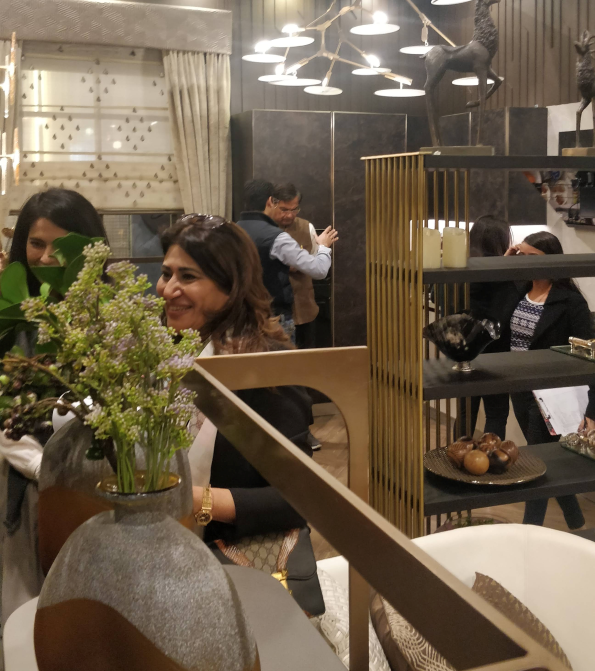
At peak hours, visitors queued.
Not for brochures.
But to touch fabric.
To build combinations.
To explore possibilities.
Even those who did not enter heard about
“the stall where you could feel everything.”
This was not an exhibition stall.
It was spatial storytelling.
The product was not supported by design.
The design existed to reveal the product.
Exhibition design is not architecture alone.
It is behaviour design.
When space is choreographed with intent, brands don’t need to shout.
They are remembered quietly.
Each layer worked together to create presence, not promotion.
exhibition strategy and spatial narrative
zoning and behavioural flow design
tactile engagement framework
lighting and material choreography
execution supervision
With experience across branding, interiors, and spatial systems, Beryl understands how to translate identity into environments.
Our approach blends psychology, material intelligence, and design discipline to create experiences that sell without selling.
Luxury is not explained.
It is experienced.
Window Passions reminded us that when craft is real, design’s role is simply to get out of the way.
Noted. Adding only the missing sections. Nothing else changed.
Because fabric decisions are rarely made visually. Touch builds trust faster than claims.
A three layer flow that first creates curiosity, then anchors attention, then invites hands on exploration.
By letting material truth do the convincing, visitors touched, compared, and self qualified before speaking to the team.
It offered something others did not, sensory proof. People remembered it as the stall where you could feel everything.
Yes. Any category where trust depends on experience, furniture, flooring, interiors, lifestyle, and premium materials.