

02 Apr The Future of Beverage Packaging Was Always in the Past
There was a particular hour in the north Indian summer when the world slowed down to the speed of thirst. It arrived around two in the afternoon, somewhere between the last roti of lunch and the first yawn of an involuntary nap, when the ceiling fan above did nothing but rearrange the heat in lazy circles. If you were a child in the early 1990s, in any of the small towns that dotted the plains from Lucknow to Ludhiana, you knew this hour not by the clock but by the body. Your throat turned to chalk. Your lips cracked at the corners. And if you were lucky, if your mother was in a generous mood or your father had just come home with a five-rupee note placed casually on the dining table, you were sent to the corner shop with a single instruction: bring back a cold drink.
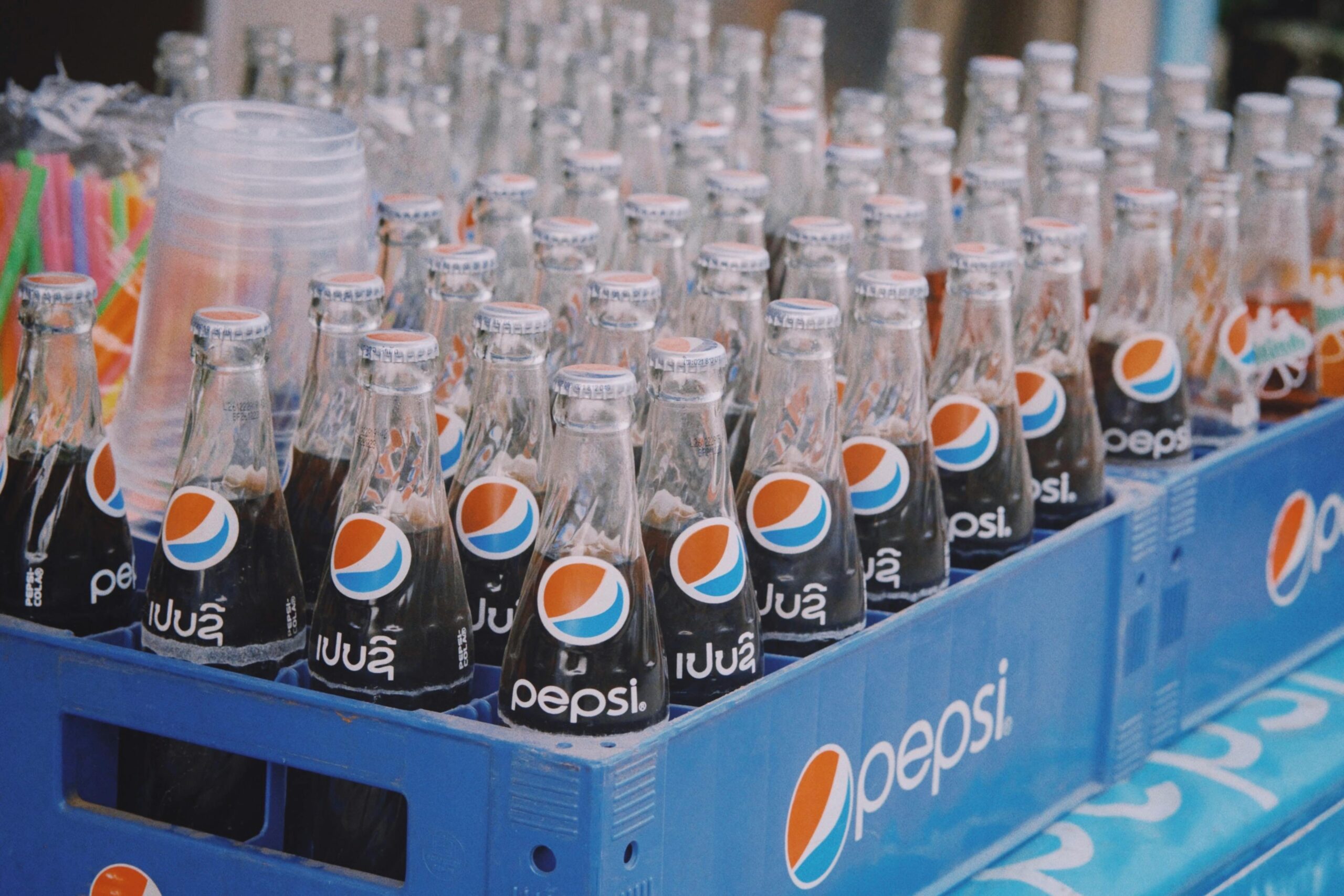
The shop was never air-conditioned. It was a narrow affair, open to the street, with a wooden bench out front and a deep red Visi Cooler humming against the back wall. The shopkeeper, usually a man who had been sitting in the same spot since before you were born, would drag a wooden crate across the stone floor with a sound that scraped against the silence of the afternoon. He would pull out a glass bottle, its surface already weeping with condensation, and pop the crown cap off with a fixed opener bolted to the side of the cooler. The hiss was not a sound effect. It was a promise. You drank standing there, in the shade of the shop, while the vendor watched you with a patience that was neither hurried nor indifferent. He was not being generous. He was simply waiting for his bottle back. Because the bottle was never yours. You were borrowing it. You were borrowing the glass, the weight of it in your hand, the way the ridges pressed into your fingers, and the cold that traveled from your palm to your chest with every sip. When you were done, you placed it back on the counter, and the bottle went back into the crate, back onto the truck, back to the factory, back into the filling line. It would return to another shop, in another town, for another child standing in another afternoon.
There was no environmental consciousness in that transaction. There was no hashtag for circularity. It was just life.
That returnable glass bottle system was not a packaging innovation. It was a social contract. It bound the manufacturer to the retailer, the retailer to the consumer, and the consumer back to the manufacturer in a loop so quiet, so ordinary, that nobody thought to call it a circular economy. Nobody needed to. The bottle carried the brand name embossed directly into the glass, raised letters you could feel with your thumb, a kind of direct-to-container branding that required no paper label, no adhesive, no sleeve to peel off and throw into a gutter. The identity of the product and the vessel were one and the same. The brand did not sit on the bottle. It was the bottle. And millions of these bottles moved through the Indian distribution network every single day, collected, washed, refilled, and sent back out, without a single sustainability report being written about it.
That world did not die of natural causes. It was killed, methodically and profitably, by a system that arrived from the West with a better sales pitch.
When multinational FMCG companies expanded aggressively into the Indian market through the 1990s, they brought with them a packaging model designed not for reuse but for disposal. The PET bottle was lighter, cheaper to produce, and critically, it transferred the cost of waste from the manufacturer to the public. This was not an incidental side effect. It was the architecture of the model. A glass bottle that must be collected, transported back, inspected, washed, sterilised, and refilled represents a significant recurring cost to the producer. A PET bottle that the consumer throws away after use represents zero post-sale cost. The entire logistics of return, the entire infrastructure of reuse, was eliminated overnight, and the savings went straight to the bottom line. What was marketed to the Indian consumer as convenience and modernity was, in structural terms, nothing more than cost externalisation. The waste did not disappear. It simply became someone else’s problem. It became the municipality’s problem, the ragpicker’s problem, the river’s problem.
And so an entire generation grew up believing that single-use plastic was the natural state of things. That buying a bottle of water and throwing it into the street was normal behaviour, because the bottle had no return value, no deposit, no reason to go back. The social contract was severed. The loop was broken. India went from having one of the most efficient returnable packaging ecosystems on the planet to becoming one of the largest generators of plastic waste, not because Indian consumers were careless, but because the incentive to care was deliberately removed from the system.
Now here is the part that should make you sit up.
The same Western packaging industry that dismantled India’s reuse infrastructure is now spending billions to reinvent it. Coca-Cola, PepsiCo, Unilever, Nestlé, and a growing consortium of European beverage companies are investing heavily in what they call label-free packaging and direct-to-container branding, a system where the brand identity is printed, embossed, or laser-etched directly onto the container so that the packaging enters the recycling stream without label contamination. This is being celebrated in sustainability conferences from Davos to Amsterdam as a breakthrough. Papers are being published. Awards are being given. Extended producer responsibility legislation in the European Union is accelerating the shift, and startups in Scandinavia and Germany are raising venture capital to build the infrastructure for returnable bottle networks.
Let that settle for a moment. The West is now building, from scratch, with venture capital and government subsidy, the exact system that India operated at national scale for decades, without subsidy, without legislation, without a single panel discussion about it. The returnable glass bottle system that your grandfather used was not a primitive practice waiting to be replaced by progress. It was the destination that the world’s most advanced packaging thinkers are now trying to reach. India did not need to catch up. India needed to remember.
The phrase circular economy is used today as though it were a Western invention, a product of Nordic design thinking and EU regulatory ambition. But the principle it describes, that materials should flow in loops rather than lines, that the end of a product’s use should be the beginning of its next life, was not theorised in Scandinavia. It was practised in Saharanpur. It was practised every time a doodhwala collected his steel canister from your doorstep, every time a kabaadiwala weighed your old newspapers and gave you steel utensils in return, every time a glass bottle was returned to the counter of a shop that smelled of dust and sugar syrup. The intellectual dishonesty of the current sustainability discourse is not that it promotes good ideas. It is that it erases the origins of those ideas. It rebrands indigenous practice as Western innovation and then sells the innovation back to the country that invented the practice, often at a premium.
The question that remains is not whether India can build a circular packaging future. It is whether Indian brands have the courage to claim a story that is already theirs.
This is where the conversation shifts from policy to brand strategy, from regulation to conviction. Because the brands that will define the next decade of Indian consumer goods will not be the ones that slap a green leaf on their label and call it sustainable. They will not be the ones that comply with extended producer responsibility mandates because the fine for non-compliance is inconvenient. They will be the ones that carry a genuine, traceable, embodied story in every inch of their packaging. They will be the ones whose brand identity is not a sticker applied at the end of the production line but a principle embedded at the beginning of the design process. They will be the ones who understand that authentic brand storytelling in the age of circularity is not a marketing layer. It is the product itself.
Consider what it means for a beverage brand to etch its name directly into the glass of a returnable bottle. It means the brand is declaring, physically and permanently, that it intends to see that bottle again. It means the brand is investing in a relationship with the consumer that extends beyond the moment of purchase. It means the brand is not hiding behind a label that can be peeled off and discarded, taking the brand’s accountability with it. The container becomes the commitment. The packaging becomes the proof. And in a market where consumers are increasingly able to distinguish between performance and posture, that proof is worth more than any certification stamp or ESG slide deck.
India does not need a pivot to circularity. India needs a return to sanity. The infrastructure of reuse was not a historical accident. It was a cultural default, an economic logic so embedded in daily life that it required no advocacy. What it requires now is not reinvention but recognition, not a new framework but the will to honour an old one with the sophistication it always deserved. The founders who understand this will not be chasing global trends. They will be setting them. The brands that understand this will not be competing for sustainability awards. They will be rendering those awards irrelevant. And the consumers who grew up with the weight of a cold glass bottle in their hands on a summer afternoon will recognise, in some wordless way, that this is not a new idea. It is the oldest one. The bottle is in your hands.
We believe the most sustainable thing a brand can do is be honest. If you are an FMCG or D2C brand looking to move beyond greenwashing and into authentic circularity, let us talk about how we can build a brand that lasts.
